Translate

Saturday, February 9, 2013

HOW DID I MISS THIS EXCELLENT ARTICLE ON THE REFORM OF THE REFORM OF THE ORDINARY FORM OF THE MASS IN CONTINUITY?

The Catholic Report on February 7th had a very good article on a book by Father Uwe Michael Lang. You can read it here or below:

Hastening the Reform of the Reform; or, the End of Clown Masses
February 07, 2013
A new book on Latin and the liturgy stresses the importance of continuity, not contentious campaigning.
Joanna Bogle


...In recent decades, especially in the English-speaking world, the words used in the Church’s sacred liturgy have been miserably inadequate for the glory of their task. Of course, the words have fulfilled their required purpose—as a bleak, ill-decorated church is adequate for Mass and provides protection from the weather for the Holy Sacrifice. But the very nature of the Mass, and the nature of human beings created to worship God, requires something better than that.

Now Father Uwe Michael Lang has examined all of this in a readable book exploring the subject of words, language, and liturgy. The Voice of the Church at Prayer: Reflections on Liturgy and Language (Ignatius, 2012) could not have come at a more opportune time: the new Mass translation—already it does not feel so new—is in use in parishes across the English-speaking world, the “reform of the reform” is well under way, the debates and discussions over liturgy have matured and are better informed than for many years passed, and the younger generation of priests is one that seeks authenticity, reverence, and beauty in the celebration of the sacred mysteries.

This book is not a tirade about liturgy with “ooh-isn’t-this-dreadful” accounts of noisy children’s Masses with horrible music and children reading aloud tedious Bidding Prayers into crackling microphones. This is a scholarly, readable, and important book that analyzes the uses of language, exploring topics that for too long have not been adequately aired. The liturgical debate in recent years has been dominated by a shouted, “Let’s just have 1962 with no alterations of any kind!”, and those wanting a deeper discussion have too often been squeezed out or been told, “Oh, you just want clowns and guitars” or even just, “Shut up—go away!”

So we are ready for a scholarly examination of the subject that does not dismiss the Fathers of Vatican II’s call for some inclusion of the vernacular and for enabling a deep prayer in the congregation connected to the activity at the altar, and which sees the essence of the discussion as involving continuity, reverence, and a sense of awe and gratitude at what has been given to us by God.

Father Lang, who is a staff member of the Congregation for Divine Worship and the Discipline of the Sacraments, looks at the tradition and heritage of Latin and the way it was used in worship in late antiquity, and how this tradition of the “rhetoric of salvation” is crucial for all of us as it “works to achieve its threefold end of teaching the faith, giving spiritual delight, and persuading to a virtuous life” (p. 76). The tone, the sound, the style, the manner of worship are all important; the idea of how we address God and the way in which we behave in addressing him—all these are bound up with the words we use.

Father Lang is fascinating on the subject of the rhythmic sound of the ancient prayers, the way in which the words and their “beat” work together. He gives us crucial insights and information from St. Thomas Aquinas, and uses him to show the deep significance of “sacred language.” It is to St. Thomas Aquinas that we owe the understanding of the value of Latin as being intrinsically linked to the Mass because it was one of the languages used at the Crucifixion itself, on the board placed, on Pilate’s instructions, above Christ’s head on the Cross.

In looking at the use of English, Father Lang inevitably points out, in some detail, the banalities and inaccuracies of the ICEL “translations” used from the 1970s until just recently, where whole sentences of the original Latin were washed away and paraphrases used instead, with an apparently deliberate attempt to bleach out references to God’s glory and to our imploring him graciously to hear our prayers, and so on. The result was to give people a sense of living through a revolution in the way they were meant to pray, and also to rob some prayers of their actual meaning and their power of teaching and inspiring.

This book will become standard reading in seminaries. It will help to foster a greater use of Latin, and hasten the “reform of the reform”; it will be quoted and studied and used in debates and discussions and arguments. Over the next couple of decades, the 1970s-style liturgies will slither away; already the whole tone and mood of any discussion about liturgy reflects more and more the message of the then-Cardinal Ratzinger’s Spirit of the Liturgy and the fresh interest in historical accuracy and the notion of an authentic attitude toward what liturgy really is.

Father Lang emphasizes continuity and not campaigning. He understands that we start where we are and work from there: that is why his work is of such practical value. He is interesting on the subject of the Council of Trent and the vernacular. Its wording was subtle and specific, and revealed a more detailed discussion than some historians have assumed. There is a consistent line from Trent’s Decree on the Sacrifice of the Mass through to the decrees of Vatican II.

Father Lang is not, one suspects, at all an enthusiast for the use of local languages—most of the book is about Latin—but he shows how the vernacular can play its part in liturgy, properly grasped, and also the crucial need to be faithful to the reality of how the liturgy develops and why. This is, again, a book of scholarship, with a message that challenges and teaches and informs—it is not a piece of polemic. It will convince a large number of young priests to take a very different view of liturgy from the one that was dominant 40 years ago. It all chimes with the general thinking, mood, and sense of loyalty notable in the John Paul/Benedict generation.

Toward the end of the book Father Lang laments that there is currently such ignorance of Latin that many Catholics are unable to sing the Pater Noster together in Latin at great international gatherings in St. Peter’s Square. I suspect that within a decade or so, things will be different. The “reform of the reform” is under way.

The Voice of the Church at Prayer: Reflections on Liturgy and Language
by Uwe Michael Lang
Ignatius Press, San Francisco, 2012
225 pages. Paperback and e-book.

OBEDIENCE AND THE POWER OF THE MODERNISTS: UNDERSTANDING THE RESURGENCE OF MODERNISM IN THE PAST 50 YEARS


Obedience and the Power of the Modernists: understanding the resurgence of Modernism in the past 50 years is an article by Father Giovanni Cavalcoli, O.P., Th. D., who is an Italian theologian currently residing in the Convent of Saint Dominic, in Bologna,home of that famous spaghetti sauce that my mom made so well and mine is only a faint resemblance! But I digress. You can read the entire article by pressing this entire paragraph.

I offer some excerpts from the article which I italicize and offer interspersed my comments in bold:

Father Giovanni speaks of the trends in modern theology as promoted by modern theologians as "the “work of auto-demolition”, that Paul VI had spoken about."

The first period is characterized by the famous chaotic and disordered contestations of 1968 and, at that same time, the wild, uncontrolled spreading of heretical doctrines in dogma and morals among seminarians, youth, priests, religious and theologians. The bishops, taken by surprise, and not wanting to be labeled “prophets of doom” or pre-conciliar conservatives, more or less allowed them free rein, at times with the formula ad experimentum (“Let’s see how it goes.”); as if the truth of a doctrine depended on the success it meets.

The disobedience to the Magisterium and to the Pope himself, either openly or covertly in the name of an unspecified “spirit of the Council” began to be a habit which spread among the faithful, intellectuals and people, the clergy, theologians and moralists. [Thus] the so-called “Catholic dissent” was born, and Paul VI spoke about “a parallel Magisterium”.

My comments: I was in the seminary between 1976 and 1980. Yes the academic theologians of that day starting presenting themselves as the "parallel Magisterium" that Pope Paul VI described and they did so proudly as the "loyal opposition!" In terms of experiementation with liturgy and church structures, indeed, this was allowed by the Magisterium and the pope, although I think Paul VI later came to regret his liberalism in this regard. Like Joseph Ratzinger who embraced the Council and some of its modern "spirit" he and Pope Paul VI quickly became very disillusioned with what was happening that the Council Father's never foresaw, yet Pandora's Box had been opened by them or the toothpaste was out and shoving it back in and closing a door that was too heavy and doing so quickly were not options.

Heretical and modernist ideas, especially those along Protestant lines, started to be taught freely, tranquilly and with impunity in Catholic schools and were also found in the publications and press of many so-called “Catholic” publishers. The scandal and anxiety of the devout and orthodox among the faithful, were considered with derision and superciliousness by the modernists – those so-called “progressives” increasingly sure of themselves and convinced they were the new Church of the future and modernity: “in the heart of the world”, in “the Church of the poor” in “the Church of dialogue”, guided directly by the Spirit, truly evangelical, attentive to the “Word of God” and the “signs of the times” and so on.

Throughout this first period, the modernists had the opportunity of becoming more and more dominant in social communications, thus infiltrating into families, in culture - schools, universities, workplaces, parishes, movements, academic environments and Catholic education, seminaries and religious institutes, thus forming an entire generation of new priests, new religious, new leaders, new bishops and even new cardinals. All of this in the face of extremely weak resistance on the part of good pastors and the Holy See, itself weakened and contaminated through ultra-recommended infiltrators by ambitious prelates of dubious orthodoxy.

What was the catastrophic outcome of all this? We see it today before our eyes, growing in proportions, and it could have been but figured out - as it had indeed been figured out and foreseen by those many clear-sighted “prophets of doom”. (We should better say: the “unheeded sentinels”). Or let us say more simply, it was foreseen by those endowed with common sense: that gradually from the modernists and false teachers, free to spread their errors, there would have risen (as indeed it has) a generation or a category holding ecclesiastical power at various levels, more or less ruthless or convinced, more or less oscillating and double-crossing, imbued with their own ideas and therefore, not only able to spread modernist ideas, but order their implementation, subject to disciplinary sanctions, in the name of “obedience” or even, persecution against those that wanted to remain faithful to the Church’s Magisterium.


My Comments: The greatest damage that seminary of the 1970's did was in the area of Scripture Studies and Moral studies. In the area of Scripture, the historical/critical method of studying it was borrowing heavily from the mistakes of liberal Protestants of the late 1800's and 1900's which thus led to the deconstruction of the Scriptures which then led to the questioning of core dogmatic teachings of the Catholic Church such as miracles in general, angels and demons, Immaculate Conception, Virgin Conception and birth, much of what was purported to be the ministry of Jesus Himself including his miracles, His divinity, his nativity and yes, His resurrection. The door to questioning all these dogmas and doctrines had been opened wide with the eye to preparing seminarians, the future priests, theologians and bishops of the Church, to redefine these dogmas and doctrines in accord with the narrow presentation of the "critical-historical" method of interpreting the Scriptures. Fortunately Pope Benedict XVI has laid to rest such nonsense in his books and given us the correct hermeneutic in using the historical critical method.

But I can say from experience what these Scripture scholars did to the Catholic faith of young seminarians during this time period screams for justice from heaven. Many left the seminary and some the Church in total disbelief and disgust.

Then on top of that the new was always taught by showing how bad the old was. Pre-Vatican II old and bad, Vatican II new and far superior!

Moral theology quickly became the most disoriented. I think what was being taught in this area would give license to those who might otherwise have had the capacity to embrace their vows or promises of chastity/celibacy to act out on their impulses no matter what, even if they could live chaste lives. I blame the confusion of the 1960's and 70's in terms of moral theology and sexuality for the breakdown of morality in the clergy and religious. Certainly there will always be people who have pathologies, but their pathologies shouldn't be fueled by false teachings in moral theology.


They are the first to disobey the truth and directives of the Gospel as well as the Supreme Pontiff, and they dare to dish out orders which clash with the sound doctrine or moral and judicial principles of the Church. These are the same ones that in 1968 or in its wake, who wailed against “the barons” and “authoritarianism”; they felt authorized to contest the Pope and bishops, and to enlighten them with expressions of such dogmatic rigor as: “the Church of the rich” of despotism and medieval theocracy from the “age of Constantine”, “Baroque triumphalism “, pharisaical legalism, the Inquisition, sex phobia, and so forth. Now, instead, they ask for absolute obedience and whoever contradicts them is compared to one that disobeys a divine precept. That is, if they still believe in the true God and do not make a god of themselves, along the lines of the sublime intuition of a certain Gnostic pantheist.


My comments: Yes, the new progressives of the Church who are really the ones my age and older trying as hard as they can to infect religious life and Catholic institutions, continue to use the dusty old mantra of accusing traditionalists and those who actually believe what the Church teaches by wailing "against “the barons” and “authoritarianism”; they felt authorized to contest the Pope and bishops, and to enlighten them with expressions of such dogmatic rigor as: “the Church of the rich” of despotism and medieval theocracy from the “age of Constantine”, “Baroque triumphalism “, pharisaical legalism, the Inquisition, sex phobia, and so forth. Now, instead, they ask for absolute obedience and whoever contradicts them is compared to one that disobeys a divine precept. That is, if they still believe in the true God and do not make a god of themselves, along the lines of the sublime intuition of a certain Gnostic pantheist.

The new clericalism or clericalist mentality is to be found primarily in progressive clergy and religious and to question them is forbidden as is calling them out in their clericalism. If you do, they will come down on you hard, harder than any pope or bishop would do in the legitimate sense. Look at rebel clergy groups in Ireland and Australia, men who have taken vows or promises of obedience to their bishop, who himself has taken a vow of obedience to the pope and see how they disobey and try as hard as they can to take others with them and in the most public way. If this isn't clericalism coupled with modernism, I don't know what is!


Friday, February 8, 2013

PRAYERS PLEASE!

I don't normally use my blog seeking prayers, but one of our parishioners who is in the third grade at our school has just been diagnosed with a very aggressive bone cancer. Doctors have diagnosed her with Osteosarcoma. It is currently in her knee. Her parents are making immediate plans to bring her either to Emory in Atlanta or St. Jude in Memphis. It is very serious.

DESIRING THE PERFECT IN AN IMPERFECT WORLD

There is a great deal of foment in the world of liturgy today and much of it is grassroots. We see how churches that were once stripped of their pre-Vatican II beauty in favor of a Presbyterian look that John Calvin would love are now "re-enchanting" their liturgical architecture. And new churches that once looked like something that McDonald's or Burger King would build are now being designed with an eye to tradition.

Saint Teresa Church in Grovetown, Georgia (a suburb of Augusta in the Diocese of Savannah) whose pastor is Fr. Mike Ingram, has come up with this design for their new suburban church:

The parish is working with King Richards of Atlanta which salvages liturgical art from magnificent closed Catholic churches in the northeast. St. Teresa has acquired a traditional altar with reredos, marvelous stations of the cross and stain glassed windows.

Kudos to Saint Teresa's for not buying into the Calvinistic approach to building new Catholic Churches.

The Reform in Continuity new liturgical movement is very, very different than what Vatican II did in terms of a shoving of a particular vision of it down everyone's throat in a lockstep fashion in the 1960's (in other words, Vatican II implemented in a pre-Vatican II way).

The renewal that His Holiness Pope Benedict XVI is implementing is one of invitation and giving example but not mandating. And it is catching on around the world, maybe not like wildfire, but it is catching on like the small mustard seed that is sprouting into some that will be very big and very grand.

For example, I would have never thought 5 years ago that we would have one Sunday Mass ad orientem for the Ordinary Form, that we would be celebrating the older Tridentine Mass and that people would have the personal choice to either stand or kneel comfortably at a kneeler for Holy Communion and that intinction would be as well received as it has been.

All of this is liturgical renewal without forcing anyone into a lockstep across the board. And what I have seen in my parish is that more and more people (not all certainly) are choosing to kneel as they witness others doing it. And yes there is a developing sense of a recovered piety and reverence at Mass not experienced since Vatican II!

I often wonder what path the liturgical renewal had taken if Pope Paul VI had been more like Pope Benedict and allowed the Tridentine Mass to co-exist side by side with the missal of 1970? Would we have had all the upheavals we've had?

Only in heaven will we be able to see on our heavily iPads parallel history to determine various outcomes depending on the road chosen.


Thursday, February 7, 2013

OH, THE NOSTALGIA OF IT ALL!

I've been borrowing from posts from the New Liturgical Movement these past two days. They love to post before and after pictures of recent church renovations which I love looking at too!

The one they just posted really caught my eye in that the "before" look is almost identical to the parish church I grew up in Augusta, Georgia. It is called Saint Joseph Church too. It had the same beams and roof line and almost the same sanctuary as the before picture, except in Augusta the wood was painted, the arches were a maroon reddish color and the ceiling itself, wood planks like in the photo below was painted white. It is about the same size as Augusta's church too (which is now their social hall, as they built a new ultra modern one.

It is also very similar to the parish church of my first assignment in Albany, Georgia, St. Teresa of Avila.

Before:
after:

MY COMMENTS: I have mixed feelings. Certainly the after picture is a great enhancement but it doesn't seem to go with the simple A frame style of architecture. These kinds of churches were built in the 1950's and even in pre-Vatican II times, these buildings would not have been gussied up as much as the after picture is. It seems to have two different styles of art clashing, an A frame building wanting to be Baroque or something other than what it is.

Apart from that the "rood screen" effect blocks the altar from the some sitting in the congregation and seems superfluous and to fussy in this particular style of A frame building.

Just my thoughts.


IS IT POSSIBLE TO MERGE THE E.F. AND THE O.F. CALENDARS?

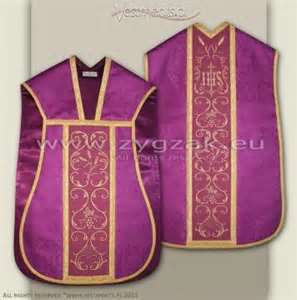
This time of year, especially as the the Extraordinary Form calendar is in the holy season of Septuagesima, and thus the liturgies are violet, shows the stark difference between the Ordinary Form calendar and the Extraordinary Form calendar.

While the Ordinary Form liturgy has helped our people to become comfortable with options during the Mass, i.e. variety of penitential acts, prefaces, and Eucharistic prayers (and thus there is no universal Mass around the world or even in various parish liturgies on any given Sunday, I think the diversity of calendars is a bit too extreme. I think just as we can live with various options of the Ordinary Form Mass concerning prayers, we can live with the diversity of Scriptures too that are read in terms of the differences in the OF and EF lectionaries. But the calendar needs to become more similar and it wouldn't be that difficult to do and to do it as soon as possible.

This is the Anglican Ordinariate Liturgical Calendar for the Personal Ordinariate
of the Chair of Saint Peter. It could and should be implemented by this coming Advent in all Latin Rite Ordinary Form liturgies as far as I am concerned. This calendar can be used with the revised Roman Missal already in place and its lectionary simply by changing the names of certain Sundays, especially in Ordinary Time. It uses the term "after Trinity" for the traditional "after Pentecost" Sundays. I prefer the traditional "after Pentecost" though. You'll note the reinstitution of ember days, rogation days and the season of Septuagesima!

If the former Anglicans now in full communion with the Church can have this calendar, why can't we? Here it is:

Temporale

The date of Easter being moveable, Sundays marked * are not needed in every annual cycle.

Advent

First Sunday of Advent
Second Sunday of Advent
Third Sunday of Advent
Fourth Sunday of Advent

Christmas Eve
Christmas
The Nativity of the Lord (Christmas)


Sunday within the Octave of the Nativity: The Holy Family of Jesus, Mary and Joseph
(if there is no Sunday, December 30)
The Octave Day of Christmas: Solemnity of Mary, the Holy Mother of God
*Second Sunday after Christmas
Epiphany
The Epiphany of the Lord (The Manifestation of Christ to the Gentiles)
(January 6, or the Sunday between January 2 and 8)
The Baptism of the Lord (Sunday after Epphany, or on Monday, January 8 or 9)
Time after Epiphany
Time after Epiphany begins usually with Monday of Week 1 on the day following the the
Baptism of the Lord. For the weekdays following the Baptism of of the Lord, the propers
for the Week after Epiphany (Week 1) are used. Even when the Baptism of the Lord is
transferred to the Monday, the Sunday after the Baptism of the Lord is observed as the
Second Sunday after Epiphany. For the purposes of the lectionary, this is Sunday 2 in
Ordinary Time and the Sundays thereafter Sundays 3, 4, 5 &c. until Lent begins.
Second Sunday after Epiphany
*Third Sunday after Epiphany
*Fourth Sunday after Epiphany
*Fifth Sunday after Epiphany
*Sixth Sunday after Epiphany
__________________
Feast of the Lord
The Presentation of the Lord (Candlemas) - 2 February
__________________
Third Sunday before Lent (Septuagesima)
Second Sunday before Lent (Sexagesima)
Sunday next before Lent (Quinquagesima)

Lent
Ash Wednesday
First Sunday in Lent
Second Sunday in Lent
Third Sunday in Lent
Fourth Sunday in Lent (Mothering Sunday)
Fifth Sunday in Lent (Passion Sunday)
Palm Sunday
Monday of Holy Week
Tuesday of Holy week
Wednesday of Holy Week

Maundy Thursday
Good Friday
Holy Saturday (Easter Eve)
Easter
Easter Sunday
Monday of Easter Week
Tuesday of Easter Week
Wednesday of Easter Week
Thursday of Easter Week
Friday of Easter Week
Saturday of Easter Week
Second Sunday of Easter (Divine Mercy Sunday)
Third Sunday of Easter
Fourth Sunday of Easter
Fifth Sunday of Easter
Sixth Sunday of Easter
Scheme A
Ascension Day (Thursday of Week 6 of Eastertide)
From Friday after Ascension Day begin the nine days of prayer before Pentecost
Seventh Sunday of Easter (Sunday after Ascension)
Pentecost (Whit-Sunday)
Scheme B
Ascension of the Lord (Sunday 7 of Eastertide)
Pentecost (Whit-Sunday)
Pentecost Octave
The ancient Octave of Pentecost began with Whit-Sunday and continued until Trinity
Sunday. For the midweek ferias following Pentecost the weekday lectionary is used, as
prescribed for Ordinary Time, but the mass propers and red as the liturgical colour may
sustain the themes of Pentecost.
3
Time after Trinity
This begins on Monday of the week following Trinity. For the purposes of the Roman
Lectionary, the numbering of Sundays (Sunday 8, 9, 10, 11, 12) resumes either on the
First Sunday after Pentecost or on the first Sunday thereafter on which a solemnity is not
celebrated. Sunday numbers remain in sequence until Sunday 33. Sunday 34 is Christ the
King and Week 34 the final six days of the liturgical year.
Solemnity of the Most Holy Trinity (Trinity Sunday)
(Sunday after Pentecost)
Solemnity of the Most Holy Body and Blood of Christ (Corpus Christi)
(Thursday after Trinity Sunday, or as appointed on the First Sunday after Trinity)
Solemnity of the Most Sacred Heart of Jesus
(Friday after the First Sunday after Trinity)
Sundays after Trinity
First Sunday after Trinity (if not kept as Corpus Christi)
Second Sunday after Trinity
Third Sunday after Trinity
Fourth Sunday after Trinity
Fifth Sunday after Trinity
Sixth Sunday after Trinity
Seventh Sunday after Trinity
Eighth Sunday after Trinity
Ninth Sunday after Trinity
Tenth Sunday after Trinity
Eleventh Sunday after Trinity
Twelfth Sunday after Trinity
Thirteenth Sunday after Trinity
Fourteenth Sunday after Trinity
Fifteenth Sunday after Trinity
Sixteenth Sunday after Trinity
Seventeenth Sunday after Trinity
Eighteenth Sunday after Trinity
Nineteenth Sunday after Trinity
Twentieth Sunday after Trinity
Twenty-first Sunday after Trinity
Twenty-second Sunday after Trinity
*Twenty-third Sunday after Trinity
*Twenty-fourth Sunday after Trinity
*Twenty-fifth Sunday after Trinity
*Twenty-sixth Sunday after Trinity
*Twenty-seventh Sunday after Trinity
Last Sunday of the Church Year: Solemnity of Our Lord Jesus Christ, King of the Universe
The propers of the Sunday next before Advent are used during the final week of the
liturgical year, Week 34.
4
Dedication Festival - The First Sunday in October as permitted or required by authority, may
be kept locally as the Dedication Festival if the date of consecration or dedication of the church is
not known.
The Rogation Days are the three days follows Rogation Sunday (Sixth Sunday of Easter)
The Ember Days at the four seasons are the Wednesday, Friday, and Saturday after
First Sunday of Lent
Pentecost
14 September
13 December

Wednesday, February 6, 2013

YOU NEVER KNOW WHAT ALTAR BOYS YOU HAVE MAY BECOME GRAND ARCHITECTS OF CHURCHES

I saw at the New Liturgical Movement blog a post on the renovation of a Jesuit High School's chapel in Tampa. Low and behold the one who did the renovations is Joel Pidell, a former parishioner of mine from the Church of the Most Holy Trinity in Augusta, GA!

If I am not mistaken, both he and his brother were altar boys at Most Holy Trinity which had some of the best trained ones in the world due to one Mr. Bill Harper!

Joel's brother Aaron became a Jesuit priest. He is one of about 12 men who have become priests from the Church of the Most Holy Trinity between 1983 and now! I feel blessed to have been in a parish that produced so many vocations to the priesthood. It was like reform in continuity there before that became popular!

You can read Joel's blog "Reading the form" HERE.

This is the chapel before Joel got a hold of it:
This is what he did to it!:


These are Joel's own words about things like this:

"Aesthetically, the task was to create a beautiful interior which was artistically coherent—properly proportioned, scaled, detailed, and ornamented—despite the eccentricities of the existing geometries and structural conditions, which was no small task with the given parameters and budget. But principally, over and above all these considerations, it was essential to transform the chapel into, as Fr. Hermes would later say, a place of “epiphany”, a space that served to manifest God’s ever-greater Glory and facilitate our encounter with the same Living God; or, as Hans Urs von Balthasar would say, an example of theological aesthetics."


THE GLORY OF SPRINGTIME IN MACON, GA!

I just came in after taking this photo with my iPhone of one of the two blooming pink budded trees outside our rectory/office door here at St. Joseph. Oh, and it's about 76 degrees right now in downtown Macon. And the pollen is making me sneeze!

I heard on the news that Boston is going to get two feet of snow by Friday. Poor souls! Who in their right mind would want to be in the northeast and across the top if this country especially in the Church? The south is the place to be for good weather and good Church--it's the springtime for the Catholic Church here as we go full steam ahead with the reform of the Church following explicitly Vatican II and thus continuity.

COMMON SENSE WHEN IT COMES TO BANNING BLOWING ON BIRTHDAY CAKES IN AUSTRALIA AND NOT DRINKING FROM A COMMON CHALICE IN CATHOLIC CHURCHES

SAY THE BLACK AND DO THE RED!

Father Chicken Little here, happy to pass on some common sense hygiene from Australia! I wonder how the government feels about the common chalice at Mass?

"Celebrating birthdays at school just got a little less fun for kids in Australia. New guidelines issued Tuesday by the country's National Health and Medical Research Council say that children can no longer blow out the candles on cakes at school because doing so spreads too many germs."

Of course as I have written before at Roman Masses that are concelebrated, the concelebrants never, never, ever drink from a common chalice, this includes the princes of the Church and other archbishops and bishops, not to mention priests. No they do what his hygienically common sense, they take the Sacred Host and intinct it into the chalice of Precious Blood.

The Holy Father also gives Holy Communion to the deacons of the Mass as they kneel before him through intinction as well. No one drinks from the common chalice save the celebrant himself.

I think Europeans are more conscious of health issues, like germs and cleanliness whereas we Americans like the Australians until recently have blown on cakes and drink after others with reckless abandon!

HAPPY AND HEALTHY BIRTHDAYS TO ALL!


Tuesday, February 5, 2013

FATHER O'MALLEY'S SUGGESTIONS TURNED AROUND TO APPLY TO THOSE WORKING TO REJECT THE ANTI-SPIRIT OF VATICAN II AND ITS SHIFTS IN THE CHURCH BASED UPON BOGUS AUTHOIRTY BUT APPLIED NOW TO THE REFORM IN CONTINUITY MOVEMENT AND ITS LEGITIMATE AUTHORITATIVENESS!

Father John O’Malley, SJ a well known Jesuit theologian and expert on Vatican II wrote about the shift that Vatican II brought to the Church but in terms of "rupture" with what he thought/thinks is bad, no good, and worth discarding in order to "re-imagine" a new church into being.

But I would like to take his words and apply it to "anti-spirit" of Vatican II pundits who have hijacked Vatican II's true spirit and true implementation and have won the day for the past 45 or 50 years but no more and they know it! They are running as they shake in their boots about this turn of events that they can not control.

And so, let's apply Fr. O'Malley's words to those who are now embracing the true spirit of Vatican II as they reject the post-Vatican II anti-spirit, which is helping the Church now actually to implement Vatican II.

So this is applied to the anti-spirit of Vatican II adherents who now have seen the light and are embracing the "reform in continuity" true spirit of Vatican II. So they must move from the anti-spirit perspective to the true spirit perspective by doing the following things Fr. O'Malley suggests:

from commands to invitations

from monologue to dialogue

from laws to ideals

from threats to persuasion

from ruling to serving

from hostility to friendship

from rivalry to partnership

from suspicion to trust

from withdrawal to engagement

from passive acceptance to active participation

from behaviour modification to conversion of heart

[He goes on –-]

What the Council was asking really was a kind of conversion and a shift in core values; a new heart.


My final comment: Apply the above to the dogmatism of those who have no real authority in the Church and thus are authoritarian to those who do have authority in the Church like our Holy Father which is actually authoritativeness.

Anti-spirit of Vatican II is bogus authority and many are screaming as they lose this ill begotten authority and the spirit of Vatican II authentic authority exercised by the Holy Father and the bishops in union with him is the authentic authority!

THE PAST/PRESENT AND THE PRESENT/FUTURE IN THINGS LITURGICAL AND ARCHBISHOP SAMPLE'S PROPHETIC AND BOMBSHELL INTERVIEW ON THE LITURGY!

This is the past/present and it is hilarious!
The following prophetic interview is present in some places, but certainly the future, please God (present/future):

Archbishop-elect Sample on Sacred Music and the Traditional Latin Mass

From an interview published today by Catholic World Report: Portland’s new archbishop: “I’m a teacher at heart”.
CWR: The Archdiocese of Portland is home to Oregon Catholic Press, which produces missals and liturgical music materials used by two-thirds of our country’s Catholic churches. You have developed an interest in the liturgy—in fact, you’re writing a pastoral letter on the topic. Can you share with us some highlights of that letter?

Sample: Yes. It is on pastoral music, and is just being released. We just hired a new director of sacred music, and this will be his road map. It will be my last contribution to the life of the Church in Marquette.

In this letter I discuss the liturgical movement of the Church, what Vatican II said about liturgical music, documents released on the topic after Vatican II, as well as writings by popes about [liturgical music]. It is not my vision or my ideas; I try to present the Church’s vision.

It is clear that the Council calls for the liturgy to be sung. In recent decades we’ve adopted the practice of singing songs at Mass. We take the Mass, and attach four hymns or songs to it. But this is not the Church’s vision. We need to sing the Mass. It is meant to be sung. The texts of the Mass are meant to be sung.

The Church provides us with chant, which is integral to liturgy, and should inspire the music of the Mass. We need to get away from singing songs at Mass and return to singing the Mass. And Gregorian chant is best suited to the Mass. The new director I hired [in the Diocese of Marquette] will introduce chant. It will be a huge shift for the people.

I mean no criticism of our sacred musicians, who are very dedicated. It will be a shift for them as well.

And, in addition to Latin chant, we also need to introduce chant in English. Although the Second Vatican Council said that chant should be given “pride of place,” one rarely hears it in parishes. Music is an important part of celebrating the Mass. As Pope Benedict has said, if we get the music right, we’ll get the spirit of the Mass right.

CWR: Where have you seen liturgy and liturgical music done well?

Sample: The parishes I’ve visited have all different levels of quality of music. In my formative years, the liturgy at the Church of St. Agnes in St. Paul, Minnesota, led by Msgr. Richard Schuler (1920-2007), was outstanding. More recently, the liturgy and music at the National Shrine of the Immaculate Conception for the March for Life was spectacular.

CWR: You’ve been involved in ordinations for the Fraternity of St. Peter, which celebrates the traditional liturgy of the Roman rite. What do you like about the pre-Vatican II rite of the Mass, and will we be seeing more of it in Portland?

Sample: I appreciate the Tridentine liturgy. I am 100 percent a product of the Second Vatican Council, in that I grew up in its wake, and all my formation was post-Vatican II. Therefore, my fondness for the Tridentine liturgy is not based in nostalgia. Having been exposed to it, I’ve gained a great appreciation for it.

What sparked my interest in it was Pope Benedict’s 2007 motu proprio Summorum Pontificum [granting greater freedom to priests to celebrate the older form of the liturgy]. I thought, “I’m a bishop of the Catholic Church, and it’s my responsibility to know how to celebrate Mass according to both the new and old rites.” I’ve learned the Tridentine liturgy, and have since celebrated three Pontifical High Masses and Masses for the Fraternity of St. Peter and the Institute of Christ the King (in Florence, Italy).

I believe that Pope Benedict wants the Extraordinary Form of the Mass to influence liturgical reform, to lead to a reform of the reform, because in some areas we’ve gotten off track. He wants the pre-conciliar liturgy to help shape the new liturgy and help reconcile us with the past. If the Tridentine Mass was once beautiful, it cannot now be harmful.

The Tridentine Mass certainly has many strengths; for example, it clearly stresses the sacrificial nature of the Mass. It also draws many young people who did not grow up with it. They’re discovering their heritage and tradition. It’s providing them with something they’re not finding in the ordinary form. We need to pay attention to that.

When I arrive in Portland, I’ll find out the status of the Tridentine Mass, and see if there are stable groups who want it. As their archbishop, I’ll do what I can to make it available.

And now the recent past/present church design and present/future church design Holy Innocents Catholic Church, Long Beach, California:

Past/present:

Present/future:
MY COMMENTS: Archbishop Samples hits the nail on the head in his interview when he says: "I believe that Pope Benedict wants the Extraordinary Form of the Mass to influence liturgical reform, to lead to a reform of the reform, because in some areas we’ve gotten off track. He wants the pre-conciliar liturgy to help shape the new liturgy and help reconcile us with the past. If the Tridentine Mass was once beautiful, it cannot now be harmful."

What was once beautiful, the Tridentine Mass, traditional Church architecture and sanctuary design including ad orientem altars, traditional decoration and altar railings, not to mention Gregorian Chant and newer forms of English Chant based upon Gregorian style that were/are once beautiful, it cannot now be harmful!"

The opposite is true too. What is now ugly, such as sloppy, creative, dumbed down celebrations of the Ordinary Form of the Mass, non traditional church architecture and sanctuary designs that are stripped down, plain, blah and with altars that look like free standing ironing boards without altar railings, not to mention the guitar tripe that is so truthful in the satire of the video above that is now so ugly that was and is sooooooo harmful!!!!!!

Archbishop Sample is just simply prophetic and liberal but in a traditional kind of way. I hope other bishops are listening to him and I hope Archbishop Sample becomes the Primate of America at least as Liturgy Czar! I nominate him for that!

So, which do you like best? Past/present or present/future?

Archbishop Sample clearly is present/future and represents what is in store!

Oregon Catholic Press which influences about 80% or more of Catholic parishes in terms of the guitar tripe in the video above (although they also have some traditional resources) is in the new Archbishop's Archdiocese. I recommend that Oregon Catholic Press fasten it seat belts, the ride to the present/future might get bumpy, but oh so fun for them and those they influence, the majority of Catholic parishes!

Archbishop Samples' placement by the Holy Father in Oregon may well make him the defacto liturgy Czar of America whereby influencing Oregon Catholic Press will influence the nation!

Monday, February 4, 2013

WOW, SUNDAY, FEBRUARY 3 CONSISTED IN A KALEIDOSCOPE OF CLASHING LITURGIES, COLORS AND TECHNOLOGIES--IT WAS RICH!

For the 4th Sunday in Ordinary Time in the Ordinary Form the color was:
However for the blessing of throats, on the Feast of Saint Blaise, the color should have been red, since he was a martyr:
And, and certainly everyone knows this, in the Extraordinary Form Calendar and Mass, the liturgical color was violet for Sexagesima Sunday and of course yesterday, Saint Joseph Church celebrated High Mass in the Extraordinary Form at 2:00 PM:
But if that wasn't enough we also had our annual kick off Super Bowl Sunday, Bishop's Annual Appeal, which always falls the first Sunday of February. So we had to show a video from Bishop Gregory Hartmayer at all our Masses including the Extraordinary Form Mass and did so during the homily time. I also spoke before and after the video at all the Masses, including the Extraordinary Form Mass--I wonder how many times videos have been shown at an EF High Mass? Am I a pioneer in that too!? Oh, the Glory!


OMINOUS WORDS FROM THE PRESIDENTIAL HIGH PRIEST: GAYS AND LESBIANS SHOULD HAVE ACCESS AND OPPORTUNITY IN EVERY INSTITUTION

The president stated last night, Super Bowl Sunday, the following: “My attitude is that gays and lesbians should have access and opportunity the same way everybody else does, in every institution and walk of life.”

In this declaration, I suspect he also means religious institutions, such as the Christian Church, like Lutherans and Roman Catholics. As you will recall his administration sought to force a Lutheran School to hire back an actively gay person who taught in one of their schools. The Supreme Court, fortunately, sided with the Lutherans not the president.

Well of course people with same sex attractions are in every institution, Catholic and otherwise. In religious institutions whether Christian or otherwise, where there is a prohibition against same sex activity or sexual expression, this could exclude them from some institutional functions, such as ministry, leadership and participation in specific religious organizations and ministries.

Heterosexual fornicators are excluded from some institutional access in the Catholic Church as are adulterers.

When the president says gays and lesbians should have equal access and opportunity in every institution and frames in "ex cathedra" does he mean those who are actively engaged in homosexual activity and publicly so?

The following is an excerpt from the United States Conference of Catholic Bishops document, "Always Our Children: A Pastoral Message to Parents of Homosexual Children and Suggestions for Pastoral Ministers"

My comment first: Of course families and the Church must be fair and compassionate towards those with same sex attractions, but we must also show love by calling them to God's truth revealed in the Church and we should be able to do this without government interference.

Accepting God's Plan and the Church's Ministry

For the Christian believer, an acceptance of self and of one's homosexual child must take place within the larger context of accepting divinely revealed truth about the dignity and destiny of human persons. It is the Church's responsibility to believe and teach this truth, presenting it as a comprehensive moral vision and applying this vision in particular situations through its pastoral ministries. We present the main points of that moral teaching here.

Every person has an inherent dignity because he or she is created in God's image. A deep respect for the total person leads the Church to hold and teach that sexuality is a gift from God. Being created a male or female person is an essential part of the divine plan, for it is their sexuality—a mysterious blend of spirit and body—that allows human beings to share in God's own creative love and life.


Like all gifts from God, the power and freedom of sexuality can be channeled toward good or evil. Everyone—the homosexual and the heterosexual person—is called to personal maturity and responsibility. With the help of God's grace, everyone is called to practice the virtue of chastity in relationships. Chastity means integrating one's thoughts, feelings, and actions, in the area of human sexuality, in a way that values and respects one's own dignity and that of others. It is "the spiritual power which frees love from selfishness and aggression" (Pontifical Council for the Family, The Truth and Meaning of Human Sexuality, 1996, no. 16).

Christ summons all his followers—whether they are married or living a single celibate life—to a higher standard of loving. This includes not only fidelity, forgiveness, hope, perseverance, and sacrifice, but also chastity, which is expressed in modesty and self-control. The chaste life is possible, though not always easy, for it involves a continual effort to turn toward God and away from sin, especially with the strength of the sacraments of penance and eucharist. Indeed God expects everyone to strive for the perfection of love, but to achieve it gradually through stages of moral growth (cf. John Paul II, On the Family, 1981, no. 34). To keep our feet on the path of conversion, God's grace is available to and sufficient for everyone open to receiving it.

Furthermore, as homosexual persons "dedicate their lives to understanding the nature of God's personal call to them, they will be able to celebrate the sacrament of penance more faithfully and receive the Lord's grace so freely offered there in order to convert their lives more fully to his way" (Congregation for the Doctrine of the Faith, Letter on the Pastoral Care of Homosexual Persons, 1986, no. 12).

To live and love chastely is to understand that "only within marriage does sexual intercourse fully symbolize the Creator's dual design, as an act of covenant love, with the potential of co-creating new human life" (United States Catholic Conference, Human Sexuality: A Catholic Perspective for Education and Lifelong Learning, 1991, p. 55). This is a fundamental teaching of our Church about sexuality, rooted in the biblical account of man and woman created in the image of God and made for union with one another (Gn 2–3).

Two conclusions follow. First, it is God's plan that sexual intercourse occur only within marriage between a man and a woman. Second, every act of intercourse must be open to the possible creation of human life. Homosexual intercourse cannot fulfill these two conditions. Therefore, the Church teaches that homogenital behavior is objectively immoral, while making the important distinction between this behavior and a homosexual orientation, which is not immoral in itself. It is also important to recognize that neither a homosexual orientation, nor a heterosexual one, leads inevitably to sexual activity. One's total personhood is not reducible to sexual orientation or behavior.

Respect for the God-given dignity of all persons means the recognition of human rights and responsibilities. The teachings of the Church make it clear that the fundamental human rights of homosexual persons must be defended and that all of us must strive to eliminate any forms of injustice, oppression, or violence against them (cf. The Pastoral Care of Homosexual Persons, 1986, no. 10).

It is not sufficient only to avoid unjust discrimination. Homosexual persons "must be accepted with respect, compassion and sensitivity" (Catechism of the Catholic Church, no. 2358). They, as is true of every human being, need to be nourished at many different levels simultaneously. This includes friendship, which is a way of loving and is essential to healthy human development. It is one of the richest possible human experiences. Friendship can and does thrive outside of genital sexual involvement.

The Christian community should offer its homosexual sisters and brothers understanding and pastoral care. More than twenty years ago we bishops stated that "Homosexuals . . . should have an active role in the Christian community" (National Conference of Catholic Bishops, To Live in Christ Jesus: A Pastoral Reflection on the Moral Life, 1976, p. 19). What does this mean in practice? It means that all homosexual persons have a right to be welcomed into the community, to hear the word of God, and to receive pastoral care. Homosexual persons living chaste lives should have opportunities to lead and serve the community. However, the Church has the right to deny public roles of service and leadership to persons, whether homosexual or heterosexual, whose public behavior openly violates its teachings.

The Church also recognizes the importance and urgency of ministering to persons with HIV/AIDS. Though HIV/AIDS is an epidemic affecting the whole human race, not just homosexual persons, it has had a devastating effect upon them and has brought great sorrow to many parents, families, and friends.

Without condoning self-destructive behavior or denying personal responsibility, we reject the idea that HIV/AIDS is a direct punishment from God. Furthermore

Persons with AIDS are not distant, unfamiliar people, the objects of our mingled pity and aversion. We must keep them present to our consciousness as individuals and a community, and embrace them with unconditional love. . . . Compassion—love—toward persons infected with HIV is the only authentic Gospel response. (National Conference of Catholic Bishops, Called to Compassion and Responsibility: A Response to the HIV/AIDS Crisis, 1989)

Nothing in the Bible or in Catholic teaching can be used to justify prejudicial or discriminatory attitudes and behaviors.2 We reiterate here what we said in an earlier statement:

We call on all Christians and citizens of good will to confront their own fears about homosexuality and to curb the humor and discrimination that offend homosexual persons. We understand that having a homosexual orientation brings with it enough anxiety, pain and issues related to self-acceptance without society bringing additional prejudicial treatment. (Human Sexuality: A Catholic Perspective for Education and Lifelong Learning, 1991, p. 55)

Sunday, February 3, 2013

OF COURSE, IF YOU HAD ANY DOUBT, SAINT JOSEPH BLESSED EVERYONE'S THROATS TODAY, THE FEAST OF SAINT BLAISE

In place of the normal recessional, as the recessional hymn was being sung, we invited parishioners to come forward for the traditional blessing of throats in honor of Saint Blaise. And I must say everyone came forward and then departed.

Did your parish bless throats today??????????

Through the intercession of Saint Blaise, Bishop and Martyr, may God deliver of every disease of the throat and every other illness, in the name of the the Father + and of the Son and of the Holy Spirit. Amen.

GOD'S NEW ROTTWEILER, PREFECT FOR THE CONGREGATION FOR THE DOCTRINE OF THE FAITH, ARCHBISHOP GERHARD LUDWIG MüLLER, TELLS IT LIKE IT IS

MY COMMENTS FIRST: The Catholic Church will not capitulate to secular culture, to secular governments, to anti-Catholicism! The Catholic Church will not capitulate to Catholic dissenters, period! No women priests; no same sex marriage; no to ignorance of the truths of the Catholic faith; no to decentralization and diluting the unity of the Church through super congregationalism of dioceses and national conferences of bishops! And no to the "Lefebvrians" a word not unlike "Lutherans" in the sense that the Church will not wait forever for them to return from their dissent and schismatic actions in Church governance and acceptance of the complete Magisterium of the One, Holy, Catholic and Apostolic Church.

And what is the sacramental theology that the good Archbishop uses that says that the Catholic Church will never be able to ordain women? Well it really is based upon Scripture, Tradition and Natural Law and is summed up in this his statement (one that I have consistently use, BTW): "The problems Müller was referring to are for example, the requests by the laity for the priesthood to be opened up to women: this “is not possible,” not because women are worth less than men, but because “it is in the nature of the Sacrament of Order for Christ to be represented within it as husband in relation to wife.”"


From the Vatican Insider's article here, it is reported that Archbishop Müller compares mood toward Catholic Church to anti-Jewish pogroms (i.e. pogroms is a Russian word designating an attack, accompanied by destruction, looting of property, murder, and rape, perpetrated by one section of the population)

The Prefect of the Congregation for the Doctrine of the Faith launches an attack from the columns of German daily “Die Welt”: North America and Europe are involved in a "concerted campaign" to discredit the Catholic Church.

Alessandro Alviani
Berlin


The Prefect of the Congregation for the Doctrine of the Faith, Mgr. Gerhard Ludwig Müller, has launched a biting attack of the mood toward the Catholic Church in the U.S. and Europe, comparing it to an anti-Jewish “pogrom” in German weekly Die Welt. “The campaigns which are specifically targeted at discrediting the Catholic Church in the U.S. and Europe have led to clerics in some sectors being publicly insulted in a vulgar way,” the former bishop of Regensburg said. “An artificially instigated anger is building, occasionally echoing the sentiment of the pogroms against Jews in Europe,” he added. Attacks against the Church are launched on many blogs and on television. The instruments adopted in these attacks “recall the struggles of totalitarian ideologies against Christianity.”

In his interview with Die Welt, the cardinal also criticizes the process of dialogue that is currently underway between bishops and lay people in dioceses across Germany. The fact that there is dialogue is a positive thing but essential questions must be dealt with instead of “dredging up the same problems every time.” The problems Müller was referring to are for example, the requests by the laity for the priesthood to be opened up to women: this “is not possible,” not because women are worth less than men, but because “it is in the nature of the Sacrament of Order for Christ to be represented within it as husband in relation to wife.”

The rejection of same-sex unions is just as clear-cut: “It is impossible for the Catholic Church to accept a relationship between people of the same sex, as such relations cannot in any way be considered equivalent to marriage,” Müller stated. He also shut the door on the potential abolition of celibacy: “Priestly celibacy corresponds to the example and word of Jesus and has found unique expression through the spiritual experience of the Latin Church.” There is no sign, he added, of the Church wanting to change this, starting with certain mistaken ideas, as if practicing one’ sexuality in or outside marriage were a natural necessity.”

The real stagnation in reforms within the Church, Müller said, regards “essential issues that are not being dealt with, such as participation in the sacraments and knowledge of the Catholic faith.” The word “reform” should be used to hinder real renewal through Christ.

Müller then said one cannot speak of the “German Church” but rather of the Catholic Church in Germany. He went on to deny the existence of “Roman centralism”, saying that unfortunately there is not enough unity in the Church and that is not centralism that is causing the Church to suffer, but other centrifugal forces which are too strong.

Finally, the Prefect of the Congregation for the Doctrine of the Faith sent a clear message to the Lefebvrians: we presented them with a proposed doctrinal preamble but “we have received no response so far and we will not wait forever.”

Saturday, February 2, 2013

EVEN A SCHISMATIC NEWSPAPER CAN GET AN EDITORIAL RIGHT

The National Schismatic Reporter gets it right! If only they would take responsibility, not for bishops who covered up sexual abuse, but for dissent in matters sexual that gave license to perverted priests who abused children and justified it according the the Gospel of the National catholic? Reporter and then followed the Nc?R's corrupt moral theology that one can follow their corrupt conscience in birth control,homosexuality, fornication and by extension of that in violating children and teenagers!

Read the Nc?R's very good editorial here on Archbishop Jose Gomez of the Archdiocese of Los Angeles. Just pray they repent for their part in instigating the abuse of children through their moral dissent! Press here!

PROTESTANT NON DENOMINATIONALS KNOW HOW TO DO COMMUNITY AND MOTIVATE THEIR FOLKS!

This is a video from the web version of the Augusta Chronicle about the growth of a non-denominational Protestant congregation in metro Augusta, Georgia (actually North Augusta, South Carolina). The video is well done and highlights how well Protestants form community and hospitality and grow and build churches and that the Church is them!

CANDLEMAS, GROUNDHOG DAY AND SPRING'S EARLY ARRIVAL

Many people do not know that the legend of the groundhog goes back to our Catholic Liturgical roots on this day, February 2, the Feast of the Presentation of the Lord.

The legend has it that in the dark of morning on Candlemas, the faithful and the clergy would gather outside, light new candles, bless them and process to the far distant church. The groundhog hearing all the commotion awakes from his hibernation and sees all the people and the light outside and either enjoys it or is frightened by his shadow and rushes back into his hibernation. Depending on the outcome of what the groundhog does on Candlemas means either a shorter winter and early spring or a longer winter and late spring.

On this Candlemas, I did not rely on any groundhogs around the rectory to come out because more than likely these would be huge rats instead, no I took a picture of a tree at 7:30 AM right outside our rectory and thus you can see for sure, spring is here as this tree has blossoms. God, it is good to live in the south! Amen, Alleluia!

IN DEFENSE OF CARDINAL MAHONY: THE 1970'S AND THE 1980'S I'M OKAY; YOU'RE OKAY AND THE TRIUMPHALISM OF PSYCHOLOGY AND THE THERAPEUTIC MODEL

It is meltdown time in the Archdiocese of Los Angeles and when you think a scandal where hundreds of young people have been damaged by a Cardinal's mismanagement of his clergy and poor theology and even poorer Catholicism, there would be a way to bring things back to center and a healthy theology and Catholicism, it just gets worse rather than better.

Cardinal Roger Mahony on his own blog chastises his successor and tries to spin what has happened. I think at this point it would be better for him to go to a monastery to reflect just like what the founder of the Legionaries of Christ was made to do by Pope Benedict the XVI.

Before I go further, pray for the Cardinal and Archbishop Gomez and the people of the Archdiocese of Los Angeles. This is a circus from the Twilight Zone they are experiencing. It is a nightmare and horror show for the victims in all of this.

You can read Cardinal Mahony's full statement from his blog HERE.

In his defense, I'd like to comment on his last two paragraphs:

"I have stated time and time again that I made mistakes, especially in the mid-1980s. I apologized for those mistakes, and committed myself to make certain that the Archdiocese was safe for everyone.

Unfortunately, I cannot return now to the 1980s and reverse actions and decisions made then. But when I retired as the active Archbishop, I handed over to you an Archdiocese that was second to none in protecting children and youth."


MY COMMENTS:

I do believe that most people prior to the mid 1980's and in high places in the Church did not view the sexual molestation of children and teenagers as a crime but more as a sin and that the victim like the perpetrators may both have culpability. I think this is especially true when the victims were teenagers. I think that many bishops felt that these teenagers, boys or girls acted in a seductive way towards the priests and the priests couldn't resist. They dealt with perpetrators and victims as sinners, not as criminals. They dealt with them as having a pathology that could be treated and cured.

It is also true that parents of children abused and even abused teenagers did not want their abuse to go public and these parents and victims were content simply to have the offending priest transferred somewhere else, out of sight and out of mind.

The blind spot in which they were either oblivious or thought nothing of was the ramifications of the molestation and/or rape of children and young people by a priest who represents God. There seems to be a callous disregard for the victims and potential victims and the old adage "Caveat Redemptor" or "let the buyer beware." (Please keep in mind that the vast, vast majority of cases were not truly pedophile cases or of young children, the crimes were against teenagers with adult looking bodies. But again, keep in mind that the biggest issue is how bishops handled each and every case and the recirculation of molesting priests back to unsuspecting congregations.)

In fact most bishops felt they had an obligation to protect their priests more so than their parishioners. They felt that their priests were married to the Church and that was indissoluble and so through thick and thin, in good times and bad, the bishop had to do all he could to preserve the ministry of a priest and make sure he could exercise it.

And this I know first hand. Bishops relied upon psychiatrists and psychologists who worked for the Church and ran the mental institutions that priests were sent to for therapy to advise them on what to do.

These professionals and the institutions they ran were for priests and religious. They were not concerned about victims.

As vocation director, I heard from some of the top professionals working for the Church at various conferences I attended to help us to screen candidates for the priesthood. (Again this was in the late 1980's and well into the 1990's.) They told us quite frankly that through medication, therapy and support groups, most priests could be returned to ministry if they maintained a the therapeutic
regimen that was prescribed.

On top of that, we were told that the prophetic ministry of the Church was to change the larger culture's attitude about child molesters just as our culture in the 1960's and 70's had changed its attitudes about alcoholics, that it wasn't their fault, they had a disease and that this disease could be treated. The Church's ministry is about love and recovery, not punishment and retribution. I kid you not! This was the triumphalism of the therapeutic model of recovery! It was also a product of the theology of escathology where we could bring heaven to earth and make people perfect here on earth and that heaven was on earth. Again, I kid you not, but escathology was a very strong trend in the seminary of the 1970's and 80's and in the Church too. It is a religious form of Utopianism.

I asked a very prominent priest-psychiatrist at one of these conferences publicly, "But what about these priests' victims and/or their future possible victims???" I can't remember his complete answer, but I was not satisfied and found it circumvented what I had asked and he simply restated that medication, therapy and a support groups would help most of these priests who were recovering molesters to remain in recovery but no one could guarantee that they wouldn't relapse like some alcoholics do!

To be fair, these therapists also stated that it should be public knowledge in the parishes where these recovering priests were sent of their history in this regard and that they were in recovery, like alcoholics. This one aspect, which I think was tried in Chicago by Cardinal Bernadine, may have mitigated against future victims. And it is true that some priests molested only when they were drunk and the problem was more associated with alcoholism and the loss of personal control. Many priests where successfully treated and never committed further sins and crimes in this area.


Because of this "I'm okay, you're okay" mentality, vocation directors and bishops in the late 1960's and well into the 1990's began to accept candidates for the priesthood that really should not have qualified for the seminary. These bishops expected the seminary to form new priests from broken men and to put into place a therapeutic model of formation to take care of their psychological issues.

Prior to Vatican II the seminary was primarily an academic institution and a spiritual house of formation. It was like a monastic community. That all changed after Vatican II and other formation concerns sometimes competed and diluted the spiritual and academic formation of the priest. And broken men were being sent to the seminary to be fixed before they were ordained.

I heard at one conference a Benedictine rector of a seminary say to us vocation directors: "Don't send us men who need psychological and psychiatric therapy. We are academic institutions, not mental institutions!"

Bishops, whether they be flaming liberals or ultra-traditionalists have always had to manage their priests and they have done so according to social custom and norms. Prior to the 21st century they did so as most other professional organizations would do, such as teachers and doctors and law enforcement. Avoiding public scandal for these professions was more of a priority than the victims and the victims could take care of themselves. Law enforcement usually worked with the Church and these other professions to lessen the likelihood of public scandal.

So, I would caution against applying our "tell-all generation mentality" that only developed with Phil Donahue and Oprah Winfrey and the talk show genre beginning in the 1980's to every previous generation where the mentality was not to air your dirty laundry whether that be in your personal life, your family life, or your particular institution's life, church or otherwise. And in the Catholic Church the only place to air your dirty laundry was under the seal of confession and in a most secretive and confidential way.

Somehow the tell-all generation is just as out of control today as the tell nothing generation was. Perhaps we need a happy middle ground here, no? And the tell all generation formed by the therapeutic generation of "I'm okay, you're okay" tell all not out of sorrow or for justice but for bragging rights.

Here is a good summary of the "Twilight Zone" mentality of Cardinal Mahony and other bishops in the Church during the 1960's through the 90's. This article is from the Los Angeles Times, Priests' ecclesiastical missteps treated more sternly than abuse. YOU CAN LINK TO IT HERE.

Friday, February 1, 2013

STUNNING NEWS ON THE ON-GOING EFFORTS OF THE REFORM OF THE REFORM AND RECOVERY OF COMMON SENSE

READ THE LOS ANGELES TIMES REPORTING ON "CARDINAL MAHONY RELIVED OF DUTIES" BY PRESSING HERE.

Archbishop of Los Angeles, Jose Gomez states of the former administration of his archdiocese under now retired Cardinal Roger Mahony the following: ""The behavior described in these files is terribly sad and evil."
Is this terribly sad looking and ugly as sin Cathedral built by the same cardinal-archbishop a powerful and thought provoking symbol of his administration of the Archdiocese of Los Angeles? I report, you decide.

I use the term bombshell often on my blog but always in a kind of funny way. The following from "Whispers in the Loggia" is not funny but truly can be classified as a bombshell. It is very sad indeed:

"Ten days after an initial release from 30,000 pages of clergy sex-abuse files in the archdiocese of Los Angeles sparked widespread scorn and calls for the prosecution of now-retired Cardinal Roger Mahony and his then-vicar for clergy, now Auxiliary Bishop Thomas Curry, in a letter to the 5 million-member church released tonight, Archbishop José Gomez announced that the embattled auxiliary would be relieved of his pastoral oversight of two of the LA church's three counties, while the iconic Mahony – the longest-reigning American cardinal named after Vatican II, whose quarter-century tenure saw his hometown church become the largest diocese in the nation's history – will, according to his successor, "no longer have any administrative or public duties.

"The behavior described in these files is terribly sad and evil," Gomez said. "There is no excuse, no explaining away what happened to these children. The priests involved had the duty to be their spiritual fathers and they failed.
""


MY COMMENTS: Ever sense this horrible scandal's root cause became more and more known, meaning the mismanagement of clergy by bishops, the two most egregious cases of mismanaging bishops have been in Boston and Los Angeles. Cardinal Bernard Law of Boston who was considered a "conservative" in theological matters was quickly maligned by the Boston Globe and in a pit-bull fashion. The liberal media went after him tooth and nail which eventually led to his resignation accepted by the Vatican.

But not so for Cardinal Roger Mahony who, at least from the point of view of perception was considered somewhat of a progressive or liberal, especially in the area of liturgy and thus endeared him to the more progressive elements of the press and Church (just look at the monstrosity of his new Cathedral, which will perhaps become a symbol of his twisted and so call naive management of abusive priests). Things are ugly and out of quilter in that Cathedral, in that archdiocese and in that man.

What continues to puzzle and amaze so many is that these sorts of actions against cardinals and bishops only come about through the public medias exposure of the facts which are only acquired by acts of the law enforcement and court system. There's something very wrong about that from those who are suppose to be our moral leaders and should act in a transparent way in and of themselves although I certainly recognize the need for due process which can take time.

On an entirely different front, we have the good news that finally, and again at a snail's pace, The National Catholic Reporter which ceased being Catholic decades ago, may well be asked to stop identifying itself as Catholic or affiliated in any way with the Catholic Church.

This is welcome news to say the least. On the one hand you have this newspaper which in fact was the first to break the news of the abuse scandal in the early 1980's with a long expose on the notorious priest-abuser in the Diocese of Lafayette, Louisiana and other notorious cases but on the other hand may well have been responsible for giving license to priests and religious to ignore their promises and vows of obedience and Chasity/celibacy and redefine them in a pejorative way, by promoting heterodox moral principles and heretical views in their reporting of stories and in their editorializing. They have led many Church leaders and others in the laity into practical schism with the Church

I first started reading the National Catholic Reporter around 1975 as it was available in one of the parishes I attended in Augusta. I was somewhat shocked by what they often proposed and what they held up as models of priestly conduct as this paper was truly a scandal sheet and would promote infidelity in the priesthood and religious life in order to goad the Church into changing her policies on priesthood and religious life as it regards both obedience and celibate chastity.

The majority of priests and religious of the 1970's and 80's would read the National Catholic Reporter as their theological adviser and Bible.

This is a petition to the USCCB to manage properly those who claim Catholic authority and the name Catholic:


Dear Bishops of the United States:

The National Catholic Reporter has stridently published notorious articles attacking immutible Catholic teachings for decades. In fact, in Bishop Helmsing's 1968 formal condemnation of National Catholic Reporter, he said:

"It is difficult to see how well instructed writers who deliberately deny and ridicule dogmas of our Catholic faith can possibly escape the guilt of the crime defined in Canon 1325 on heresy, and how they can escape the penalties of automatic excommunication entailed thereby."

Re-affirming Bishop Helmsing's official condemnation, Bishop Finn publicly stated:

"Bishop Charles Helmsing in October of 1968 issued a condemnation of the National Catholic Reporter and asked the publishers to remove the name “Catholic” from their title – to no avail. From my perspective, NCR’s positions against authentic Church teaching and leadership have not changed trajectory in the intervening decades."

Rather than seeking contrition and reconciliation, NCR chose defiance. In response to this direct condemnation, National Catholic Reporter stated that it is "is proud to call itself a Catholic publication," would continue to represent itself as a Catholic organization, and justified it's position as an authentic Catholic voice by belonging to the U.S. Conference of Catholic Bishops’ sanctioned Catholic Press Association.

Your Excellencies, for the protection of our souls and in solidarity with the faithful Catholic laity and religious, we the undersigned ask you to strongly and prayerfully consider:

1. Removing the credentials of the National Catholic Reporter from the Catholic Press Association,

2. Ban National Catholic Reporter from all privileges at the USCCB or at USCCB-sponsored events,

3. Publicly forbid NCR from misrepresenting itself as a media source faithful to the Church.

It is unfortunate when examples must be made, but the souls of the faithful require a shepherd. As laity, we faithfully pray daily for the bishops to have guidance and strength during these difficult times. Yet for over 40 years, National Catholic Reporter has chiseled away at the New Evangelization.

Until such a time when NCR embraces fidelity as fiercely as they embrace dissent, we the Catholic faithful in America ask the United States Conference of Catholic Bishops to assist the Catholic faithful in identifying authentic voices of Catholicity -- voices which are so few in today's media.

Support Bishop Finn. Shepherd the flock. Remind those of us that hope in Christ that fidelity is the light that guides fidelity, and fidelity is the light that must guide the New Evangelization.

MY LAST COMMENT: Progressive Catholicism has been a miserable failure for the Church and for the style in which our bishops have managed their priests and dioceses and how some priests even manage their parishes. Isn't it time to wake up and smell the coffee and bring about by God's grace the "reform of the reform" a reform of the 1960's that has been a catastrophe for the Church from the point of view of theology, ecclesiology, liturgy and pastoral common sense?