If the Church is the baptized people of God, the term to be a welcoming Church must not be interpreted as a social organization would interpret the word. As the Church WE welcome God; we welcome God's grace; we welcome God's word; we welcome God's transforming love; we welcome all the sacraments; we welcome forgiveness in the Sacrament of Confession; we welcome God's power to save us by enabling us to be conformed to Him.
If we denigrate the religious meaning of welcome and turn it into a horizontal trap, we miss the richness of the word!
Sunday, October 25, 2015

PAPAL MASS FOR THE CONCLUSION OF THE SYNOD
Homily of His Holiness Pope Francis
Holy Mass for the Closing of the XIV Ordinary General Assembly
of the Synod of Bishops
30th Sunday in Ordinary Time, 25 October 2015
The three Readings for this Sunday show us God’s compassion, his fatherhood, definitively revealed in Jesus.
In the midst of a national disaster, the people deported by their enemies, the prophet Jeremiah proclaims that “the Lord has saved his people, the remnant of Israel” (31:7). Why did he save them? Because he is their Father (cf. v. 9); and as a Father, he takes care of his children and accompanies them on the way, sustaining “the blind and the lame, the women with child and those in labour” (31:8). His fatherhood opens up for them a path forward, a way of consolation after so many tears and great sadness. If the people remain faithful, if they persevere in their search for God even in a foreign land, God will change their captivity into freedom, their solitude into communion: what the people sow today in tears, they will reap tomorrow in joy (cf. Ps 125:6).
We too have expressed, with the Psalm, the joy which is the fruit of the Lord’s salvation: “our mouth was filled with laughter, and our tongues with shouts of joy” (v. 2). A believer is someone who has experienced God’s salvific action in his life. We pastors have experienced what it means to sow with difficulty, at times in tears, and to rejoice for the grace of a harvest which is beyond our strength and capacity.
The passage from the Letter to the Hebrews shows us Jesus’ compassion. He also “is beset with weakness” (5:2), so that he can feel compassion for those in ignorance and error. Jesus is the great high priest, holy and innocent, but also the high priest who has taken on our weakness and been tempted like us in all things, save sin (cf. 4:15). For this reason he is the mediator of the new and definitive covenant which brings us salvation.
Today’s Gospel is directly linked to the First Reading: as the people of Israel were freed thanks to God’s fatherhood, so too Bartimaeus is freed thanks to Jesus’ compassion. Jesus has just left Jericho. Even though he has only begun his most important journey, which will take him to Jerusalem, he still stops to respond to Bartimaeus’ cry. Jesus is moved by his request and becomes involved in his situation. He is not content to offer him alms, but rather wants to personally encounter him. He does not give him any instruction or response, but asks him: “What do you want me to do for you?” (Mk 10:51). It might seem a senseless question: what could a blind man wish for if not his sight? Yet, with this question made face to face, direct but respectful, Jesus shows that he wants to hear our needs. He wants to talk with each of us about our lives, our real situations, so that nothing is kept from him. After Bartimaeus’ healing, the Lord tells him: “Your faith has made you well” (v. 52). It is beautiful to see how Christ admires Bartimaeus’ faith, how he has confidence in him. He believes in us, more than we believe in ourselves.
There is an interesting detail. Jesus asks his disciples to go and call Bartimaeus. They address the blind man with two expressions, which only Jesus uses in the rest of the Gospel. First they say to him: “Take heart!”, which literally means “have faith, strong courage!”. Indeed, only an encounter with Jesus gives a person the strength to face the most difficult situations. The second expression is “Rise!”, as Jesus said to so many of the sick, whom he took by the hand and healed. His disciples do nothing other than repeat Jesus’ encouraging and liberating words, leading him directly to Jesus, without lecturing him. Jesus’ disciples are called to this, even today, especially today: to bring people into contact with the compassionate Mercy that saves. When humanity’s cry, like Bartimaeus’, becomes stronger still, there is no other response than to make Jesus’ words our own and, above all, imitate his heart. Moments of suffering and conflict are for God occasions of mercy. Today is a time of mercy!
There are, however, some temptations for those who follow Jesus. The Gospel shows at least two of them. None of the disciples stopped, as Jesus did. They continued to walk, going on as if nothing were happening. If Bartimaeus was blind, they were deaf: his problem was not their problem. This can be a danger for us: in the face of constant problems, it is better to move on, instead of letting ourselves be bothered. In this way, just like the disciples, we are with Jesus but we do not think like him. We are in his group, but our hearts are not open. We lose wonder, gratitude and enthusiasm, and risk becoming habitually unmoved by grace. We are able to speak about him and work for him, but we live far from his heart, which is reaching out to those who are wounded. This is the temptation: a “spirituality of illusion”: we can walk through the deserts of humanity without seeing what is really there; instead, we see what we want to see. We are capable of developing views of the world, but we do not accept what the Lord places before our eyes. A faith that does not know how to root itself in the life of people remains arid and, rather than oases, creates other deserts.
There is a second temptation, that of falling into a “scheduled faith”. We are able to walk with the People of God, but we already have our schedule for the journey, where everything is listed: we know where to go and how long it will take; everyone must respect our rhythm and every problem is a bother. We run the risk of becoming the “many” of the Gospel who lose patience and rebuke Bartimaeus. Just a short time before, they scolded the children (cf. 10:13), and now the blind beggar: whoever bothers us or is not of our stature is excluded. Jesus, on the other hand, wants to include, above all those kept on the fringes who are crying out to him. They, like Bartimaeus, have faith, because awareness of the need for salvation is the best way of encountering Jesus.
In the end, Bartimaeus follows Jesus on his path (cf. v. 52). He did not only regain his sight, but he joined the community of those who walk with Jesus. Dear Synod Fathers, we have walked together. Thank you for the path we have shared with our eyes fixed on Jesus and our brothers and sisters, in the search for the paths which the Gospel indicates for our times so that we can proclaim the mystery of family love. Let us follow the path that the Lord desires. Let us ask him to turn to us with his healing and saving gaze, which knows how to radiate light, as it recalls the splendour which illuminates it. Never allowing ourselves to be tarnished by pessimism or sin, let us seek and look upon the glory of God, which shines forth in men and women who are fully alive.
Saturday, October 24, 2015
PASTORAL SOLUTIONS IS AN ART NOT A SCIENCE: ONE VIEW ON THE INTERNAL FORUM

by Father John Catoir, J.C.D.
WHAT IS THE INTERNAL FORUM?
The internal forum is the forum of conscience. The external forum is the ecclesiastical court of law.
Occasionally petitioners are afraid of dredging up the history of their failed marriage. Some fear that their former spouse might do them harm. Whatever the reason they cannot bring themselves to proceed with a formal case.
Then there are those cases where because of some error in judgment made by a priest or a tribunal official justice was not rendered. Justice delayed is justice denied.
If a person believes his or her prior marriage is invalid, but cannot prove it they should seek counsel. Many Catholics have divorced and later remarried before a Justice of the Peace without having consulted anyone, and without having obtained a Church annulment.
This is a violation of Canon law, and they are presumed to be living in sin. Suppose however that the legal presumption of the validity of the first was incorrect. Suppose there was a defective intention which could not be proved.
Rare though it may be, such a thing can happen. Following one's conscience may be justified in some circumstances. Every marriage is different. It is impossible to judge me state of another person's soul based on the known facts of a case. Sometimes things are not as they appear. Sometimes the so-called sinners are saints and the upstanding saints turn out to be sinners.
Someone who wakes up from the nightmare of a disastrous marriage in a state of disorientation may not understand the laws of the Church. The victim of abuse and violence seldom has the objectivity of a trained professional. It takes a long time to recover from a nightmare.
If such a person begins to heal, and for the first time finds true love, it is not difficult to see how the new relationship can be perceived to be a gift from God. The couple begins living together, feeling absolutely clean before God. They try for an annulment but are told they have no case or they cannot prove their allegations. What are they to do?
They may decide to consult a priest confessor or counselor for advice. The priest may encourage them to follow their conscience if the facts seem to support their moral convictions. The priest may not marry them because this would be simulating the sacrament, but he can encourage them to trust a well-formed and certain conscience.
Pope John Paul II in his Apostolic Exhortation, Familiaris Consortio, has forbidden couples from receiving the Eucharist if they are not validly married. Many of them receive anyway believing that their second marriage is not a sin but a blessing.
Such a reception of Holy Communion violates the letter of the law, but freedom of conscience comes into play here. The natural law right to marry must be weighed against the doubt about the validity of the first marriage. Very few priests would turn anyone away from receiving the Eucharist. The burden is on the person receiving to do what they think is the right thing.
What about the Magisterium?
Isn't a Catholic is bound to form his or her conscience according to the teaching of the Church's highest teaching authority? Yes, but what exactly does that mean?
Theologian and scholar Father Avery Dulles S.J., now Cardinal Dulles, gave a talk in 1991 to Cardinals, archbishops and bishops from all over North America. He explained the relationship between conscience and the magisterium in this way: "There is no perfect identity between conscience and the magisterium of the Church. Conscience is an interior, not an outer, voice...The magisterium fulfills the aspirations of conscience by enabling it to find the moral good at which it aims...For members of the Church, the magisterium is one, but only one, informant of conscience." (Proceedings of me Tenth Bishops' Workshop, Dallas Texas, p. 142).
In other words there are times when an informed conscience is not a conformed conscience. The Church urges us to obey and conform, but this is not always possible. The lawmaker cannot envision every set of circumstances when writing a law. Some people fall through the cracks and the internal forum is a safety net for them.
The Church upholds freedom of conscience to the extent that even if a person is in error, he or she must obey their conscience. Outsiders should respect the sincere and well-formed conscience of another person even if they disagree with it.
In my book"Where Do You Stand With The Church The Dilemma of Divorced Catholics," (Alba House, NY, 1996) I go into all these questions in greater detail.
I hope this brief outline is of help to you as you try to understand the Church's discipline on marriage. The internal forum is not a license to do as you will, it is a sacred faculty to help you discern the truth as you stand before God.
One day we will all be judged on the way we have loved one another. This essential truth of the Gospel must be weighed carefully in all the decisions we make in life. I wish you well in all that you do and I pray that God will bless you always.
A SANE VOICE ACROSS THE POND TELLS THE TRUTH: THE ORTHODOX PREVAILED DESPITE THE SPINNING THAT IS GOING ABOUT THIS, THAT OR THE OTHER
The Vatican Synod on the Family is over and the conservatives have won
JUST STATING THE OBVIOUS NO BOMBSHELLS HERE AND NO ZINGERS!

Dear Beatitudes, Eminences and Excellencies,
Dear Brothers and Sisters,
I would like first of all to thank the Lord, who has guided our synodal process in these years by his Holy Spirit, whose support is never lacking to the Church.
My heartfelt thanks go to Cardinal Lorenzo Baldisseri, Secretary General of the Synod, Bishop Fabio Fabene, its Under-Secretary, and, together with them, the Relator, Cardinal Peter Erdő, and the Special Secretary, Archbishop Bruno Forte, the Delegate Presidents, the writers, consultors and translators, and all those who have worked tirelessly and with total dedication to the Church: My deepest thanks!
I likewise thank all of you, dear Synod Fathers, Fraternal Delegates, Auditors and Assessors, parish priests and families, for your active and fruitful participation.
And I thank all those unnamed men and women who contributed generously to the labours of this Synod by quietly working behind the scenes.
Be assured of my prayers, that the Lord will reward all of you with his abundant gifts of grace!
As I followed the labours of the Synod, I asked myself: What will it mean for the Church to conclude this Synod devoted to the family?
Certainly, the Synod was not about settling all the issues having to do with the family, but rather attempting to see them in the light of the Gospel and the Church’s tradition and two-thousand-year history, bringing the joy of hope without falling into a facile repetition of what is obvious or has already been said.
Surely it was not about finding exhaustive solutions for all the difficulties and uncertainties which challenge and threaten the family, but rather about seeing these difficulties and uncertainties in the light of the Faith, carefully studying them and confronting them fearlessly, without burying our heads in the sand.
It was about urging everyone to appreciate the importance of the institution of the family and of marriage between a man and a woman, based on unity and indissolubility, and valuing it as the fundamental basis of society and human life.
It was about listening to and making heard the voices of the families and the Church’s pastors, who came to Rome bearing on their shoulders the burdens and the hopes, the riches and the challenges of families throughout the world.
It was about showing the vitality of the Catholic Church, which is not afraid to stir dulled consciences or to soil her hands with lively and frank discussions about the family.
It was about trying to view and interpret realities, today’s realities, through God’s eyes, so as to kindle the flame of faith and enlighten people’s hearts in times marked by discouragement, social, economic and moral crisis, and growing pessimism.
It was about bearing witness to everyone that, for the Church, the Gospel continues to be a vital source of eternal newness, against all those who would “indoctrinate” it in dead stones to be hurled at others.
It was also about laying closed hearts, which bare the closed hearts which frequently hide even behind the Church’s teachings or good intentions, in order to sit in the chair of Moses and judge, sometimes with superiority and superficiality, difficult cases and wounded families.
It was about making clear that the Church is a Church of the poor in spirit and of sinners seeking forgiveness, not simply of the righteous and the holy, but rather of those who are righteous and holy precisely when they feel themselves poor sinners.
It was about trying to open up broader horizons, rising above conspiracy theories and blinkered viewpoints, so as to defend and spread the freedom of the children of God, and to transmit the beauty of Christian Newness, at times encrusted in a language which is archaic or simply incomprehensible.
In the course of this Synod, the different opinions which were freely expressed – and at times, unfortunately, not in entirely well-meaning ways – certainly led to a rich and lively dialogue; they offered a vivid image of a Church which does not simply “rubberstamp”, but draws from the sources of her faith living waters to refresh parched hearts.1
And – apart from dogmatic questions clearly defined by the Church’s Magisterium – we have also seen that what seems normal for a bishop on one continent, is considered strange and almost scandalous for a bishop from another; what is considered a violation of a right in one society is an evident and inviolable rule in another; what for some is freedom of conscience is for others simply confusion. Cultures are in fact quite diverse, and each general principle needs to be inculturated, if it is to be respected and applied.2 The 1985 Synod, which celebrated the twentieth anniversary of the conclusion of the Second Vatican Council, spoke of inculturation as “the intimate transformation of authentic cultural values through their integration in Christianity, and the taking root of Christianity in the various human cultures”.3 Inculturation does not weaken true values, but demonstrates their true strength and authenticity, since they adapt without changing; indeed they quietly and gradually transform the different cultures.4
We have seen, also by the richness of our diversity, that the same challenge is ever before us: that of proclaiming the Gospel to the men and women of today, and defending the family from all ideological and individualistic assaults.
And without ever falling into the danger of relativism or of demonizing others, we sought to embrace, fully and courageously, the goodness and mercy of God who transcends our every human reckoning and desires only that “all be saved” (cf. 1 Tm 2:4). In this way we wished to experience this Synod in the context of the Extraordinary Year of Mercy which the Church is called to celebrated.
Dear Brothers,
The Synod experience also made us better realize that the true defenders of doctrine are not those who uphold its letter, but its spirit; not ideas but people; not formulae but the gratuitousness of God’s love and forgiveness. This is in no way to detract from the importance of formulae, laws and divine commandments, but raather to exalt the greatness of the true God, who does not treat us according to our merits or even according to our works but solely according to the boundless generosity of his Mercy (cf. Rom 3:21-30; Ps 129; Lk 11:37-54). It does have to do with overcoming the recurring temptations of the elder brother (cf. Lk 15:25-32) and the jealous labourers (cf. Mt 20:1-16). Indeed, it means upholding all the more the laws and commandments which were made for man and not vice versa (cf. Mk 2:27).
In this sense, the necessary human repentance, works and efforts take on a deeper meaning, not as the price of that salvation freely won for us by Christ on the cross, but as a response to the One who loved us first and saved us at the cost of his innocent blood, while we were still sinners (cf. Rom 5:6).
The Church’s first duty is not to hand down condemnations or anathemas, but to proclaim God’s mercy, to call to conversion, and to lead all men and women to salvation in the Lord (cf. Jn 12:44-50).
Blessed Paul VI expressed this eloquently: “”We can imagine, then, that each of our sins, our attempts to turn our back on God, kindles in him a more intense flame of love, a desire to bring us back to himself and to his saving plan… God, in Christ, shows himself to be infinitely good… God is good. Not only in himself; God is – let us say it with tears – good for us. He loves us, he seeks us out, he thinks of us, he knows us, he touches our hearts us and he waits for us. He will be – so to say – delighted on the day when we return and say: ‘Lord, in your goodness, forgive me. Thus our repentance becomes God’s joy”.5
Saint John Paul II also stated that: “the Church lives an authentic life when she professes and proclaims mercy… and when she brings people close to the sources of the Saviour’s mercy, of which she is the trustee and dispenser”.6
Benedict XVI, too, said: “Mercy is indeed the central nucleus of the Gospel message; it is the very name of God… May all that the Church says and does manifest the mercy God feels for mankind. When the Church has to recall an unrecognized truth, or a betrayed good, she always does so impelled by merciful love, so that men may have life and have it abundantly (cf. Jn 10:10)”.7
In light of all this, and thanks to this time of grace which the Church has experienced in discussing the family, we feel mutually enriched. Many of us have felt the working of the Holy Spirit who is the real protagonist and guide of the Synod. For all of us, the word “family” has a new resonance, so much so that the word itself already evokes the richness of the family’s vocation and the significance of the labours of the Synod.8
In effect, for the Church to conclude the Synod means to return to our true “journeying together” in bringing to every part of the world, to every diocese, to every community and every situation, the light of the Gospel, the embrace of the Church and the support of God’s mercy!
Thank you!
TRANSLATIONS OF THE BISHOPS' TEXTS TRICKLING OUT--THIS ONE HAS NO BOMBSHELLS AND IS IN FACT WHAT MOST AMERICAN PRIESTS HAVE BEEN DOING SINCE BEFORE I WAS ORDAINED IN 1980!

The 2015 Synod of Bishops on the family has wrapped up its work and the bishops have voted on a final document to be given to Pope Francis. In the past three weeks, 270 cardinals, archbishops, and priests from around the world, joined by lay observers, have discussed and debated a host of issues, including letting divorced and civilly remarried couples return to Communion, using less harsh language in reference to gays and lesbians as well as couples living together outside of marriage, preparing couples better for the challenges of married life, and supporting them more during marriage.
Crux is translating the document and will post information about each topic section-by-section, so check back frequently for updates.
Divorced and civilly remarried Catholics
Section 84. The first section on the divorced and remarried was adopted by a vote of 187-72.
While not advocating that divorced and civilly remarried Catholics should receive Communion, the bishops nonetheless declared that the Church should figure out whether they can be included in any elements of Church life from which they are now excluded.
They also said that they should be more integrated into the life of the Church and not made to feel that they have been excommunicated — not only for their sake, but for the sake of their children.
* * * * *
Section 85. The second section on the divorced and remarried was adopted by a vote of 178 to 80.
When deciding how much to integrate remarried Catholics into Church life, the bishops said consideration must be given to the fact that both parties in a divorce may not be equally to blame, and that the fallout from a divorce may not be the same in all cases.
The Church should follow the “complex criterion” set out by Pope Saint John Paul II in understanding the difference between Catholics who tried to save their first marriage but were abandoned, and those who destroyed the marriage “through a grave fault.”
Some Catholics, they pointed out, remarried for the sake of their children. But they should ask themselves how they treated their kids when their marriage started breaking apart, how hard they tried to reconcile, how their second marriage has affected their family, and whether they are truly setting a good example for young couples contemplating marriage.
Section 86. The second section on the divorced and remarried was adopted by a vote of 190 to 64.
How to figure out how divorced/remarried Catholics can participate more fully in the Church? They should have private conversations with their priest, who will help them understand their situation and what steps they can take.
But they must demonstrate humility, discretion, and a love for the Church and its teaching, and be sincerely searching for the will of God, the bishops said.
Gays and lesbians
Section 76. The section on homosexual unions was approved by a vote of 221-37.
The bishops strongly rejected the notion of same-sex marriages, declaring that they are not “even remotely analogous” to straight unions. They also reiterated Church teaching that every person, regardless of sexual orientation, be treated with dignity and respect and not be subjected to “unjust discrimination.”
They said local churches shouldn’t be pressured on the question of same-sex marriage, nor should international aid organizations make the acceptance of gay unions a condition of their financial help to poor nations.
ALLELUIA AND THANK GOD! THE SYNOD ON MARRIAGE AND FAMILY LIFE IS FINALLY OVER! OVER I SAY! ALLELUIA
Let's all sing a solemn Te Deum!
Philippa Hitchen of Vatican Radio makes some comments on the end of the synod. Nothing here that indicates anything but we can now give thanks it is over!
Vatican Radio It’s hard to describe the mix of emotions that washed around the Synod Hall on Saturday at the close of this three week meeting. Elation, exhaustion, incredulity and relief were certainly among the reactions I heard from Synod Fathers as they worked their way painstakingly through all 94 points of their lengthy final text. Surprisingly similar, I thought, to that indescribable blend of emotions that most mothers experience as they give birth to a new life.
There’s no denying there have been labour pains over the past weeks here, as tensions surfaced and fears were expressed, both in public and on the pages of letters sent to the Pope and members of the organizing committee. In the small groups and in the open debates, strong words and provocative language has been bandied around, both by those seeking some new developments in Church teaching and by those who resist any openings towards people in so–called irregular situations of cohabitation, remarriage or same-sex relationships.
Yet the final document has been welcomed by most as a carefully crafted work of art which seeks to balance the very different views and cultural perspectives of all Synod participants. Rather than producing any groundbreaking theological developments, it showcases a new, more inclusive way of working, which began with the questionnaires sent out to families around the world and concluded with the intense small group discussions inside the Synod Hall.
Inevitably, the more open, frank discussions of difficult issues, encouraged by Pope Francis at the start of the 2014 Synod, has required a new methodology to find agreement acceptable to all sides, without settling for a lowest common denominator. The key word in this process – unsurprisingly under a Jesuit Pope – is discernment, or the ability to listen, learn and respond to personal stories. Starting from the bible, the catechism and the teaching of popes past and present, pastors are encouraged to open doors and engage with every person and every family, not judging or condemning, but welcoming and caring for each individual need.
While the joys and sorrows of family life have been the main focus of discussions, the bishops have really been learning a new way of relating to each other in the family of the Church. Half a century on from establishment of the Synod of bishops, these Church leaders are moving towards a new way of collaborating more closely with each other and with the pope, respecting differences, while at the same time realizing the value of diversity.
You could call it a growing up and coming of age of that synodality that was born during the Second Vatican Council. Few of those Council Fathers are around today to witness the joy all parents feel as they watch their children mature and make their way in the world. But just as the document born during this Synod stresses the role of each generation in nurturing and handing on the faith, so today’s Synod Fathers will be looking back with gratitude as they strive to respond more effectively to the challenges facing the Church in the contemporary world.
My comment: If this synod has been an exercise in maturity, I'd love to know what an immature synod looks like! YIKES!
Philippa Hitchen of Vatican Radio makes some comments on the end of the synod. Nothing here that indicates anything but we can now give thanks it is over!
Vatican Radio It’s hard to describe the mix of emotions that washed around the Synod Hall on Saturday at the close of this three week meeting. Elation, exhaustion, incredulity and relief were certainly among the reactions I heard from Synod Fathers as they worked their way painstakingly through all 94 points of their lengthy final text. Surprisingly similar, I thought, to that indescribable blend of emotions that most mothers experience as they give birth to a new life.
There’s no denying there have been labour pains over the past weeks here, as tensions surfaced and fears were expressed, both in public and on the pages of letters sent to the Pope and members of the organizing committee. In the small groups and in the open debates, strong words and provocative language has been bandied around, both by those seeking some new developments in Church teaching and by those who resist any openings towards people in so–called irregular situations of cohabitation, remarriage or same-sex relationships.
Yet the final document has been welcomed by most as a carefully crafted work of art which seeks to balance the very different views and cultural perspectives of all Synod participants. Rather than producing any groundbreaking theological developments, it showcases a new, more inclusive way of working, which began with the questionnaires sent out to families around the world and concluded with the intense small group discussions inside the Synod Hall.
Inevitably, the more open, frank discussions of difficult issues, encouraged by Pope Francis at the start of the 2014 Synod, has required a new methodology to find agreement acceptable to all sides, without settling for a lowest common denominator. The key word in this process – unsurprisingly under a Jesuit Pope – is discernment, or the ability to listen, learn and respond to personal stories. Starting from the bible, the catechism and the teaching of popes past and present, pastors are encouraged to open doors and engage with every person and every family, not judging or condemning, but welcoming and caring for each individual need.
While the joys and sorrows of family life have been the main focus of discussions, the bishops have really been learning a new way of relating to each other in the family of the Church. Half a century on from establishment of the Synod of bishops, these Church leaders are moving towards a new way of collaborating more closely with each other and with the pope, respecting differences, while at the same time realizing the value of diversity.
You could call it a growing up and coming of age of that synodality that was born during the Second Vatican Council. Few of those Council Fathers are around today to witness the joy all parents feel as they watch their children mature and make their way in the world. But just as the document born during this Synod stresses the role of each generation in nurturing and handing on the faith, so today’s Synod Fathers will be looking back with gratitude as they strive to respond more effectively to the challenges facing the Church in the contemporary world.
My comment: If this synod has been an exercise in maturity, I'd love to know what an immature synod looks like! YIKES!
ALL ARE WELCOME OR HAVE YOU AS A CATHOLIC EVER FELT UNWELCOMED? SHOULDN'T THE CHURCH MEANING ALL THE BAPTIZED BE WELCOMING OF GOD'S TRANSFORMING GRACE THAT LEADS TO REPENTANCE AND A NEW WAY OF LIFE?
Some of the bishops at the synod want the Catholic Church to be more welcoming. For the life of me, I thought the doors of the Church were open to all. That anyone could attend Mass, even if not Catholic. The only prohibition was that one must be in full communion with the Catholic Church and in a state of grace to receive Holy Communion. But Holy Communion, while essential for the priest who celebrates the Mass to complete the sacrifice, the Sacrifice is completed after his Holy Communion. The graces of God are present.
This is not to denigrate the reception of Holy Communion by the laity, but let's be clear, not all are invited to Holy Communion. A Catholic must be in the state of grace to receive and fully a Catholic.
I suspect, though, that those who are calling for a more welcoming Church are wanting to give Holy Communion to whoever presents themselves without judgment. I know of some Protestant denominations who say anyone can go to their communion even if not baptized. Wow, how welcoming is that!
Maybe some feel unwelcome when sin is preached in the homily (although from what others have told me, they don't hear about sin at all in homilies except the things they can't really control, like global warming, multi-nationals and the like).
But if a priest dared to speak about the Church authentic teachings on marriage and sexuality, all of a sudden people feel unwelcome.
Maybe they prefer sin to grace, lies to truth, hell to heaven and damnation to salvation? Do they feel more in tune with hell rather than heaven? Then maybe judgement day has arrived?
Maybe the truly unwelcome are any of us who do not welcome the transforming grace that Christ offers us in His Holy Church. We shut it out and say go away!
I AGREE WITH VATICAN RADIO ON THIS ONE!

As I mentioned the internet was new to me at the time and the reporter's email addresses were at the end of each story. I would email one of the reporters correcting this, that or the other. He would kindly respond. Ultimately I thanked him as far back as 2003 that what he the other reporters had uncovered and reported was an act of God for the Catholic Church, a judgement day for bishops and perpetrators, a wake-up call for the laity and a time of purification and reformation for the clergy. It has led to the healing of many victims and an awareness of this horrible reality of life for many adults which will help prevent some of this now and in the future.
I don't plan to go see the movie and I don't find the subject entertaining in the least. But I am glad for the Boston Globe's coverage as painful as it was to read. But that pain didn't and doesn't compared to what adolescents went through at the hands of those who represent God and the Church. It was the murder of souls.
This is John Allen's article in CRUX which is owned by the Boston Globe. The fact that the Boston Globe has a very Catholic blog that for the most part is quite balanced is another amazing thing to me given their role in exposing the gates of hell in the Church.
Vatican Radio praises movie on Boston Globe coverage of clergy abuse
A new film about The Boston Globe’s coverage of child sexual abuse scandals in the Church 13 years ago has drawn strong praise from the Vatican’s official radio outlet, which described the movie as “honest” and “compelling.”
A Vatican Radio commentator also said the Globe’s reporting, upon which the film is based, helped the Church in the United States “to accept fully the sin, to admit it publicly, and to pay all the consequences.”
Artistic commentary from either Vatican Radio or the official Vatican newspaper, L’Osservatore Romano, is not tantamount to an endorsement of a work by either the pope or the Vatican, spokesmen have insisted over the years. Its appearance in a Vatican media outlet, however, creates at least the impression of approval.
Directed by Thomas McCarthy, the movie takes its title, “Spotlight,” from the name of the investigative unit at the Globe that documented a widespread pattern of abuse and cover-up in the Archdiocese of Boston, which eventually led to the resignation of Cardinal Bernard Law in December 2003.
The paper won the Pulitzer Prize for public service in 2003 for its reporting.
The Vatican Radio commentary says the new film shows Globe journalists exercising “their most pure vocation” as journalists.
Luca Pellegrini, who frequently comments on art and culture for Vatican Radio, praised “Spotlight” for demonstrating “the inexhaustible and uncontainable force of the truth.” His review was posted in Italian on the Vatican Radio website.
“It was a group of professional journalists of the daily ‘Boston Globe’ that made themselves examples of their most pure vocation,” Pellegrini wrote, “that of finding the facts, verifying sources, and making themselves — for the good of the community and of a city — paladins of the need for justice.”
Pellegrini wrote that through its coverage, the Globe had revealed “the horror which, in part, was already known but for too long kept silent by many, of diffuse pedophilia among Catholic priests of the American diocese, with hundreds of victims on the conscience not only of those who committed the crimes but also those who covered it up.”
Pellegrini wrote that the Catholic Church should not be wary of a film about its past failures.
After “decisions made by popes, Vatican departments, and episcopal conferences” to put the Church on a path of reform, he wrote, “designed for the extirpation of evil always and everywhere,” today there is nothing to fear.
Pellegrini praised the sober feel of the movie, saying “the director never gives in to personal interpretation or falls into the trap of scandal,” and also hailed the “extraordinary performances” delivered by actors Mark Ruffalo and Michael Keaton.
“Spotlight,” which is generating buzz as a possible Oscar contender, is scheduled for release on Nov. 6.
Pope Francis repeatedly has pledged himself to fighting child sexual abuse in the Catholic Church, including the creation of a new papal commission in 2014 intended to advise him on reform measures and a special tribunal to prosecute bishops who looked the other way. That body is led by Cardinal Sean P. O’Malley, who took over the Boston archdiocese from Law in 2003.
Friday, October 23, 2015
I THINK IT IS QUITE POSSIBLE THAT THE HETERODOX ARE BEHIND DISCREDITING THE POPE BUT TRYING TO MAKE IT LOOK LIKE THE ORTHODOX ARE DOING IT--WHAT DO YOU THINK?
This interview with a Chicago television station by Archbishop Blase Cupich is encouraging actually.
When he says the critics of the pope are the conservatives, I think he means this in a political way and not just religious. Political conservatives who aren't even Catholic do not like Pope Francis' theology of the economy or his encyclical Laudato Si. In fact in one of my classes on the encyclical I pondered out loud that some of this stuff could get him killed by those in power in governments and financial institutions and I mean that quite literally. They are the new communists trying to destabilize the pope and Church.
While Archbishop Cupich is very pastoral, he isn't selling the Catholic farm out to the fads and trends of today's political and economic world. He's saying no to cafeteria Catholics. Even though this is heavily edited, it is very hopeful I think:
When he says the critics of the pope are the conservatives, I think he means this in a political way and not just religious. Political conservatives who aren't even Catholic do not like Pope Francis' theology of the economy or his encyclical Laudato Si. In fact in one of my classes on the encyclical I pondered out loud that some of this stuff could get him killed by those in power in governments and financial institutions and I mean that quite literally. They are the new communists trying to destabilize the pope and Church.
While Archbishop Cupich is very pastoral, he isn't selling the Catholic farm out to the fads and trends of today's political and economic world. He's saying no to cafeteria Catholics. Even though this is heavily edited, it is very hopeful I think:
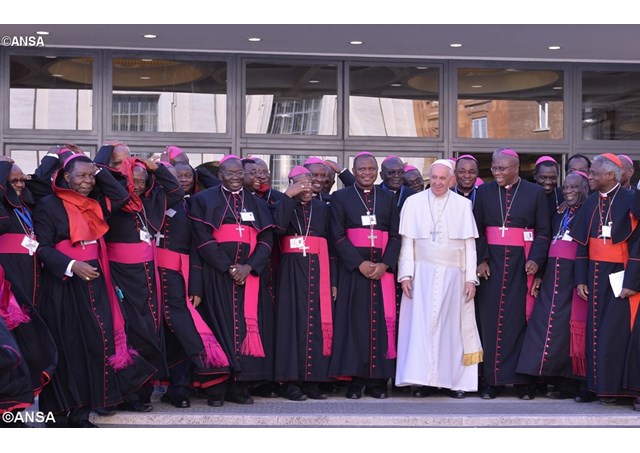
BOMBSHELL PHOTO TAKEN TODAY! POPE FRANCIS IS WITH THE AFRICANS AND SIDES WITH THEM! DEO GRATIAS!

PROPAGANDA WHICH PRODUCES THE YUCK FACTOR AND A DEEP FEELING OF SADNESS
I will no longer buy Campbell products or whoever the company that produces it.
Recently I saw this commercial on television and had a visceral negative reaction to it, a sick feeling in my stomach. It didn't make me want to go and buy any soup let alone drink it.
I hope these are just actors. But I thought to myself how sad that this little boy didn't have a mother in the home and that two men were acting this way with him and confusing him in the process about fatherhood.
Pope Francis has said that it is a basic human right that a child should have one father and one mother. We know that this doesn't always happen because of death, abandonment or divorce but usually not intentionally contrived.
How sad for this small child, how tragic! No mother! Do you sell soup by glorifying a child's victim-hood and tragedy? I think not! That's why I am staying as far away from Campbell's as possible!
Recently I saw this commercial on television and had a visceral negative reaction to it, a sick feeling in my stomach. It didn't make me want to go and buy any soup let alone drink it.
I hope these are just actors. But I thought to myself how sad that this little boy didn't have a mother in the home and that two men were acting this way with him and confusing him in the process about fatherhood.
Pope Francis has said that it is a basic human right that a child should have one father and one mother. We know that this doesn't always happen because of death, abandonment or divorce but usually not intentionally contrived.
How sad for this small child, how tragic! No mother! Do you sell soup by glorifying a child's victim-hood and tragedy? I think not! That's why I am staying as far away from Campbell's as possible!
IS POPE FRANCIS A PAPAL GENIUS? GIVING HIS HOLINESS THE BENEFIT OF THE DOUBT!

But what has happened at this synod and the last is something that Popes Paul VI, John Paul II and Benedict XVI would not have allowed. They would have ruled with an iron fist and not put up with ugly comments directed at each other by cardinals and bishops.
But because of that iron fist, divisions and polarization festered under the facade of tranquility and agreement, a faux unity as it were.
While I am not clairvoyant, although some say that I am, I believe that Pope Francis will issue a document of some kind in the coming months, probably before the Year of Mercy begins December 8th.
He will be what the word "pontiff" means, a bridge builder between the polarized forces in the Church which we now know includes cardinals and bishops as well as the laity.
But he will bridge the gap between orthodoxy and heterodoxy.
Here is a good article by Mary Jo Anderson of Catholic World Report well worth reading:
Synod work has slowed slightly, as the bishops digest the reports of
their small language based discussion groups. The official schedule is
now about a half day behind. It's remarkable that, considering the
gravity and depth of their discussions, that the schedule is only a few
hours delayed. And, this is good. It means that bishops have taken the
task so seriously that a pause to insure better amendments, more
discernment and consultation may yet bring forth a final document, based
on the Intrumentum Laboris, the working document. As it stands, that is not a certainty.
Closer analysis of the third edition of the small group reports (which corresponds to the three parts of the Instrumentum Laboris)
indicates no expectation that there will be any pastoral change in
favor of the “penitential path” for divorced and civilly remarried to
receive Communion. A majority of bishops recognize that admitting
“irregular relationships” to Communion is an assault on the entire
sacramental economy and the theology of grace. Furthermore, if the
Church can ignore Jesus’ own direct teaching on marriage, it raises the
question, “Who do you say that I am?”
That's the bottom line of this entire synod: major issues that affect
families worldwide were simply overwhelmed by the “euro-centric” gambit
to achieve “flexibility” for sexual relationships outside the teaching
of the Church.
The much discussed “Kasper proposal” is favored, at best, by about ten
percent of the bishops gathered for the Synod. Some modified version
might be accepted by another ten percent. But even that will not salvage
the plan put forward for two years by the “reformers.” A two-thirds
majority is required for a paragraph to pass into the final document. As
one Vaticanista quipped, “Even Kasperites can count.”
Those who have followed the Synod deliberations will perceive that the
likely failure of the gambit is a great relief for orthodox Catholics,
but an equally great disappointment for “progressives” who have held
exalted hopes of change, at least in pastoral practice. To review
briefly, the “Kasper Proposal” is Synod shorthand for three main changes
in pastoral practice: re- admittance of divorced and civilly remarried
Catholics to Communion, some accommodation for cohabiting couples who
hope to marry, and some “opening” to homosexual pairs. The latter was
always a nebulous proposition. The assumption has been that “opening” to
same-sex pairs was intended as a bargaining chip that would be
jettisoned if compromise could be found for divorced and civilly
remarried.
Still, those proposals have the sympathy of much of the secular press
who have built an expectation that under this pope the Kasper Proposals
would find an advocate. During today’s Vatican press briefing there was
agitation; tense questions were aimed at Cardinal Gracias of India who
serves on the document drafting committee. Reporters realized that the
votes simply aren't there, but perhaps the reason is the process (a
process that, coming into the Synod, seemed to favor their goal). Most
questions addressed to Cdl. Gracias targeted the methodology that will
result in a final document: Who was chosen to collate the amendments
from the small groups? Who will decide on the exact wording of
amendments? Why is “old” theology like Familiaris Consortio
cited? Will some accommodation be achieved, such as pastoral emphasis on
an “internal forum” concept of conscience be in the final document?
The fate of the final document hinges on the work of the draft
commission, huddled together today until the early evening. The
Herculean task of the commission is to faithfully incorporate the 1000+ modi ( amendments) from all the circoli minores into their draft. Many of the modi overlap,
but even weaving together 300 or so different amendments to the working
document is daunting. It is reportedly nearing a hundred pages.
However, the overarching question isn't if the work can be
completed,rather can it find wording that is acceptable to two-thirds of
the bishops?
Tonight, in the Synod Hall, the first draft of the final document will
be summarized by Cardinal Erdo, in Italian with simultaneous
translation. Bishops will be given a written copy of the draft, in
Italian, to take to their rooms and review overnight. (There is also
whispered expectation that the draft will be leaked to the press.)
The use of Italian is another element in the fate of the final document.
Joan Lewis, EWTN’s Vatican Bureau chief, mused today about the
explosive situation caused last year by a poor translation of the
Extraordinary Synods’s mid-term report. It contained a controversial
proposal to welcome and “value” the contributions of homosexuals. The
secular journalists latched onto that concept of “valuing” practicing
homosexuals in the Church. There were headlines whirling around the
globe announcing new “opening and valuing” of gay persons by the
Catholic Church.
To make the situation more combustible, that mid-term report had not
even been seen by the bishops yet. A copy was given to the press, but
had not yet been given to Synod participants. When they had frantic
calls from home dioceses about web reports permitting “Gay is OK!”
bishops blanched. The following day, Cardinal Napier of Durban, during
the daily briefing to press, said emphatically that the bishops had
approved no such proposal. Some journalists grew indignant: it was in
the text. “Yes” Cdl.Napier replied, but that text had not been seen by
the bishops, and as it turns out, the translation was faulty. The
Italian word for “evaluate” had been translated into English as “value.”
This spongy language situation rests on those responsible for the
translations. And presumably, in their rooms tonight, bishops won't have
translators standing by.
Those who yearn for relaxed pastoral approach for persons in “irregular relationships” won't be folding their tents,
however. In small clutches in the Sala Stampa (Vatican Press
Office) reporters for progressive Catholic publications discuss the
“Synodal Church” which is code-speak for “the discussion isn't over.”
Increasingly we’ve heard from bishops—see Archbishop Chaput's most recent column,
for example—that the unexpected result of the Synod has been the
intense sharing among bishops, a heightened fraternal spirit, a true
experience of synodality. Despite the battle described above, the
majority of bishops have found confederates from a continent away. There
is no quicker manner to form friendships than to work intensely
together for three weeks. For, if no final document is reached, or if
Pope Francis thanks everyone for their work, but chooses not to produce a
post-synod exhortation, what was this Synod about? Only heaven
knows,but one terrestrial suggestion has been that when the next
conclave meets, these men will already have taken the measure of their
brothers.
THIS SUNDAY IS CHRIST THE KING SUNDAY, WELL AT LEAST AT OUR 12:10 PM EXTRAORDINARY FORM HIGH MASS THAT IS!

Now that we have moved our Extraordinary Form High Mass from the first Sunday of the month at 2 pm to the last Sunday of the month at our normally scheduled 12:10 PM Mass, this will be the first time since the revised Ordinary Form Calendar took effect in 1970 that Christ the King Sunday has been celebrated at St. Joseph Church on the last Sunday of October. Historic, no?
In my humble opinion, though, despite any correlation with Christ the King Sunday on the last Sunday of October and Reformation Sunday, I prefer Christ the King to be the Sunday prior to the First Sunday of Advent in the Ordinary Form. What a great way to conclude a liturgical year and then start all over the following First Sunday of Advent.
At any rate, this is the Mass for our 12:10 PM Mass for Christ the King, this Sunday, October 25th which is also Reformation Sunday.
|
||||||||||||||||||||||||||||
Thursday, October 22, 2015
JUST TO REMIND EVERYONE: THE SYNOD IN ROME IS NOT A PARLIAMENT, IT SIMPLY ADVISES THE POPE JUST AS A PASTORAL COUNCIL SIMPLY ADVISES A PASTOR

On Saturday, the bishops will meet to hear the final draft and vote on the document paragraph by paragraph. There will also be a vote on the document as a whole. Thereafter the document will be presented to Pope Francis. Cardinal Gracious reminded the media that this document is intended for the Pope, to help and advise him. It is not being written for the world.
DANCES WITH WOLVES

Pope Francis has not had to face the white martyrdom of Pope Benedict as he has received accolades from the liberal press and progressives worldwide. But it appears things are changing. The question is who are the wolves of Pope Francis' papacy? Is it the same crowd disguised now who wish to reorient the Church a la 1970's and the Anglican Communion and fear time is running out:
Vatican Says Rumors About Pope's Health Are Attempt To Undermine Him
After repeatedly denying reports that Pope Francis has a benign brain tumor Wednesday, the Vatican is going a step further, calling the rumor "false information" that's meant to destabilize the papacy. The doctor named in the reports also says they're untrue.The stringent denials came after the Quotidiano Nazionale and other Italian newspapers reported that in recent months, Francis had been visited by a Japanese doctor to diagnose a tumor.
The reports emerged as Francis, 78, has been attending a large gathering of bishops, where three weeks of meetings have been marked by disagreements over how the Church approaches marriage, sex and homosexuality.
From Rome, NPR'S Sylvia Poggioli reports:
"The suggestion that the tumor report was part of a plot against Pope Francis was put forth by the official Vatican daily L'Osservatore Romano. It wrote, "the timing of the claim reveals there was an intent to manipulate and cause a dust storm of confusion."
"Cardinal Walter Kasper said it was part of an effort to undermine the bishops' assembly
And Buenos Aires Archbishop Victor Manuel Fernandez said spreading false information to discredit a person in power is as old as antiquity. It's an attempt to make Francis appear weak, he added, and in need to be replaced.
The doctor named in the Italian reports is Takanori Fukushima, a neurosurgeon who lives in North Carolina and works at the Duke University Medical Center and the Carolina Neuroscience Institute."Several Vatican analysts say the tumor claim in an Italian right-leaning daily insinuated the pope's mental condition is responsible for alleged chaos in the church."
"I have never medically examined the pope," Fukushima said in a statement released by Duke last night and relayed by the AP. "These stories are completely false."
As the Raleigh News & Observer reports, Fukushima has met Pope Francis at least twice – once last September and again in January, according to photos and blog entries posted by the brain surgeon. The newspaper says that in those cases, Fukushima visited the Holy See during trips to perform surgeries in Europe.
REV. THOMAS REESE OF THE NATIONAL CHISMATIC REPORTER (NCR) NOT HAPPY WITH THE SYNOD AND THAT IS A GOOD THING: BE HAPPY; NOT SAD!

These are some excerpts of his commentary on the Synod from his newspaper, the National Chistmatic Reporter (NCR) which you can read in its entirety there.
The pope and the bishops argue that the synod is about the family and decry the media’s focus on homosexuality and divorce, but there is no question that these are the topics around which the bishops have conflict. There is little disagreement over other issues.
The problem is that conservatives do not see divorce and remarriage as simply one sin, which can be confessed and forgiven. They see it as a continuing sin each time the couple has sex. Since they will not stop having sex, they cannot go to Communion. There is no willingness to accept the first marriage as irrevocably broken and destroyed, which would allow the parties to move on with their lives.
One bishop spoke of a child who at his First Communion gave part of his host to his mother and father who were not allowed to go to Communion. Does this child understand something that the bishops do not?
But some bishops would like the church to stop using terms like “intrinsically disordered,” which is heard as demeaning by gays. Even language such as “hate the sin, love the sinner” is seen by some bishops as not helpful since sexuality is experienced as intrinsic to a person’s identity.
On the other hand, some bishops are obsessive in their opposition to homosexuality. Some still see it as a lifestyle choice. Dr. Anca-Maria Cernea, a lay auditor and head of the Association of Catholic Doctors in Romania, gave an impassioned speech at the synod linking homosexuality and Marxism while arguing that homosexuals can be cured.
The bishops are currently trapped in the old theology they learned in the seminary. They are afraid of new ideas and are not consulting with theological experts who could show them other options. As a result, it is unlikely that new pastoral approaches will be coming forth from this synod.
Some progressives still hope that Pope Francis can somehow magically pull victory from the jaws of defeat. I don’t think so. Pope Francis is conflicted. His pastoral instincts are leading him in one direction, but his respect for collegiality is stopping him from getting too far out in front of the bishops.
Never in my lifetime have I heard of bishops and cardinals being so disrespectful of a pope, challenging his organization of this synod, even a few referring to him as a Protestant and threatening a fractured church if he goes against their wishes.
The pope may have the support of the people, but could he win a vote of confidence from this synod?
RUSSIAN ORTHODOX METROPOLITAN NAILS IT AT THE SYNOD--IF WE WANT AUTHENTIC ECUMENISM, WE NEED TO GO THE WAY OF THE ORTHODOX ORTHODOX AND NOT THE HETERODOX PROTESTANTS
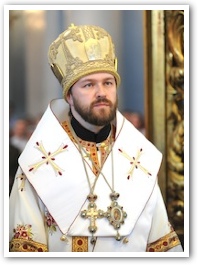
Your Holiness!
Your Beatitudes, Eminences and Excellencies!
On behalf of His Holiness Patriarch Kirill of Moscow and All Rus I extend fraternal greetings to you on the occasion of the Fourteenth Ordinary General Assembly of the Synod of Bishops of the Catholic Church on the theme of the family.
In our restless and disturbing world the human person needs a firm and unshakable foundation upon which he can rest and upon which he can build his life with confidence. At the same time, secular society, aimed primarily at the gratification of individual needs, is incapable of giving the human person clear moral direction. The crisis of traditional values which we see in the consumer society leads to a contradiction between various preferences, including those in the realm of family relationships. Thus, feminism views motherhood as an obstacle to a woman’s self-realization, while by contrast having a baby is more often proclaimed as a right to be attained by all means possible. More often the family is viewed as a union of persons irrespective of their gender, and the human person can ‘choose’ his or her gender according to personal taste.
On the other hand, new problems are arising which have a direct impact on traditional family foundations. Armed conflicts in the contemporary world have brought about a mass exodus from areas gripped by war to more prosperous countries. Emigration often leads to a disruption of family ties, creating at the same time a new social environment in which unions of an inter-ethnic and inter-religious nature arise.
These challenges and threats are common to all the Christian Churches which seek out answers to them, proceeding from the mission that Christ has placed upon them – to bring humanity to salvation. Unfortunately, in the Christian milieu too we often hear voices calling for the ‘modernization’ of our ecclesial consciousness, for the rejection of the supposedly obsolete doctrine of the family. However, we ought never to forget the words of St. Paul addressed to the Christians of Rome: ‘And be not conformed to this world: but be ye transformed by the renewing of your mind, that ye may prove what is that good, and acceptable, and perfect, will of God’ (Rom. 12: 2).
The Church is called to be a luminary and beacon in the darkness of this age, and Christians to be the ‘salt of the earth’ and ‘light to the world’. We all ought to recall the Saviour’s warning: ‘If the salt have lost his savour, wherewith shall it be salted? It is thenceforth good for nothing, but to be cast out, and to be trodden under foot of men’ (Matt. 5: 13-14). The salt which has lost its savour are those Protestant communities which call themselves Christian, but which preach moral ideals incompatible with Christianity. If in this type of community a rite of blessing of same-sex unions is introduced, or a lesbian so called ‘bishop’ calls for the replacement of crosses from the churches with the Muslim crescent, can we speak of this community as a ‘church’? We are witnessing the betrayal of Christianity by those who are prepared to accommodate themselves to a secular, godless and churchless world.
The authorities of some European countries and America, in spite of numerous protests, including those by Catholics, continue to advocate policies aimed at the destruction of the very concept of the family. They not only on the legislative level equate of the status of the same-sex unions to that of marriage but also criminally persecute those who out of their Christian convictions refuse to register such unions. Immediately after the departure of Pope Francis from the USA, President Barack Obama openly declared that gay rights are more important than religious freedom. This clearly testifies to the intention of the secular authorities to continue their assault on those healthy forces in society which defend traditional family values. Catholics here are found at the forefront of the struggle, and it is against the Catholic Church that a campaign of discrediting and lies is waged. Therefore courage in vindicating Christian beliefs and fidelity to Church tradition are particularly necessary in our times.
Today, when the world ever more resembles that foolish man ‘which built his house on the sand’ (Matt. 7: 26) it is the Church’s duty to remind the society of its firm foundation of the family as a union between a man and woman created with the purpose of giving birth to and bringing up children. Only this type of family, as ordained by the Lord when he created the world, can forestall or at least halt temporarily modern-day society’s further descent into the abyss of moral relativism.
The Orthodox Church, like the Catholic Church, has always in her teaching followed Holy Scripture and Sacred Tradition in asserting the principle of the sanctity of marriage founded on the Saviour’s own words (Matt. 19: 6; Mk. 10: 9). In our time this position should be ever more strengthened and unanimous. We should defend it jointly both within the framework of dialogue with the legislative and executive branches of power of various countries, as well as in the forums of international organizations such as the UN and the Council of Europe. We ought not to confine ourselves to well-intentioned appeals but should by all means possible ensure that the family is legally protected.
Solidarity among the Churches and all people of good will is essential for guarding the family from the challenges of the secular world and thereby protecting our future. I hope that one of the fruits of the Assembly of the Synod will be the further development of Orthodox-Catholic co-operation in this direction.
I wish you peace, God’s blessing and success in your labours.
Wednesday, October 21, 2015
BOMBSHELL: SHADOW POPE AT THE SYNOD? ONE OF THE POPES INCAPACITATED?


Synod dispute over Communion issue rachets up
Thus this bombshell statement from Cardinal Marx (as reported by CRUX and you can read the entire depressing article there) which highlights in a way I have never seen in my 61 years as a Catholic that we may well be on the verge of a schism with either Germany or the Vatican leading it and one of the two popes behind it:The dispute between conservative Cardinal George Pell of Australia and the more liberal German bishops broke out into the open Wednesday, with the Germans saying they felt “dismay and sadness” that Pell had fostered division in the synod with his recent public remarks.
The German bishops favor a proposal put forth by German Cardinal Walter Kasper to allow divorced Catholics who remarried without an annulment of their first marriage to receive Communion, as determined on a case-by-case basis. Pell and other conservatives oppose the idea, fearing it will dilute the Church’s teaching that marriage is indissoluble.
German Cardinal Reinhard Marx said (Cardinal) Pell’s recent remarks that set up the disagreement as a battle between supporters of Kasper and followers of Pope Emeritus Benedict XVI was unhelpful and “contradicts the spirit of cooperation.”
And then this little ditty from John Allen from the same Crux publication today!
The German report also featured an unusual public complaint about others in the synod, expressing “sadness and dismay” over the public comments of some unnamed participants.
During the daily news briefing, Cardinal Reinhard Marx of Germany lifted the veil by naming whom they had in mind: Australian Cardinal George Pell, who in an interview with Le Figaro, had phrased the division over the divorced and remarried as a battle between followers of German Cardinal Walter Kasper and Emeritus Pope Benedict XVI, using his given name, Ratzinger.
Finally, the day also got a jolt from a report in an Italian newspaper that Pope Francis has a curable brain tumor. That claim has been denied twice by the Vatican in remarkably strong terms as “unfounded,” “seriously irresponsible” and “completely unjustifiable.”
Though there was no overt evidence that the report was timed to coincide with the synod, some observers in Rome couldn’t help but wonder if it was a preemptive strike — a way of casting doubt on the solidity of the pope’s judgment and thus putting the credibility of whatever decisions he’ll make based on the synod into doubt.
MY FINAL COMMENT: All I can say is WOW and UNBELIEVABLE!
Subscribe to:
Posts (Atom)