Translate

Tuesday, April 20, 2010

ON HIS FIFTH ANNIVERSARY, THE PERFECT STORM AGAINST POPE BENEDICT AND HIS REFORM OF THE REFORM

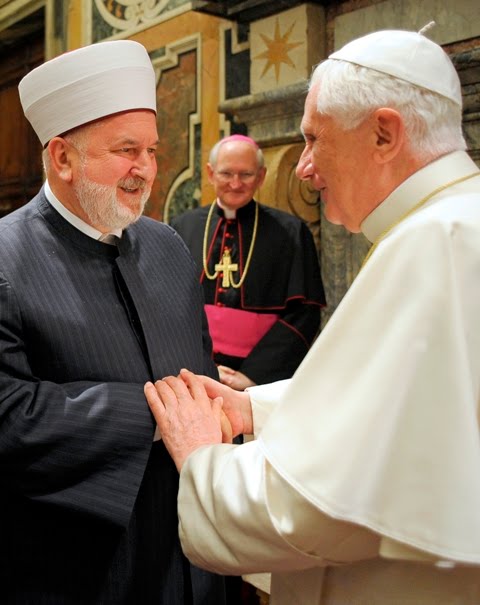
WHAT DO ALL THE IMAGES BELOW HAVE IN COMMON? THESE ARE THE FORCES AT WORK AGAINST THE TRUE CHURCH OF GOD AND GOD'S APPOINTED LEADER OF THE CHURCH, POPE BENEDICT THE XVI. IT'S TIME TO TAKE A STAND AND SUPPORT OUR CHURCH AND THE AGENDA OF THE REFORM OF POPE BENEDICT XVI AND TO CALL CATHOLICS WHO ARE COMPLICIT IN THE CONSPIRACY TO TAKE DOWN POPE BENEDICT AND THE TRUE CHURCH OF VATICAN II (NOT THE SPIRIT OF VATICAN II CHURCH, AS THE ANTI POPE, HANS KUNG ELOQUENTLY DESCRIBES IN THE POST BELOW THIS ONE). POPE BENEDICT KNOWS WHAT HE IS DOING. MAY THE POPE HAVE MANY MORE YEARS TO OVERTURN THE "SPIRIT OF VATICAN II ANTI-CHURCH" AND STAND UP TO THE LIBERAL FORCES IN THE WORLD THAT SEEK TO CONTROL THE CHURCH, THE POPE AND ALL CATHOLICS--THE DICTATORSHIP OF LIBERALISM--POLITICAL, SECULAR AND RELIGIOUS!

This lawyer, Jeff Anderson has been at the core of old documents given to the New York Times and AP, both news outlets that have not been forthright in reporting to the public that this lawyer's intent is to "sue the s--t" out of the Catholic Church. He has made millions over lawsuits in this country. He is at the core of the recent media blitz and false reporting concerning two major cases of priest abuse from 30 to 50 years ago. I think this man may well be described as an "anti-Christ." He wants to interrogate Pope Benedict in court and sue the s--t out of the Vatican to make hundreds of millions for himself and bankrupt the universal Church.

Today's standards applied to clergy sex abuse of the 1970's and bishops' actions well over 50 years ago!

Pope Benedict allowing the Tridentine Mass without restrictions (a liberal move!)

Pope Benedict allowing disaffected Anglicans, clergy and laity to come into full communion of the Catholic Church with their Anglican Customs and traditions, including married priests

Pope Benedict speaks truth to Muslims

Pope Benedict speaks truth to Jews

The pope has no authority to authorize women deacons, priests or bishops, he is also investigating religious orders of women as he has done so for men and seminaries, he is pro-life, against artificial birth control, the use of condoms, etc--all highly charged, polarizing issues in the world and the Church

The pope emphasizes that the Catholic Church understands marriage as a divine institution between one man and one woman for a lifetime. This flies in the face of proponents of gay marriage and the gay lobby is outraged against any Church that stands in their way, in particular the Catholic Church and her pope.


The perfect storm against Pope Benedict and the Catholic Church has been created by left wing liberal forces in our lawyer generated litigious society, world politics, the media and sadly in our own Church. Jeff Anderson a lawyer in Minnesota desires to bring down the Catholic Church financially as a result of the sex abuse scandal. The Pope is accused of covering up every sex abuse case since the 1960's, fifty years ago and forward.

Liberal Anglicans are outraged that the Pope has saw fit to invite disaffected conservative, traditional Anglicans and their pastors to join the full communion of the Catholic Church. Pope Benedict has the audacity to teach what the Catholic Church believes, that the Catholic Church is the One True Church and Protestant denominations are not true Churches, but "communions separated from the true Church which is the Catholic Church and the Orthodox Churches." As well, the Holy Father has no authority to ordain women, will not relax the Church's teaching on artificial birth control and is concerned about some orders of Women Religious who have chosen a path of self-destruction of their orders for the sake of liberalism, political and religious. The Holy Father is opposed to radical feminism in the Church that is built not on Church teaching but secularism.

Tied into radical feminism is the radical gay lobby and their political agenda to redefine marriage. The Holy Father is a symbol of oppression and repression to them as is the Catholic Church. There are strong forces in the main stream media that will do anything to bring down this pope and the Church to help the radical gay agenda move forward unimpeded.

Pope Benedict has the audacity to allow the Tridentine Mass without restrictions, angering liberal hippie theologians, bishops, priests and laity (mostly aging ones, the Pope's contemporaries) who absolutely despise him and his leadership in seeking the reform of the reform and the ousting of the "Spirit of Vatican II" ideology that as so infected the Church since the drunken euphoria of the 1960's. In other words, Pope Benedict wants all Catholics to worship the true God, not the false god that so many have turned the "spirit of Vatican II anti-Church" into. These same liberal forces in the Church are seeking revenge on Pope Benedict who as Cardinal Ratzinger put many of their heroes on trial and stripped them of their teaching credentials!

Pope Benedict challenges extremism in Islam and its violent approach to the world and its own members which then causes violent outrage over his words thus proving the Holy Father's well made point.

The pope desires to canonize Pope Pius XII who is bitterly maligned by some Jews and the main stream media. The pope tries to heal schism in the Church by reaching out to a schismatic sect in the Church which has an "anti-Semitic" bishop and the press and some in the Jewish community spew forth contempt toward the pope for doing so and try to even paint Pope Benedict as "anti-Semitic."


THIS ARTICLE IN THE NEW YORK TIMES IS ACTUALLY FAIR AND BALANCED BUT INADVERTENTLY CONFIRMS MY EDITORIALIZING ABOVE. NOTE ESPECIALLY THE PARAGRAPH I HAVE MADE IN BOLD PRINT:

NEW YORK TIMES
Pope Says He Faces Crisis With Cardinals’ Support
By ELISABETTA POVOLEDO
Published: April 19, 2010


VATICAN CITY — Buffeted by a sexual abuse scandal that is quickly defining his papacy, Pope Benedict XVI marked the fifth anniversary of his election on Monday by telling a group of cardinals that he did not feel alone at the head of what he called a “wounded and sinner” church.
Related

His remarks seemed yet another small and indirect reference to the growing sexual abuse scandal, which has focused more directly on whether Benedict, before he became pope, and his subordinates acted strongly enough against pedophile priests. Under increasing pressure to address the issue more forcefully, Benedict spoke a day after meeting with abuse victims during a short pilgrimage to Malta.

At the anniversary lunch here on Monday, he told 46 cardinals that he “very strongly feels that he is not alone; that he has on his side the entire college of cardinals, sharing with him tribulations and consolations,” according to a front-page article that afternoon in L’Osservatore Romano, the Vatican newspaper.

He did not directly bring up the crisis, the paper said, but thanked the cardinals for their help at a time when the church seemed to press forward “amid the persecutions of the world and the consolations of God.”

When Benedict succeeded Pope John Paul II five years ago, many Vatican experts predicted that Benedict, a bookish scholar with a strong theological bent, would not inspire the same sort of public adoration as his predecessor. But few could have predicted that his papacy would be characterized by a series of controversies that have alienated Muslims, Jews, Anglicans and even many Roman Catholics.

“This has been a papacy of cyclical crises,” said Marco Politi, a journalist who covers the Vatican, citing a series of missteps: the citation of a disparaging comment about Islam in a 2006 lecture that angered Muslims; support for the canonization of the controversial pope during World War II, Pius XII; and the 2009 attempt to rehabilitate a Holocaust-denying bishop.

“The issue is that Benedict is a great thinker and theologian and preacher, but he doesn’t have the temperament of a religious political leader,” Mr. Politi said. He added that the Vatican curia had been of little help to the pope.

Benedict’s greatest challenge, however, may be to deal with the sexual abuse scandal that has rocked the church in recent weeks, with cases mushrooming in the United States and Europe, including the pope’s native Germany. Benedict returned Sunday from Malta, where he met and prayed with abuse victims, as he has several times in the past in addressing sexual scandals around the world generally.

Speaking after Monday’s lunch, Cardinal Angelo Sodano, dean of the college of cardinals, thanked the pope for leading the church “with great generosity.” The college of cardinals “is a large family, ever united with the successor to Peter,” in particular in the face of “the challenges that the modern world poses to each disciple of Christ,” Cardinal Sodano said in his speech, published in L’Osservatore Romano.

My final comment: Some would say the pope should not be so polarizing and simply get with the times and allow the Catholic Church to be like the Anglican Communion and then there wouldn't be such the polarization that he has caused. But I ask you, wasn't Jesus Christ just as polarizing in His day and in the Church as He now lives in the Holy Spirit, dividing people just as He did in His public ministry?

(Matthew 10:34) - "Do not think that I came to bring peace on the earth; I did not come to bring peace, but a sword. 35"For I came to set a man against his father, and a daughter against her mother, and a daughter-in-law against her mother-in-law; 36and a man’s enemies will be the members of his household."
(Luke 12:51) - "Do you suppose that I came to grant peace on earth? I tell you, no, but rather division; 52for from now on five members in one household will be divided, three against two, and two against three..."

Sunday, April 18, 2010

THE ANTI POPE AND FAILED THEOLOGIAN HANS KUNG WRITES THE SAME OLD, SAME OLD TIRED 1960'S TRASH!

THE ANTI POPE, HANS KUNG, PRAY FOR HIS CONVERSION!

You would think that this poor soul would go off in silence and pray for the Church that he helped to weaken and deconstruct. Yes, I told you, forces in the world and in the Church are exploiting the abuse of minors and the Church's woes at this time to reassert a failed agenda that failed in the 1960's! Blind guides all of them!

HANS KÜNG

Pope Benedict has made worse just about everything that is wrong with the Roman Catholic Church and is directly responsible for engineering the global cover-up of child rape perpetrated by priests, according to this open letter to all Catholic bishops

VENERABLE BISHOPS,

Joseph Ratzinger, now Pope Benedict XVI, and I were the youngest theologians at the Second Vatican Council from 1962 to 1965. Now we are the oldest and the only ones still fully active. I have always understood my theological work as a service to the Roman Catholic Church. For this reason, on the occasion of the fifth anniversary of the election of Pope Benedict XVI, I am making this appeal to you in an open letter. In doing so, I am motivated by my profound concern for our church, which now finds itself in the worst credibility crisis since the Reformation. Please excuse the form of an open letter; unfortunately, I have no other way of reaching you.

I deeply appreciated that the pope invited me, his outspoken critic, to meet for a friendly, four-hour-long conversation shortly after he took office. This awakened in me the hope that my former colleague at Tubingen University might find his way to promote an ongoing renewal of the church and an ecumenical rapprochement in the spirit of the Second Vatican Council.

Unfortunately, my hopes and those of so many engaged Catholic men and women have not been fulfilled. And in my subsequent correspondence with the pope, I have pointed this out to him many times. Without a doubt, he conscientiously performs his everyday duties as pope, and he has given us three helpful encyclicals on faith, hope and charity. But when it comes to facing the major challenges of our times, his pontificate has increasingly passed up more opportunities than it has taken:

Missed is the opportunity for rapprochement with the Protestant churches: Instead, they have been denied the status of churches in the proper sense of the term and, for that reason, their ministries are not recognized and intercommunion is not possible.

Missed is the opportunity for the long-term reconciliation with the Jews: Instead the pope has reintroduced into the liturgy a preconciliar prayer for the enlightenment of the Jews, he has taken notoriously anti-Semitic and schismatic bishops back into communion with the church, and he is actively promoting the beatification of Pope Pius XII, who has been accused of not offering sufficient protections to Jews in Nazi Germany.

The fact is, Benedict sees in Judaism only the historic root of Christianity; he does not take it seriously as an ongoing religious community offering its own path to salvation. The recent comparison of the current criticism faced by the pope with anti-Semitic hate campaigns – made by Rev Raniero Cantalamessa during an official Good Friday service at the Vatican – has stirred up a storm of indignation among Jews around the world.

Missed is the opportunity for a dialogue with Muslims in an atmosphere of mutual trust: Instead, in his ill-advised but symptomatic 2006 Regensburg lecture, Benedict caricatured Islam as a religion of violence and inhumanity and thus evoked enduring Muslim mistrust.

Missed is the opportunity for reconciliation with the colonised indigenous peoples of Latin America: Instead, the pope asserted in all seriousness that they had been “longing” for the religion of their European conquerors.

Missed is the opportunity to help the people of Africa by allowing the use of birth control to fight overpopulation and condoms to fight the spread of HIV.

Missed is the opportunity to make peace with modern science by clearly affirming the theory of evolution and accepting stem-cell research.

Missed is the opportunity to make the spirit of the Second Vatican Council the compass for the whole Catholic Church, including the Vatican itself, and thus to promote the needed reforms in the church.

This last point, respected bishops, is the most serious of all. Time and again, this pope has added qualifications to the conciliar texts and interpreted them against the spirit of the council fathers. Time and again, he has taken an express stand against the Ecumenical Council, which according to canon law represents the highest authority in the Catholic Church:

He has taken the bishops of the traditionalist Pius X Society back into the church without any preconditions – bishops who were illegally consecrated outside the Catholic Church and who reject central points of the Second Vatican Council (including liturgical reform, freedom of religion and the rapprochement with Judaism).

He promotes the medieval Tridentine Mass by all possible means and occasionally celebrates the Eucharist in Latin with his back to the congregation.

He refuses to put into effect the rapprochement with the Anglican Church, which was laid out in official ecumenical documents by the Anglican-Roman Catholic International Commission, and has attempted instead to lure married Anglican clergy into the Roman Catholic Church by freeing them from the very rule of celibacy that has forced tens of thousands of Roman Catholic priests out of office.

He has actively reinforced the anti-conciliar forces in the church by appointing reactionary officials to key offices in the Curia (including the secretariat of state, and positions in the liturgical commission) while appointing reactionary bishops around the world.

Pope Benedict XVI seems to be increasingly cut off from the vast majority of church members who pay less and less heed to Rome and, at best, identify themselves only with their local parish and bishop.

I know that many of you are pained by this situation. In his anti-conciliar policy, the pope receives the full support of the Roman Curia. The Curia does its best to stifle criticism in the episcopate and in the church as a whole and to discredit critics with all the means at its disposal. With a return to pomp and spectacle catching the attention of the media, the reactionary forces in Rome have attempted to present us with a strong church fronted by an absolutistic “Vicar of Christ” who combines the church’s legislative, executive and judicial powers in his hands alone. But Benedict’s policy of restoration has failed. All of his spectacular appearances, demonstrative journeys and public statements have failed to influence the opinions of most Catholics on controversial issues. This is especially true regarding matters of sexual morality. Even the papal youth meetings, attended above all by conservative-charismatic groups, have failed to hold back the steady drain of those leaving the church or to attract more vocations to the priesthood.

You in particular, as bishops, have reason for deep sorrow: Tens of thousands of priests have resigned their office since the Second Vatican Council, for the most part because of the celibacy rule. Vocations to the priesthood, but also to religious orders, sisterhoods and lay brotherhoods are down – not just quantitatively but qualitatively. Resignation and frustration are spreading rapidly among both the clergy and the active laity. Many feel that they have been left in the lurch with their personal needs, and many are in deep distress over the state of the church. In many of your dioceses, it is the same story: increasingly empty churches, empty seminaries and empty rectories. In many countries, due to the lack of priests, more and more parishes are being merged, often against the will of their members, into ever larger “pastoral units,” in which the few surviving pastors are completely overtaxed. This is church reform in pretense rather than fact!

And now, on top of these many crises comes a scandal crying out to heaven – the revelation of the clerical abuse of thousands of children and adolescents, first in the United States, then in Ireland and now in Germany and other countries. And to make matters worse, the handling of these cases has given rise to an unprecedented leadership crisis and a collapse of trust in church leadership.

There is no denying the fact that the worldwide system of covering up cases of sexual crimes committed by clerics was engineered by the Roman Congregation for the Doctrine of the Faith under Cardinal Ratzinger (1981-2005). During the reign of Pope John Paul II, that congregation had already taken charge of all such cases under oath of strictest silence. Ratzinger himself, on May 18th, 2001, sent a solemn document to all the bishops dealing with severe crimes ( “epistula de delictis gravioribus” ), in which cases of abuse were sealed under the “secretum pontificium” , the violation of which could entail grave ecclesiastical penalties. With good reason, therefore, many people have expected a personal mea culpa on the part of the former prefect and current pope. Instead, the pope passed up the opportunity afforded by Holy Week: On Easter Sunday, he had his innocence proclaimed “urbi et orbi” by the dean of the College of Cardinals.

The consequences of all these scandals for the reputation of the Catholic Church are disastrous. Important church leaders have already admitted this. Numerous innocent and committed pastors and educators are suffering under the stigma of suspicion now blanketing the church. You, reverend bishops, must face up to the question: What will happen to our church and to your diocese in the future? It is not my intention to sketch out a new program of church reform. That I have done often enough both before and after the council. Instead, I want only to lay before you six proposals that I am convinced are supported by millions of Catholics who have no voice in the current situation.

1. Do not keep silent: By keeping silent in the face of so many serious grievances, you taint yourselves with guilt. When you feel that certain laws, directives and measures are counterproductive, you should say this in public. Send Rome not professions of your devotion, but rather calls for reform!

2. Set about reform: Too many in the church and in the episcopate complain about Rome, but do nothing themselves. When people no longer attend church in a diocese, when the ministry bears little fruit, when the public is kept in ignorance about the needs of the world, when ecumenical co-operation is reduced to a minimum, then the blame cannot simply be shoved off on Rome. Whether bishop, priest, layman or laywoman – everyone can do something for the renewal of the church within his own sphere of influence, be it large or small. Many of the great achievements that have occurred in the individual parishes and in the church at large owe their origin to the initiative of an individual or a small group. As bishops, you should support such initiatives and, especially given the present situation, you should respond to the just complaints of the faithful.

3. Act in a collegial way: After heated debate and against the persistent opposition of the Curia, the Second Vatican Council decreed the collegiality of the pope and the bishops. It did so in the sense of the Acts of the Apostles, in which Peter did not act alone without the college of the apostles. In the post-conciliar era, however, the pope and the Curia have ignored this decree. Just two years after the council, Pope Paul VI issued his encyclical defending the controversial celibacy law without the slightest consultation of the bishops. Since then, papal politics and the papal magisterium have continued to act in the old, uncollegial fashion. Even in liturgical matters, the pope rules as an autocrat over and against the bishops. He is happy to surround himself with them as long as they are nothing more than stage extras with neither voices nor voting rights. This is why, venerable bishops, you should not act for yourselves alone, but rather in the community of the other bishops, of the priests and of the men and women who make up the church.

4. Unconditional obedience is owed to God alone: Although at your episcopal consecration you had to take an oath of unconditional obedience to the pope, you know that unconditional obedience can never be paid to any human authority; it is due to God alone. For this reason, you should not feel impeded by your oath to speak the truth about the current crisis facing the church, your diocese and your country. Your model should be the apostle Paul, who dared to oppose Peter “to his face since he was manifestly in the wrong”! ( Galatians 2:11 ). Pressuring the Roman authorities in the spirit of Christian fraternity can be permissible and even necessary when they fail to live up to the spirit of the Gospel and its mission. The use of the vernacular in the liturgy, the changes in the regulations governing mixed marriages, the affirmation of tolerance, democracy and human rights, the opening up of an ecumenical approach, and the many other reforms of Vatican II were only achieved because of tenacious pressure from below.

5. Work for regional solutions: The Vatican has frequently turned a deaf ear to the well-founded demands of the episcopate, the priests and the laity. This is all the more reason for seeking wise regional solutions. As you are well aware, the rule of celibacy, which was inherited from the Middle Ages, represents a particularly delicate problem. In the context of today’s clerical abuse scandal, the practice has been increasingly called into question. Against the expressed will of Rome, a change would appear hardly possible; yet this is no reason for passive resignation. When a priest, after mature consideration, wishes to marry, there is no reason why he must automatically resign his office when his bishop and his parish choose to stand behind him. Individual episcopal conferences could take the lead with regional solutions. It would be better, however, to seek a solution for the whole church, therefore:

6. Call for a council: Just as the achievement of liturgical reform, religious freedom, ecumenism and inter-religious dialogue required an ecumenical council, so now a council is needed to solve the dramatically escalating problems calling for reform. In the century before the Reformation, the Council of Constance decreed that councils should be held every five years. Yet the Roman Curia successfully managed to circumvent this ruling. There is no question that the Curia, fearing a limitation of its power, would do everything in its power to prevent a council coming together in the present situation. Thus it is up to you to push through the calling of a council or at least a representative assembly of bishops.

With the church in deep crisis, this is my appeal to you, venerable bishops: Put to use the episcopal authority that was reaffirmed by the Second Vatican Council. In this urgent situation, the eyes of the world turn to you. Innumerable people have lost their trust in the Catholic Church. Only by openly and honestly reckoning with these problems and resolutely carrying out needed reforms can their trust be regained. With all due respect, I beg you to do your part – together with your fellow bishops as far as possible, but also alone if necessary – in apostolic “fearlessness” ( Acts 4:29, 31 ). Give your faithful signs of hope and encouragement and give our church a perspective for the future.

With warm greetings in the community of the Christian faith,

Yours, Hans Küng – (New York Times Syndicate) © Hans Küng

NEWS FLASH, POPE MEETS WITH SEX ABUSE VICTIMS IN MALTA

Subsidiarity at work, doing your own thing regardless of what Rome says. With new and more rigid laws in place from Rome to help stem the tide of sex abuse by minors, will bishops follow the pope's lead or continue with business as usual, mismanagement and abuse in all kinds of areas of the Church's sacred trust?

Since becoming Pope, Pope Benedict has met with victims of clergy sexual abuse in the United States, in Australia and now in Malta. Each time he listened to their story and apologized for the pain and suffering inflicted upon them. He has taken serious steps to address this issue worldwide even though progressive Catholics desire subsidiarity rather than Roman rule from the top down. Subsidiarity in many ways has led to a mentality to let the lowest level take care of the problem. Even Cardinal Ratzinger when he was the Archbishop of Munich in the late 70's early 80's may have well bought into the principal of subsidiarity by allowing a person below him to handle disciplinary action toward priests. Also, the common practice of sending priests for psychological counseling and then placing them back into ministry was the mindset throughout the world at this time of euphoria in the Church, that rehabilitation and healing could be sought for just about any human ailment, spiritual, moral, physical and psychological! The Vatican II Church was very optimistic, naively so! At any rate, subsidiarity doesn't seem to have worked very well and now we need micro management of bishops to make sure priests who abuse are not recycled. With new church laws in place Bishops in the future who fail in their responsibilities should face sanctions. With top down clear laws with canonical sanctions and with bottom up obedience to what the Pope is mandating, perhaps we can calm the waters, help victims heal and rebuild the great discipline and trust of the Church. What applies here to stemming sex abuse of minors should also apply to every other important ministry of the Church especially her liturgy. It's time for the bottom up of the Church to obey what Pope Benedict is asking as it concerns the Liturgy, Summorum Pontificum and following the General Instruction of the Roman Missal. If the "Reform of the Reform" was thought not to be needed, let all skeptics cease and desist! We need the "hermeneutic of continuity" with the best of our past not "rupture" in who we are as Catholics!

FROM THE NATIONAL CATHOLIC REPORTER

Victim in Malta: Pope had 'tears in his eyes'
by John L Allen Jr on Apr. 18, 2010


Valletta, Malta -- One of the eight victims of sexual abuse who met Pope Benedict XVI today in Malta described the encounter as "very emotional," saying most of those present were crying, and even the pope had "tears in his eyes."

"I made peace with the church," said Joseph Magro, one of the victims who met the pope.

Magro has been among the most outspoken of ten Maltese men who recently came forward to say they were abused by Catholic priests at a church-run orphanage in the 1980s and 1990s. The revelations shocked this tiny island nation, in part because another of the victims linked his abuse in the orphanage to a horrific murder he committed in 1991, in which he killed a homosexual man with a hammer and then cut his body into pieces with a broken bottle.

Another victim who met the pope, who asked to be described as "Immanuel," said that the victims "will continue the fight for justice," and insisted that they do not want money from the Catholic church.

This was Pope Benedict's third meeting with victims, after previous encounters in the United States in April 2008 and Australia later that same year.

In a briefing today for reporters, the Vatican spokesperson, Fr. Federico Lombardi, described the meeting as "intense" but "serene." The eight victims in the meeting were all male, he said.

Lombardi said the session took place in the chapel of the residence of the papal nuncio, or ambassador, in Malta. It began with a moment of silent prayer, and then Benedict moved near the altar to meet the victims one-by-one, allowing them to say "whatever they wished to say," Lombardi said.

The pope also responded to the victims individually, in either English or Italian, Lombardi said, but did not offer any general remarks.

The meeting concluded with a common prayer in Maltese, and the pope gave each victim a rosary.

The victims were accompanied by two local Maltese bishops, while the pope was joined by a senior Vatican official, his private secretary, and his nuncio in Malta.

On previous occasions when victims have met the pope, their first-blush reactions are generally positive, but over time some have argued that the promise of those meetings has not yet resulted in sufficient policy changes.

Recently two of the victims who met Pope Benedict in Washington in 2008 announced plans to bring a large delegation of victims to Rome in late October. They're calling the event a "Day of Reform, and intend to press the Vatican to embrace a new set of tough global policies on sexual abuse.

The Vatican also issued a formal written statement after today's meeting. It reads:

"On Sunday 18 April 2010, in the Apostolic Nunciature in Malta, the Holy Father met a small group of persons who were sexually abused by members of the clergy."

"He was deeply moved by their stories and expressed his shame and sorrow over what victims and their families have suffered. He prayed with them and assured them that the Church is doing, and will continue to do, all in its power to investigate allegations, to bring to justice those responsible for abuse and to implement effective measures designed to safeguard young people in the future."

"In the spirit of his recent Letter to the Catholics of Ireland, he prayed that all the victims of abuse would experience healing and reconciliation, enabling them to move forward with renewed hope."

While the victims who took part in the meeting seemed generally hopeful about its significance, the largest organization for victims of priestly sex abuse in the United States was more skeptical.

“We are sure these brave men deserve anything that can help their healing and we hope they feel better,” said Barbara Dorris of the Survivors’ Network of those Abused by Priests

“However, the Pope's professions of ‘sorrow’ don't keep one child molesting cleric away from kids, expose one corrupt bishop or make one child more secure,” Dorris said. “That is where the Pope’s focus should be.”

Saturday, April 17, 2010

FROM MY MOUTH TO YOUR EARS OR FROM MY COMPUTER TO YOUR EYES, MY HOMILY FOR THE THIRD SUNDAY OF EASTER, YEAR C!


My homily for the Third Sunday of Easter, Year C, for what it's worth!

Introduction: In my previous assignment I was chaplain for a VA hospital that has a spinal cord unit. As you can imagine, when someone suffers a spinal cord injury that takes away their ability to walk or move their arms, this is a devastating experience for the person and their family. When we see the sufferings of others, we wonder how in the world we would do if we experienced the same fate. Some are very bitter and angry at God. There was an African American veteran paralyzed from the neck down, unable to do anything for himself. Yet his faith in God and the grace that God gave him enabled him to exude a joy and serenity that could only come from God. He told me this is only temporary, I’m heading for an eternity of joy with my Jesus! This man loved God despite the unimaginable suffering and anguish he endures. In doing so, he is a very powerful witness to faith in God in horrible circumstances. He ministered to me and fed my faith.

Topic Statement: Loving Jesus even in the most difficult of circumstances is made possible by the grace of God and the resurrection of Christ.

1. Our love for Jesus and the hope of eternal life are the greatest gifts to us in a world that is at times insane with sin, suffering and the culture of abuse and death.

A. The great hope for renewal in the Church that so many people of my generation and older was the Second Vatican Council. It would bring about a new "Pentecost" and "Springtime" for the Church and the world, especially our engagement of the world rather than circling the wagons and avoiding the trends of the secular world. The drunken euphoria that so many Catholics experienced after Vatican II has evolved into the most desperate, painful hangover any drunken binge could create. Instead of a new springtime in the Church, we have seen our Church rocked to her very foundation in the years since Vatican II by the mismanagement of priests by bishops in the Church and the "throwing the baby out with the bath water" after Vatican II that has led to a diminishment of our Catholic discipline and identity, especially as it regards our prayer, our worship and our morality, not to mention our faith. We even thought mortal sin was passe and dared not teach it to our children less it corrupt their self-esteem. The same is true about the truths of purgatory and hell, judgment, retribution and salvation. But in a sense, being rocked to our very foundation is a great grace, because our very foundation is Jesus Christ, no better foundation to be rocked to!

Reflecting on what the Church is now experiencing, all of us, good and bad alike, victim and victimizer alike, Pope Benedict said in an impromptu homily this past Thursday the following:
“We have,” he said, “a certain fear of speaking about eternal life.” “We talk of things that are useful to this world. We show that Christianity can help make the world a better place, but we do not dare say that the end of the world and the goal of Christianity is eternal life—and that the criteria of life in this world come from the goal of eternal life, this we dare not say.” We must rather have the courage, the joy, the great hope that there is eternal life, that eternal life is real life and that from this real life comes the light that illuminates this world as well. “The Holy Father noted that when we look at things this way, penitence is a grace even though of late we have sought to avoid this word too. Now, under the attacks of the world, which speak to us of our sins, we see that to be able to do penance is a grace and we see how necessary it is to do penance, that is, to recognize what is wrong in our lives: to recognize one’s sin, to open oneself to forgiveness, to prepare for pardon, to allow oneself to be transformed. The pain of penance, the pain of purification and transformation, this pain is grace because it is renewal, it is the work of divine mercy.”

In these words, Pope Benedict is feeding us, tending to us as the Risen Lord in today’s gospel mandates him to do. To attack our Holy Father is to attack the Church, it is to attack us, it is to attack Christ. Only on the other side of life, will we see how the love of God will reconcile a sinful, war torn, violence filled, hatred producing world. But for those who trust in the Lord, love Him and serve him in this valley of tears, a great day of reward and reconciliation awaits us.

B. Through the interchange between Jesus and Peter, sinners learn of the tender mercies of God whose forgiveness graces the repentant believer with the desire, the determination and the opportunity to make amends and begin anew. Peter’s burden of guilt at having denied Jesus was relieved by Jesus’ invitation to love him and to make that love manifest in caring for Jesus’ own as their pastor/shepherd. Peter who had vehemently denied his discipleship as well as any association with Jesus was given the opportunity to renew his love for Jesus.

2. As members of the Catholic Church, we must recognize that our love for Jesus must be made concrete for all people, that we have a universal ministry especially to the neediest of God’s people.

A. Somebody once observed that there are two kinds of people in the world. There are those who wake up in the morning and say, “Good morning, Lord,” and there are those who wake up in the morning and say, “Good Lord, it’s morning!” True followers of Jesus who love the Lord with all our mind, heart and soul must greet the Lord each morning, eager to bring his message of love, peace and reconciliation to a sinful and broken world. We must love the world in spite of its brokenness. We must reach out to not only the victims of sin, but also the perpetrators of sin. That is the universal ministry of the church, inspired by our love of God in the divine person of Jesus Christ.

B. The point about the universal ministry of the Church is made clear in John’s Gospel today. The specification that 153 species of fish (all that had been identified at that time) were drawn into the one net, hauled by the one boat and none were lost. As his disciples, Jesus’ own were sent to bring salvation to all. Regardless of race or religion, spiritual or physical health or sickness, all should find a home in God’s church when they express true sorrow and repentance and turn to Christ and do penance for the remission of sins.

Conclusion: As we approach the altar of Jesus’ sacrifice and receive his body, blood, soul and divinity as food for our loving and following Jesus in his Catholic Church, may we find strength to carry on despite the suffering, disillusionment and hardships we encounter. In this Mass, God makes us a part of Christ and being one with Christ through the Most Holy Eucharist, we are one with God in heaven and all the angels and saints.

TU ES PETRUS! FEED MY SHEEP!

On Friday, Pope Benedict turned 83! Happy Birthday Holy Father! Saturday and Sunday His Holiness visits Malta to "Feed my Sheep!" On Monday the Holy Father celebrates his fifth anniversary as the Successor of St. Peter. The Holy Father is not an evil man as the main stream media would have us believe and many dissident special interest groups in the Church would have us believe. And the Church which the Lord has mandated the Holy Father to feed is not an evil institution. All of us including the institution of the papacy, the priesthood, and the laity are intrinsically good! To attack "Peter" is to attack the "Church." The Church is you and me, clergy and laity, with Christ as our Head. We are the Body of Christ. The Holy Father represents that sacred reality as the Vicar of Christ. To attack Him is to attack Christ! Please enjoy the videos below the Gospel passage which is taken from this Sunday's Mass, year C. Ad Multos Annos, Holy Father!

When they had finished breakfast, Jesus said to Simon Peter,
“Simon, son of John, do you love me more than these?”
Simon Peter answered him, “Yes, Lord, you know that I love you.”
Jesus said to him, “Feed my lambs.”
He then said to Simon Peter a second time,
“Simon, son of John, do you love me?”
Simon Peter answered him, “Yes, Lord, you know that I love you.”
Jesus said to him, “Tend my sheep.”
Jesus said to him the third time,
“Simon, son of John, do you love me?”
Peter was distressed that Jesus had said to him a third time,
“Do you love me?” and he said to him,
“Lord, you know everything; you know that I love you.”
Jesus said to him, “Feed my sheep.
Amen, amen, I say to you, when you were younger,
you used to dress yourself and go where you wanted;
but when you grow old, you will stretch out your hands,
and someone else will dress you
and lead you where you do not want to go.”
He said this signifying by what kind of death he would glorify God.
And when he had said this, he said to him, “Follow me.”


And finally, to end on a lighter, photo shopped image!

Friday, April 16, 2010

THIRD SUNDAY OF EASTER, YEAR A, 2002, AUGUSTA, GEORGIA


As I prepare my homily for this Sunday, the Third Sunday of Easter, year C, I came across a homily I gave at the Church of the Most Holy Trinity in Augusta on the Third Sunday of Easter, year A, 2002, shortly after the sex abuse scandal was revealed in Boston and erupted into an international media feeding frenzy. The Gospel for year A is Jesus on the Road to Emmaus. For what it is worth to you today:

Introduction: When the media obsession began concerning the scandal of priests sexually abusing children, I have to tell you that my first knee jerk reaction was, “this really makes us priests look bad; certainly it’s only a minority that are doing this. Yes the church made mistakes of judgment, we’re only human.” But more recently, I’ve been reflecting on the plight of the victims. What must it be like to be a child who is sexually abused by a priest? What must it be like to be the parents of a child so horribly exploited? Empathizing with the victims, rather than empathizing with the priests gives a whole new perspective.

In the spectacle of this scandalous drama that has been unfolding in the media, one scene captures a lost opportunity by Cardinal Law of Boston to empathize with the victims of this torrid scandal. At a Sunday Mass in which the Cardinal was celebrant, a purported victim of sexual abuse by a priest walked up the aisle and stood before the Cardinal who was preaching from the pulpit and demanded accountability. The cardinal stood there stunned and silent until security ushered the man away. It was yet one more tragic missed opportunity for the cardinal. What a sermon it would have been if the cardinal simply walked down from the ivory tower of the pulpit and embraced this victim. The true presence of Jesus, body, blood, soul and divinity may well have been present in this young man. The reverence the Cardinal holds for the real presence of Christ in the Eucharist must be extended to the real presence of Christ in all of us, especially the truly victimized. It was another in a long line of lost opportunities.

Topic Statement: Jesus Christ, the ultimate Victim, empathizes and embodies all who are wounded by injustice, abuse, crime, betrayal and every other sin imaginable.

1. As the ultimate victim, Jesus grants forgiveness and remission of sins to all those who abuse Him by their sins, that’s all of us, my brothers and sisters.

A. There’s a true story about a man who was terribly abused by his mother as he was growing up. She was an unfit mother who emotionally and physically abused her son when he was a child and continued to do so when he became an adult. As you can imagine, the scars of childhood generated anger and rage against his mother, a burden he carried for many years. It was not until some time after his mother’s death, that this man began to empathize with his mother and tried to understand her pathology. In doing so this moved him to forgive her in death. He states that at the moment of granting this forgiveness a great weight was lifted from his shoulders and he felt liberation from his years of abuse that he had never felt before.

B. On the road to Emmaus, two followers of Jesus encounter the risen Lord. But they do not recognize him. Perhaps the glorified body of the risen Lord resembles ordinary humanity victimized by sin and death. Could Jesus have resembled the woman caught in adultery? Could Jesus resemble the prodigal son or the prodigal father? Could Jesus have resembled the woman at the well? Could the risen Lord have resembled a beggar, an orphan, a widow or any other despised person of the day? Even as the risen Lord taught these two disciples about the things of God, they failed to recognize him? It is not until a meal that very much captures the essence of the Holy Eucharist that the disciples recognize the victim once slain but stands before them in glory. The Holy Eucharist that reenacts the sacrifice of forgiveness of the cross and the victim slain because of our sins is the venue where followers of Jesus recognize Jesus the Victim through faith and then go to the world to proclaim his message of love and forgiveness as well as penance for the remission of sin.

Conclusion: Catholics are at the crossroad of a monumental tragedy and at the same time at a moment of profound grace. Will we empathize with the victims of sin and will we empathize with the ultimate Victim of Sins, Jesus Christ and the forgiveness He offers as the way to eternal life? Will we recognize Jesus the Victim in this Holy Eucharist and at every Mass? And recognizing Him, just how well will we follow Him? Will we imitate his forgiveness, love and reconciliation?

MEDIA TWISTING WHAT CARDINAL BERTONE SAID ABOUT HOMOSEXUALITY


The main stream media and gay lobbying groups have twisted what Cardinal Bertone said about homosexuality and its link to sex abuse in the Catholic priesthood. What was a rather frank, open and non-secretive comment has led to the Cardinal being castigated by the world press and the homosexual community. My question is do they want us to be open and truthful or not?

In an article I wrote for our diocesan newspaper in 2002 shortly after revelations of the sex abuse scandal became known in Boston, I tried to put thing into proper context. This is what I wrote:


To understand what is happening in the reporting of clergy sexual abuse of minors, we need to be very clear on terminology.

An adult male (women are very rarely afflicted with this disease) who has sexual attractions for pre-pubescent children is usually diagnosed as a Pedophile. This is a serious mental illness that has no cure short of castration. True pedophiles can have hundreds of victims before they are stopped.

Most true pedophiles are heterosexual in their adult sexual relationships. The sexual abuse of children has little to do with the gender of the child. It has more to do with the smallness, smoothness and vulnerability of the child. It has to do with power and control over a child for self-gratification.

True pedophilia in the priesthood is extremely rare. Celibacy is not its cause. There have been notorious criminal cases involving priests pedophiles but these are the exception rather than the rule.

The greater problem in the priesthood is sexual abuse of teenagers, those between the ages of 13 to 17. This is not true pedophilia, but rather a condition known as “Ephebophilia.” This is more a case of arrested development. The perpetrator prefers to socialize with teenagers and in fact is emotionally a teenager himself or herself (women can be perpetrators also). This can sometimes lead to inappropriate sexual contact. Oftentimes the perpetrator deludes himself into thinking this contact is consensual. He is emotionally and morally immature. Psychological treatment can help this person to grow out of his or her immaturity or arrested development.

Those who are attracted to teenagers are so out of a heterosexual or homosexual orientation. All of us know of instances of adult heterosexual men who take advantage of teenage girls. There is less of a stigma concerning this type of abuse as when a homosexual man takes advantage of a teenage boy. But make no mistake, in either case, the adult bears the responsibility for the action even if the teenager is experienced beyond their age in sexual matters.

The majority of cases concerning priests are of a homosexual nature involving teenage boys. In most cases, bishops have sent offending priests to in-patient facilities for therapy. Many have responded well to treatment and were returned to active ministry without ever having another incident. With new “zero-tolerance” policies in most dioceses, we are seeing that even these rehabilitated priests are being removed from active ministry. The laity can now rest assured that no known sex offender will be returned to active ministry. However, it must be emphasized that out of the nearly 47,000 priests in this country, the vast majority of priests do not participate in this type of deviant behavior.

One thing must be made clear. Not all homosexuals are attracted to teenage boys, just as not all heterosexual men are attracted to teenage girls. Those who are attracted and act upon their attraction usually exhibit traits of arrested development and immaturity in the area of human relationships and sexuality whether they are homosexual or heterosexual.


So, who is trying to hide what? We can castigate the Catholic priesthood up one side and down the other and paint the whole group as criminal pedophiles, but say anything negative about the homosexual community and you'll be crucified. Go figure!

Thursday, April 15, 2010

WELL, WELL, WELL! POPE BENEDICT MODELING AD ORIENTEM AT MASS WHERE HE "BREAKS" HIS "SILENCE"!

In my post below this one, I recommended that bishops follow Pope Benedict's lead in reorienting the manner in which the priest faces the altar during the Mass. This morning Pope Benedict in celebrating Mass in the Pauline Chapel for the Pontifical Biblical Commission did it again. This tells the world bishops that this orientation of the priest at Mass is not divisive or disadvantageous but true renewal. Below the picture, read Pope Benedict's remarks on the scandal swirling around His Holiness! Long Live the Pope!

From "Whispers in the Loggia" blog:
In an extemporaneous homily delivered at a Mass this morning for the Pontifical Biblical Commission, B16 made his first comments on the sex-abuse tempest that's shaken the global church over recent weeks.

The full text of pontiff's off-the-cuff reflection to the Vatican's top body of Scripture scholars still to emerge, two early briefs have appeared....

First, from Vatican Radio:

[T]he Holy Father said that in modern times we have seen theorized an idea of man according to which human being would be, “free, autonomous, and nothing else.”

This supposed freedom from everything, including freedom from the duty of obedience to God, “Is a lie,” said Pope Benedict, a falsehood regarding the basic structure of human being – about the way women and men are made to be, “because,” he continued, “human being does not exist on its own, nor does it exist for itself.”

The Pope said it is a political and practical falsehood, as well, because cooperation and sharing of freedoms is a necessary part of social life – and if God does not exist – if He is not a point of reference really accessible to human being, then only prevailing opinion remains and it becomes the final arbiter of all things.

Citing the Nazi and Communist regimes of the 20th century as examples, Pope Benedict said such dictatorships can never accept the notion of a God who is above ideological power – and he also stressed that in the present, there are subtle forms of dictatorship like that of a radical conformism, which can lead to subtle and not-so subtle aggression toward the Church.

The Holy Father also stressed that for Christians, true obedience to God depends on our truly knowing Him, and he warned against the danger of using “obedience to God” as a pretext for following our own desires.

“We have,” he said, “a certain fear of speaking about eternal life.”

“We talk of things that are useful to the world,” continued Pope Benedict, “we show that Christianity can help make the world a better place, but we do not dare say that the end of the world and the goal of Christianity is eternal life – and that the criteria of life in this world come from the goal – this we dare not say.”

We must rather have the courage, the joy, the great hope that there is eternal life, that eternal life is real life and that from this real life comes the light that illuminates this world as well.

The Pope noted that, when we look at things this way, penitence is a grace – even though of late we have sought to avoid this word, too.

Now, under the attacks of the world, which speak to us of our sins, we see that to be able to do penance is a grace – and we see how necessary it is to do penance, that is, to recognize what is wrong in our lives: to recognize one’s sin, to open oneself to forgiveness, to prepare for pardon, to allow oneself to be transformed.

The pain of penance, the pain of purification and transformation – this pain is grace, because it is renewal – it is the work of the Divine Mercy.

Pope Benedict concluded his homily with a prayer that our lives might become true life, eternal life, love and truth.

...and a first-post and full report from Catholic News Service:

Recognizing the sins of priests who have sexually abused children, performing penance and asking for forgiveness, the Catholic Church trusts that God will purify and transform the church, Pope Benedict XVI said.

"I must say that we Christians, even in recent times, have often avoided the word 'penance,' which seemed too harsh to us. Now, under the attacks of the world that speaks to us of our sins, we see that being able to do penance is a grace," the pope said April 15 in a homily during a Mass with members of the Pontifical Biblical Commission.

For the record, this morning's comment came two years to the day after Benedict made his first-ever statement on the scandals during a press conference aboard the Papal Plane to Washington for his six-day US tour -- a week which, alongside numerous references to the Stateside church's crisis, included an unprecedented meeting with victim-survivors.

The pontiff marks his 83rd birthday tomorrow, and Monday sees the fifth anniversary of his election to Peter's chair.

OVERCOMING PRIESTLY CLERICALISM AND LAITY "LAITYISM" IN THE CHURCH AND THUS OVERCOMING SCANDAL

Updated, below the original post, I have reprinted three articles I wrote about the sex abuse scandal in the Church, one for the local Augusta, Georgia Newspaper, the Augusta Chronicle, which I wrote in 2004 as an op ed piece and two below that that I wrote for our Southern Cross, our diocesan newspaper back in 2002 as the scandal was unfolding in Boston and reported throughout our country. These are somewhat outdated, but not entirely. I think my Augusta Chronicle one was ahead of it's time.

Of the two images of the celebration of the Mass, which is less clerical, that is, involving the looks and demeanor of the priest and his personality and piety?


Moving forward in our Catholic Church in addressing our worldwide scandal of clericalism in the life of the Church and her liturgy since the Second Vatican Council, we need to hold the clergy and the laity accountable to both civil and canon law which was mocked and ridiculed by the same clergy, religious and laity in the 1960's and in no small part played a role in this scandal. No one is above civil and canon law, no one!

To heal from the scandal that has enveloped our Church, much of it media generated by inadequate and sometimes malicious reporting, we must move forward by:

1. Showing as much concern and outreach for the healing of victims as possible including financial settlements for pain and suffering
2. Fighting in the most Christian and fair way, lawyers who are exploiting this scandal and its victims for financial gain for themselves and financial ruin of dioceses and the Church
3. Rigid Church law to guide bishops in the management of their priests and other personnel with sanctions against bishops who mismanage these situations
4. Education of the laity in terms of sexual abuse and warning signs, such as Virtus programs
5. Overcoming clericalism, meaning a mentality that the clergy are above the law, either civil law or canon law
6. Accountability for the bishop and his clergy on the local level, i.e. evaluation instruments that utilize the laity in this evaluating process
7. As a part of accountability, holding the local clergy's feet to the fire when it comes to the proper celebration of the Mass, that is doing it by the book, following the General Instruction of the Roman Missal and following mandates concerning the implementation of Summorum Pontificum and eventually the new translation of the English Missal. The laity should demand dignified liturgies celebrated by the book and as Canon and Liturgical law permits. No more should priests do their own thing and make themselves the "star of the show!"
8. Make sure all advisory councils of parishes are in place and utilized by pastors and bishops. Make sure the bishop has a diocesan pastoral council to assist him (which is in canon law).
9. Proper screening of applicants for the seminary on the diocesan level and once they get to the seminary, utilizing the laity in this screening process, including their evaluation of these candidates.
10. A mandatory pastoral year after Second Theology with pastors properly trained to mentor and evaluate these seminarians, including a small group of laity to assist the pastor. I say after second theology because it is hope that in two years of pre-theology where well intentioned candidates who have no grounding in what our Church actually teaches or how she prays as well as her devotional life, can be brought up to speed and then two years of theology where they can really have some credibility and skills in the parish as teachers and would-be priests of the faith, but in training to become credible and reliable leaders of the Church.
11. If candidates for the priesthood are still befuddled about their vocation after the pastoral year and prior to their call to be a deacon, then they should be released for no less than two years, to go and find a job, make a living and discern within the context of everyday life as a lay person if God and the Church should call them to Holy Orders. Seminarians who are still on the fence about their vocation in third and fourth theology need a swift kick in the pants and out of formation into the real world.We don't need to coddle these men!

I'm afraid that out in the Church, there are clergy and religious who think they are above evaluation and censure and this includes bishops. How many Catholics in academic circles derided Cardinal Ratzinger in his time as head of the Congregation for the Doctrine of the Faith, when he evaluated and reprimanded theologians who were deconstructing the Catholic faith? These theologians thought themselves above critique and censure!

In the past seminaries have been evaluated by the Vatican. How many Catholics in these circles derided the Vatican for this investigation which in effect was an evaluation and a call to accountability? Today, religious orders of women are being investigated. How many of these women religious, especially leaders in these communities have balked, derided and chastised the pope and the Vatican for this investigation and evaluation as though they are above such? This is all part and parcel of this on-going scandal of doing your own thing and to hell with authority and evaluations, a mentality of being above the law and the Church's hierarchy! How many of these women religious act in the most clerical and divisive way by doing their own thing regardless of Church mandates, teaching and canon law?

How many bishops and priests get away with abusing the liturgy and making it up as they go? Examples of this can be found on this blog and in other videos and images on the internet? Are we above the mandates of the Church when it comes to liturgical and canon law and the General Instruction of the Roman Missal? Are we above Summorum Pontificum?

In the past, priests and pastors in particular, acted in an autocratic way with little or no consultation with their parishioners or even the bishop in decision making, either pastoral, financial or administratively. Today, for the most part, structures are in place to overcome this. Bishops need to make sure these structures are in place and being utilized on the local and diocesan level.

However, where clericalism is being overcome in administration, a new and more dangerous clericalism has entered the Liturgy in the last 45 years, one with the priest facing the people, and the people facing each other and the purpose of the Liturgy hijacked or obfuscated by architecture or mentality. The priest is not the star of the show nor is the choir, lector, communion ministers or the congregation! Any thing we can do to downplay the personality of the priest and the laity during the Mass, such as Ad Orientem celebrations should once again be seriously considered, studied and yes implemented! But we have to work in tandem with our pope and bishops in this regard and bishops need to be open to what our pope is saying and modeling for the entire Church in this regard.

Now three blasts from the past: The first an editorial I wrote for the Augusta Chronicle in 2004, then two articles I wrote for or diocesan newspaper:
This is an article that I wrote as an "Op Ed" piece for the Augusta Chronicle. It appeared in their editorial page on March 1, 2004.


Catholic hierarchy facing up to days of reckoning for sex abuse

TWO YEARS AGO, I spent three hours on Austin Rhodes' afternoon radio show discussing the scandal of sexual abuse of minors by clergy in the Catholic Church.

Mr. Rhodes made an accurate observation when he stated that the problem in the Catholic Church stemmed not only from priests who molested minors but, more importantly, from bishops whose decisions concerning those under their charge enabled molestations to occur again and again for decades.

I THANKED MR. Rhodes for his valid insight, and I also acknowledged that if not for the scrutiny of the secular and religious press - especially through the investigative reporting of the Boston Globe and The National Catholic Reporter - the Church would still be dealing with this phenomena in totally inadequate secretive ways.

I also mentioned in that interview that the Catholic Church was founded by Jesus Christ, and that Jesus Christ was going to use whatever means available to reform and purify His church either internally, externally, sideways or upside-down. And Jesus Christ has not disappointed.

For over two years, the hierarchy of the Catholic Church in this country has been having its day of reckoning. This day of reckoning came Friday, when an unprecedented study commissioned by the National Conference of Catholic Bishops on the scope and nature of this scandal was released to the public by the John Jay College of Criminal Justice.

RESULTS OF THIS study showed that 4 percent of Catholic clergy since 1950 have molested scores of young people - the majority of them teen-age boys. This study will also indicate not only the human tragedy of victims abused by trusted church leaders, but also the amounts of money paid to settle lawsuits.

No other institution in America has provided such an in-depth study of the phenomena of sexual abuse of minors. Therefore, there will be no comparisons available in terms of the percentage of people in other religious and secular institutions who have committed similar crimes over the course of 50 years.

The Catholic priesthood will stand alone. It is hoped that the press will demand an accounting of other religious institutions, public schools and other secular and religious agencies that dealt exclusively with young people for the past 50 years.

THE CATHOLIC DIOCESE of Savannah, of which Augusta is a part, has released its statistics going back 50 years. It shows that four priests out of over 600 who have served in this diocese have been accused of molesting a total of 13 minors. Most of the accusations go back to the early '60s and '70s. The number of victims may, in fact, be low, that is, not be the actual number of victims, since many people, especially adult men, are reluctant to come forward to share their histories of sexual victimization with anyone - let alone those in authority and what is perceived by them to be homosexual victimization by a priest.

The Rev. Wayland Brown was convicted last year of child sexual abuse in Maryland. He spent many years in the Augusta area, although he has not had an assignment from the Catholic Diocese of Savannah since 1987. Bishop Kevin Boland requests that anyone who may have experienced abuse by him or any active priest to contact the Catholic Diocese of Savannah.

THROUGH THE prodding of the secular and religious media, and reform groups within the Catholic Church, the bishops of the Catholic Church are finally leading the way in addressing the sad fact of the sexual abuse of minors by clergy.

More importantly, they are taking steps to rectify the pain and suffering caused to scores of young people victimized over the course of decades through the abuse of trust of some priests, and the bishops' failure to act in appropriate ways to reach out to victims and dismiss abusers.

The Catholic hierarchy will have a long season of penance to make up for the residue of these sins and crimes. Yet the message of our Church is forgiveness, healing and reconciliation in Jesus Christ.

WE BELIEVE that where sin abounds, God's grace is even greater. We have a Savior who, through His cross and resurrection, has redeemed the world!

(Editor's note: The writer is the pastor of the Catholic Church of the Most Holy Trinity in Augusta.)

Crisis in the priesthood?
By Father Allan J. McDonald
(Originally printed in the Diocese of Savannah's newspaper, Southern Cross, February 2002)


When I was growing up, my father, who was born in 1910, was of the school of thought that keeping scandal quiet was beneficial for families and society. You simply did not air your dirty laundry in public. This mentality was a part of Church and society well into the 1970’s. The lay person was to be protected from hearing about scandals that befell doctors, lawyers, teachers and members of the clergy, Catholic, Protestant and Jewish. While this secrecy was well intentioned, serious pathology was kept in the dark. Sometimes this exacerbated the problem and perpetuated dysfunctional situations.

Fortunately or unfortunately, we live in the information age. We live in the culture of Oprah and Jerry Springer. The most sordid of details about people’s lives are available to us over the Internet and on television. Court TV gives us an unedited view of the crimes people commit with all the uncensored salacious details. Our society has become couch-potato voyeurs interested in the most lurid details of scandal. Scandal sells!

And now the dirty little secret of child sexual abuse by members of our society and by some in the priesthood is being aired for all to see and hear. The secret and unsuccessful way the church has handled this scandal in the priesthood in the past has fueled a controversy that threatens to undermine the credibility and teaching authority of the Church. What is the person in the pew to make of all the bad news concerning some of their clergy? Did bishops act in bad faith in the manner in which they handled this crisis in their own dioceses?

In retrospect, we can recognize the fact that many bishops have handled these cases extremely poorly. However, we must recognize that many bishops in fact were given bad advice from those in psychiatry concerning the treatment of pedophiles and the possibility of reintegrating them back into church ministry. Loving the sinner, but hating the sin also compounded the problem along with the Church’s emphasis on healing and forgiveness. Concern for the priest and his ministry seemed to take precedence over protecting children and healing the victimized. What was often lost was the great damage that was done to children who were abused. They seemed to be only an after thought. The career of the troubled priest had to be safeguarded.

Another complicating aspect to this whole problem is the Church’s belief that when a man is ordained his commitment to the Church and the Church’s commitment to him are like wedding vows, until death do us part, in good times and in bad, in sickness and in health. In other words, it is extremely difficult following church law for a bishop to fire a priest for bad behavior. The bishop must do all he can to rehabilitate and reintegrate the wayward priest. Treatment facilities for therapy for sick priests are scattered throughout our country. To a certain extent this has led to a form a “clericalism” that sees the role of the priest and the protection of his privileged place in the Church as the most important thing to be maintained.

Many in the media and even in the Church charge that mandatory celibacy required by Church legislation is the culprit. Some actually believe that celibacy causes pedophilia. Such a belief betrays the evidence of the total numbers of child molesters in our society. The vast majority of them are heterosexual and married. It is a pathology that afflicts a certain percentage of people in our society in general. Its causes are not fully understood. Some say it is genetic, others say it is learned while others say it is the result of the person having been abused himself as a child. There is no real consensus. From a Catholic point of view, all of us inherit original sin and thus our spiritual genetics make us susceptible to sickness of mind, body and spirit.

We can no more say that marriage is the cause of incest as to say that celibacy is the cause of pedophilia. There are a certain percentage of people in the general population of heterosexuals and homosexuals who have sexual feelings for children and teenagers. Most of us would prefer not to think about this issue. However, do not be deluded into thinking that there is no sexual abuse of children by a similar percentage of married clergy of the Protestant churches. Also, be aware that there is an inherent anti-Catholic bias in our society and media.

The dilemma for the Catholic Church is that priests are wedded to dioceses or religious orders. Protestant and Jewish clergy are normally hired and fired by their congregations. Usually no bishop intervenes to make right or wrong decisions concerning the errant minister as in the Catholic Church. Catholic dioceses keep records on offending priests with a trail of evidence that most Protestant denominations do not maintain on their clergy.

Child sexual abuse is an emotional issue and many Catholics are rightly angry at the manner in which cases in the Church have been handled. As well, many Catholics are confused by the whole issue of child sexual abuse by anyone let alone a member of the clergy. How is the Holy Spirit redeeming the horrible situation of clergy sexual abuse of children? First of all, justice for those who have been victimized is taking place. Secondly, a purification of the priesthood is taking place as painful as it is. Thirdly, the clergy and laity are being made aware of the greater problem of child sexual abuse that is present in our society. This awareness may lead all to be more vigilant in protecting our children from those who prey upon them. Pedophiles are to be found in every profession and vocation including marriage. Bringing this dirty little secret to the light while painful is healthy for all of society and especially for our children. However, we want to be careful not to overreact or to become paranoid about those who relate to our children. Common sense must prevail.

Bernard Cardinal Law, the Archbishop of Boston, has stated that the Archdiocese of Boston will have a zero-tolerance for clergy who sexually abuse children. This is a dramatic new policy and many rightfully say that it is about time. His initiative and leadership in this regard will embolden other bishops throughout the country to do the same. The Vatican is also making new and more stringent laws concerning this issue. Our own Diocese of Savannah has had long standing policies concerning child sexual abuse and the reporting of Church workers, including priests, to the proper authorities. God willing, the Catholic Church and the priesthood will come out of this dark night of the soul stronger, more vibrant and accountable to God, civil authority and those we serve especially the most innocent.

While some bishops have made bad choices in dealing with the issue of the shameful activity of a minority of priests who have tainted the reputation of all, there is reason to have hope and be proud of the Catholic Church. The Catholic Church is on the forefront of dealing with the issue of child sexual abuse head-on and has much to share with society in general. I do not despair for the priesthood or for the Church. The gates of hell, our human weakness and sinfulness will not destroy the Church. She cannot be destroyed. The clergy and laity will come out of this much stronger, wiser and more holy!

From my archives, 2002 AD
Crisis in the Priesthood? Part II
By Father Allan J. McDonald
(Originally appeared in the Diocese of Savannah's newspaper "Southern Cross" in April of 2002)


Prior to the late 1970’s, most public institutions including the Catholic Church tried to keep serious scandal quiet for the good of the institution, the accused and the victims. You simply did not air your dirty laundry in public. Even the media helped to protect the lay person and institutions themselves from pubic reports of scandals that befell doctors, lawyers, teachers, scoutmasters, and member of the clergy, Catholic, Protestant and Jewish. While this secrecy was well intentioned, serious pathology was kept in the dark. This often exacerbated the problem and perpetuated dysfunctional and sometimes criminal situations.

With the advent of talk shows on Television in the late 1970’s and the subsequent development of the information age, including the Internet, a dramatic cultural shift has taken place in our society. Things that people would have only mentioned in secret in days gone by, they are now willing to broadcast to the world. This is not entirely a negative thing. It has emboldened people who had been victimized to come forward with their stories. It has brought light to dark, secret areas. If properly expressed, openness can lead to healing, understanding and reconciliation.

The reports from the media concerning the sexual abuse of minors by priests should not be viewed entirely as an “anti-Catholic” conspiracy by the media. While there is certainly a “slant” in much of the reporting, overall it has done a service to the Church. Those who were victimized are experiencing some long awaited justice. The priesthood is being purged. Bishops are taking a more common sense approach in developing stricter diocesan policies. Seminaries will be more effective in screening candidates for the priesthood and more aware of the necessity for healthy sexual maturity if one is to embrace the celibate commitment.

To understand what is happening in the reporting of clergy sexual abuse of minors, we need to be very clear on terminology.

An adult male (women are very rarely afflicted with this disease) who has sexual attractions for pre-pubescent children is usually diagnosed as a Pedophile. This is a serious mental illness that has no cure short of castration. True pedophiles can have hundreds of victims before they are stopped.

Most true pedophiles are heterosexual in their adult sexual relationships. The sexual abuse of children has little to do with the gender of the child. It has more to do with the smallness, smoothness and vulnerability of the child. It has to do with power and control over a child for self-gratification.

True pedophilia in the priesthood is extremely rare. Celibacy is not its cause. There have been notorious criminal cases involving priests pedophiles but these are the exception rather than the rule.

The greater problem in the priesthood is sexual abuse of teenagers, those between the ages of 13 to 17. This is not true pedophilia, but rather a condition known as “Ephebophilia.” This is more a case of arrested development. The perpetrator prefers to socialize with teenagers and in fact is emotionally a teenager himself or herself (women can be perpetrators also). This can sometimes lead to inappropriate sexual contact. Oftentimes the perpetrator deludes himself into thinking this contact is consensual. He is emotionally and morally immature. Psychological treatment can help this person to grow out of his or her immaturity or arrested development.

Those who are attracted to teenagers are so out of a heterosexual or homosexual orientation. All of us know of instances of adult heterosexual men who take advantage of teenage girls. There is less of a stigma concerning this type of abuse as when a homosexual man takes advantage of a teenage boy. But make no mistake, in either case, the adult bears the responsibility for the action even if the teenager is experienced beyond their age in sexual matters.

Unfortunately, the majority of cases concerning priests are of a homosexual nature involving teenage boys. In most cases, bishops have sent offending priests to in-patient facilities for therapy. Many have responded well to treatment and were returned to active ministry without ever having another incident. With new “zero-tolerance” policies in most dioceses, we are seeing that even these rehabilitated priests are being removed from active ministry. The laity can now rest assured that no known sex offender will be returned to active ministry. However, it must be emphasized that out of the nearly 47,000 priests in this country, the vast majority of priests do not participate in this type of deviant behavior.

One thing must be made clear. Not all homosexuals are attracted to teenage boys, just as not all heterosexual men are attracted to teenage girls. Those who are attracted and act upon their attraction usually exhibit traits of arrested development and immaturity in the area of human relationships and sexuality whether they are homosexual or heterosexual.

The challenge for all of us, clergy and laity is to better understand human sexuality and the church’s moral teachings in this area. We must be educated and we must at an age appropriate time educate our children.

How do you talk with your children about the sexual abuse of minors by people in positions of authority whether that person be a relative, teacher, scout master, coach, clergy or stranger? Parents themselves must be educated and wise about the interest that any adult pays to their child. Children need to be wise as well and know the difference between good touch and bad touch. They need to feel free and comfortable to talk to a responsible adult when inappropriate advances are made toward them. This type of education must begin in the home. Parents should never be naïve or silent with their children about this subject.

Wednesday, April 14, 2010

SOME TRUTH, HARD TRUTH ABOUT THE CRISIS WE ARE EXPERIENCING

Father Joseph Fessio interviewed:


This is a 40 minute interview on EWTN of George Weigel. It is excellent. I know many are sick of this and the sins of the past; but this is a current story and all sides of it must be heard and understood if we are to move into the future. We are doing this and since 2004 in this country, rather well. The rest of the world needs to catch up:

http://en.gloria.tv/?media=67206

The following are the Vatican Guidelines for bishops, released again so that the press has them, but these have been in the public domain for about eight years now, the press just didn't do its homework and didn't know about them, thought the Church was still be secretive about it, but these have been in the public domain for about eight years:

Guide to Understanding Basic CDF Procedures concerning Sexual Abuse Allegations


The applicable law is the Motu Proprio "Sacramentorum sanctitatis tutela" (MP SST) of 30 April 2001 together with the 1983 Code of Canon Law.

This is an introductory guide which may be helpful to lay persons and non-canonists.

A: Preliminary Procedures

The local diocese investigates every allegation of sexual abuse of a minor by a cleric.

If the allegation has a semblance of truth [then] the case is referred to the CDF. The local bishop transmits all the necessary information to the CDF and expresses his opinion on the procedures to be followed and the measures to be adopted in the short and long term.

Civil law concerning reporting of crimes to the appropriate authorities should always be followed.

During the preliminary stage and until the case is concluded, the bishop may impose precautionary measures to safeguard the community, including the victims. Indeed, the local bishop always retains power to protect children by restricting the activities of any priest in his diocese. This is part of his ordinary authority, which he is encouraged to exercise to whatever extent is necessary to assure that children do not come to harm, and this power can be exercised at the bishop’s discretion before, during and after any canonical proceeding.

B: Procedures authorized by the CDF

The CDF studies the case presented by the local bishop and also asks for supplementary information where necessary.

The CDF has a number of options:

B1 Penal Processes

The CDF may authorize the local bishop to conduct a judicial penal trial before a local Church tribunal. Any appeal in such cases would eventually be lodged to a tribunal of the CDF. [If there is a local trial, the appeal goes to the CDF.]

The CDF may authorize the local bishop to conduct an administrative penal process before a delegate of the local bishop assisted by two assessors. The accused priest is called to respond to the accusations and to review the evidence. [This is streamlined.] The accused has a right to present recourse to the CDF against a decree condemning him to a canonical penalty. The decision of the Cardinals members of the CDF is final. [It is unclear to me if this means the plenary meeting of the Cardinal members of the Congregation, or the smaller groups which meet regularly during the year. Also, you would think that the POPE has the final word. But this is the way it is set up under the direction of this Pope. Also, you should know that a Congregation isn’t just a building: it is the body of the members appointed who are gathered together "congregated". This includes Cardinals and also other prelates from around the world. The members in Rome have regular meeetings. This is why these curial appointments, such as that of Archbishop Burke, is important. Some Cardinal or other prelate might come to Rome once in a while, but those who are there have their influence in the actual day to day workings of the other dicasteries to which he is appointed. Archbp. Burke is the head of the Segnatura, but he belongs also, for example, to the Congregation for Bishops. But I digress.]

Should the cleric be judged guilty, both judicial and administrative penal processes can condemn a cleric to a number of canonical penalties, the most serious of which is dismissal from the clerical state. The question of damages can also be treated directly during these procedures. [It is unclear to me what these "damages" might include. I am not sure that this is monetary.]

B2 Cases referred directly to the Holy Father

In very grave cases where a civil criminal trial has found the cleric guilty of sexual abuse of minors or where the evidence is overwhelming, the CDF may choose to take the case directly to the Holy Father with the request that the Pope issue a decree of "ex officio" dismissal from the clerical state. There is no canonical remedy against such a papal decree.

The CDF also brings to the Holy Father requests by accused priests who, cognizant of their crimes, ask to be dispensed from the obligation of the priesthood [That is the best way to express this: dispensed from the obligations that come from being a cleric.] and want to return to the lay state. The Holy Father grants these requests for the good of the Church ("pro bono Ecclesiae"). [Remember this phrase and this context when people criticize then Prefect Cardinal Ratzinger for speaking about "the good of the Church" when dealing with the case of the priest in California who was requesting to be dispensed from the clerical state.]

B3 Disciplinary Measures

In cases where the accused priest has admitted to his crimes and has accepted to live a life of prayer and penance, the CDF authorizes the local bishop to issue a decree prohibiting or restricting the public ministry of such a priest. Such decrees are imposed through a penal precept which would entail a canonical penalty for a violation of the conditions of the decree, not excluding dismissal from the clerical state. Administrative recourse to the CDF is possible against such decrees. The decision of the CDF is final.

C: Revision of MP SST

For some time the CDF has undertaken a revision of some of the articles of Motu Proprio "Sacramentorum Sanctitatis tutela," in order to update the said Motu Proprio of 2001 [NB:] in the light of special faculties granted to the CDF by Popes John Paul II and Benedict XVI. The proposed modifications under discussion will not change the above-mentioned procedures (A, B1-B3).