Refreshing moneybyte:
When the world presents new challenges, our response remains the same: to proclaim Christ faithfully, to serve his Church wisely, and to ensure that the law remains an instrument of communion, justice and, above all, the salvation of souls. That is our modus operandi. That is our mission.
THE NEXT POPE?
FROM VOX CANONICA, READ FULL ARTICLE HERE
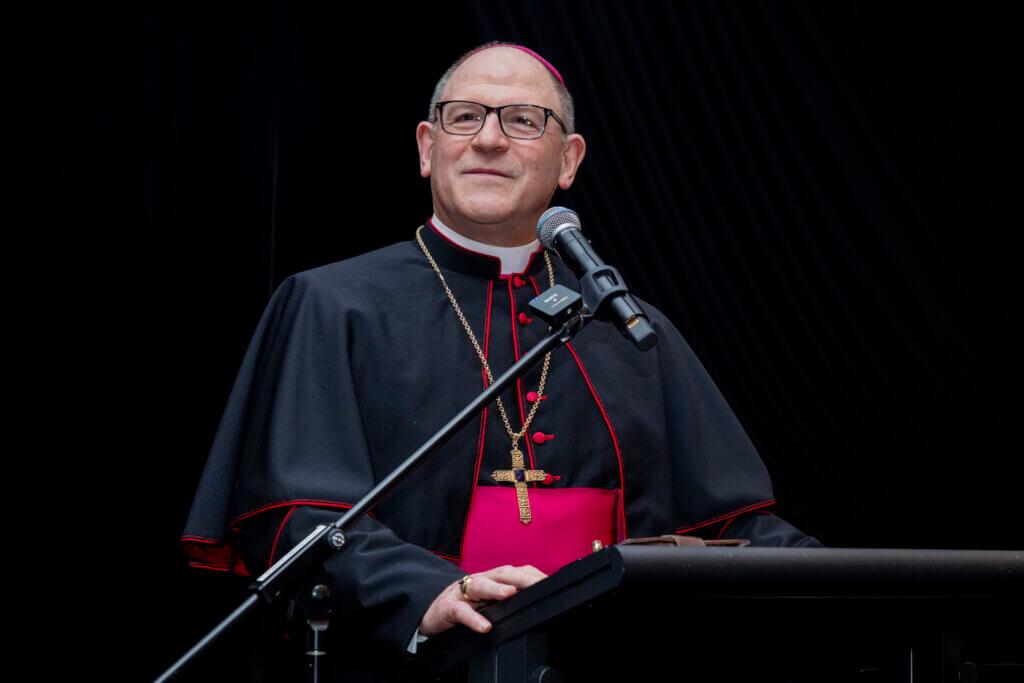
My COMMENTS IN RED EMBEDDED IN THE TEXT.
What contribution can the Code offer in this ecclesial season, in which the synodal style is at the heart of the Church’s mission?”
The synodal style has always been at the heart of the Church’s mission. I suspect that, in some places, at certain moments, and for some people, this has been lost, obscured, or forgotten. Seen positively, this ecclesial season can be understood as a new springtime: a moment of renewal, growth, and deeper awareness of what it means to walk together as the People of God. (I would caution the good Archbishop from using the term, “new springtime” to promote synodality. It was used over and over again and again to describe what Vatican II would do for the Church and just the opposite has happened by those who carried out the so-called regeneration of the Church, what they called reformed, but not observing the letter of the law of Vatican II but some corrupted spirit of Vatican II they preferred and promoted. The same will happen with the implementation of synodality, just think Germany and many other places.)
Allow me to offer the analogy of an ancient tree. In this season, the old wood can put forth new green shoots; the tree does not cease to be what it is, but rather it blossoms anew and bears abundant fruit. However, some over-enthusiastic interpretations of synodality may view this moment as an opportunity simply to cut away what is perceived to be dead wood. The danger is that, without careful discernment, what is intended as renewal can become unnecessary damage, weakening the tree rather than allowing it to flourish. (Most sane Catholics who have witnessed what has transpired with all the chatter involved in synodality under Pope Francis, know that the goal is to cut down the tree of the Church and create a different Church. I’m glad the good archbishop knows this!)
Therefore, what is needed is careful, thoughtful, intelligent, and faithful cultivation of the tree. The Church does not renew herself by abandoning her roots, but by allowing those roots to nourish new growth.
In this context, the Code of Canon Law has an important contribution to make. The Code is not static; it is dynamic because it reflects the life of the Church, the rights and duties of her members, and the essential nature of the many relationships that exist within the one Body of Christ. The Code is not separate from the Church’s life; it serves that life by giving juridical expression to the Church’s communion, mission, and order.
In my experience, many people have never read the Code, and some are not even aware of its existence. At another level, there can also be a temptation among some canonists, both lay and clerical, to approach the Code as though it were primarily an instrument for demonstrating how the Church ought to be sanctified, taught, and governed according to their own particular vision. Such an approach risks reducing Canon Law to a means of control rather than recognizing it as a service to communion.
When this happens, opposing positions can become entrenched, and discussions about the Church’s life can descend into conflicts of words rather than encounters marked by charity, justice, and a sincere search for truth.
Pope Francis repeatedly reminded the Church that synodality is not a parliament. It is not a political process of competing interests. Rather, it is an ecclesial expression of participation in the communion and mission of Jesus Christ. (Indeed, Pope Francis did say that but the beast of synodality chatter, think Fr. James Martin and his cohorts, is precisely to make the Church cut down the tree of Holy Orders and Marriage as well as Humanae Vitae to create something altogehter different for all three—this goes way beyond the LGBTQ+++ agenda—it’s about ordaining women priests, sex without procreation for any and everyone and a whole lot more.)
For this reason, a healthy reading of the Code, an intelligent study of the Code and its sources, and a charitable dialogue regarding its application will be a great contribution in this ecclesial season. The Code can help the Church live synodality faithfully because it protects both communion and responsibility, both participation and order, both the rights of the faithful and the mission entrusted to the Church by Christ. (Protecting the true mission of the true Church, not some kind of different Church is grand to hear from this Prefect!)

No comments:
Post a Comment