Translate

Wednesday, February 16, 2011

WHO SHOULD WE REACH OUT TO WITH MORE VIGOR, THE IGNORANT OR THE AMBIVALENT


In a post below this one, I posted John Allen's piece on the Pew Report concerning Catholics who leave the full communion of the Church. Some of these leave and join no other denomination or religion, they are "agnostic" or become "atheists" preferring the social trends in terms of secularized morality. This hinges on free access to artificial birth control, abortion based on choice, a denial of the need for natural law to guide morality, the desire for equal rights for homosexual persons especially as it regards marriage and equal rights for active homosexuals in society and even the Church.

This group is really a minority who leave the Catholic Church. By far the great majority that leave for Protestant denominations, a smaller number do so because they join the Protestant denomination of their spouse and do so for marital and family harmony.

The larger group leaves because they are not properly catechized in the Catholic Church's sacramental theology and spirituality, especially as it concerns the Sacraments of Holy Orders and Holy Eucharist. They are also looking for more traditional, conservative family values which they see lacking in their experience of post-Vatican II "spirit of Vatican II" parishes.

This group, the largest by far, join Protestant evangelical denominations that have lively worship, strong fellowship programs that connect people to each other and a strong sense of conservative, traditional family values and how to live one's life in the world. In other words, based on the Word of God, they nourish people who are looking for strong direction in their lives, a sense of conversion and redemption from the values of the world and a strong sense of fellowship and community.

Has the post Vatican II Church as experienced on the parish level let these Catholic down, the ones who have joined Protestant conservative, lively evangelical traditions?

Let me put it another way. If a Catholic truly believes in the necessity of the Sacrament of Holy Orders for the valid celebration of the Mass; if a Catholic truly believes that Almighty God is present on the altar through the ministry of the ordained priest at Mass and that this comes about through "transubstantiation"; and if a Catholic believes that in the presence of God one should be in awe and wonder and give God one's best and seek God's mercy where sin has corrupted the soul; and if one receives God in a humble fashion, free of mortal sin, with the utmost reverence (which is emphasized when one kneels) then would a Catholic leave the Church for fleeting emotions and strong fellowship with others? Wouldn't that be idolatry to place feelings and fellowship above Jesus really present on the altar, "Body, Blood, Soul and Divinity" as well as His one Sacrifice made present too and all through the ministry of the Sacrament of Holy Orders?

And if a Catholic doesn't know the traditional, conservative family values of the Catholic Church and the direction these give us in the world in which we live, just why is that? What has happened to Catholic catechesis on the Word of God and Sacred Tradition these past 50 years?

LITURGICAL AND NON-LITURGICAL WEAR; WHICH SHOULD NOT BE SEEN AT MASS IF YOU HAD A CHOICE OF EITHER/OR?

It rightly has been pointed out that the cappa magna is not a liturgical garment. It was never outlawed outright by Vatican II or any post-Vatican II mandate, but it did fall into disuse for bishops in the New Order of the Mass. It remains as a part of the rubrics for a Pontifical Solemn Sung Mass in the Extraordinary Form of the Mass.

The actual law addressing the post Vatican II usage is:

It is now rarely used, since the 1969 Instruction on the Dress, Titles and Coats-of-arms of Cardinals, Bishops and Lesser Prelates lays down that:

The cappa magna, always without ermine, is no longer obligatory; it can be used only outside of Rome, in circumstances of very special solemnity. (§ 12)

However, the Latin Patriarch of Jerusalem still uses the ermine-lined winter cappa, because he is bound by the complex and unalterable rules of the status quo, an 1852 Ottoman firman which regulates the delicate relations between the various religious groups which care for the religious sites in the Holy Land. This anomaly is most evident at the Midnight Mass on Christmas Eve in Bethlehem. The cappa magna is also still used among groups using the Tridentine Mass.


However, liturgical garb of the post-Vatican II "spirit" of Vatican II variety still looms out there and no progressives ever blink an eye at it. In fact they encourage it because, well, it is so progressive.

So look at the non-liturgical vesture and the liturgical one and tell me which one is more likely to be seen for the complete celebration of the Mass rather than just at the beginning and the end. Again, of the two, which would you axe?


Tuesday, February 15, 2011

THE POPE OF CHRISTIAN UNITY!


Pope Benedict is the pope of Christian Unity. He is seeking to heal the schism between Roman Catholicism and Eastern Orthodoxy. This is where we must first seek reconciliation, since it was the first major schism.

The second is with the denominations of the Protestant Reformation. Although the Anglican Communion is somewhat similar to the Eastern Orthodoxy schism, the Protestant reformation so deformed it that it cannot really be viewed as Eastern Orthodoxy because of the invalidity of Anglican Orders due to Reformation influences.

However, Pope Benedict allowing Anglicans to become Catholic and maintain their Anglican heritage where it does not affect doctrine or dogma is a huge step for the Catholic Church, especially allowing them to keep their liturgy, spirituality and valid customs as well as married clergy and former Anglican bishops acting as bishops in the Apostolic Administrator capacity.

Could the same happen for Lutherans seeking full communion? Presbyterians? Methodists? Many of these denominations have members who are fed up with the direction of acquiescence to the dictatorship of relevatism and secularism. They want a Church that will stand up to the world, evangelize the world and change the world (as St. John's Gospel understands the world). Except for conservative evangelical Protestants, the Catholic Church is the only Church doing that.

The Catholic Church is the creating bridges for Eastern Orthodoxy and Protestantism all under the authority of Saint Peter. That's marvelous. Pope Benedict is the pope of Christian Unity and Charity!

IS WEARING THE CAPPA MAGNA LIKE WEARING A CLOWN SUIT AT A CLOWN MASS?

What Cardinal Burke is wearing (cappa magna) with ermine no less, drives progressive liturgists of the school of reform in discontinuity absolute crazy. They go nutty over this:

Let's just say they feel like those who are schooled in the reform of the liturgy within continuity when they see this:


Now, if we are going to have some over the top types of celebration of Holy Mass, which do you prefer, Cardinal Burke's variety or the other type?

FAMOUS PEOPLE FROM AUGUSTA, GEORGIA OR WITH AUGUSTA CONNECTIONS

They sweep the Grammy Awards Sunday Night and even thank Augusta!

Judy Woodruff


The Hardest Working Man in Show business, Mr. James Brown

Butterfly McQueen

Lawrence Fishbourne

Danny Glover

Hulk Hogan

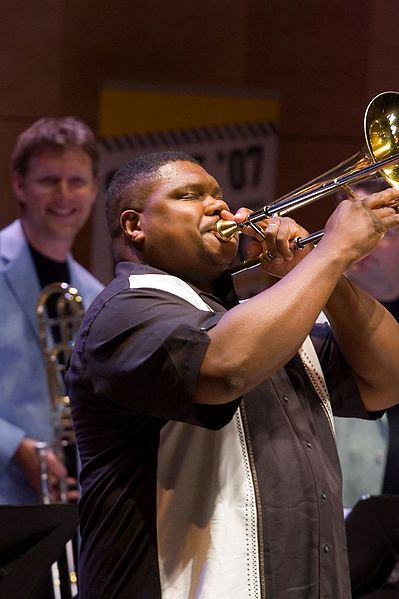
Wycliffe Gordon

Ben Bernanke

Amy Grant


"Someone's Knocking"

Quinton Aaron

Steve Morse

Jayne Mansfield lived with her first husband who was in the army in Augusta

Baltimore's Archbishop Edwin O'Brien was a lowly army chaplain in Augusta (Ft. Gordon) in the early 1970's

Sunday, February 13, 2011

CAPPA MAGNAS AND FRILLY, LACY ALBS, TIGERS, LIONS AND BEARS, O MY!

Admittedly, I've never seen a prelate wear one of these in person, only in pictures and yes to me they are over the top, but isn't most of good liturgy and vesture over the top? Read on!

Praytell is a blog that is meant to foment academic debate on the Liturgy. It also foments hysteria and dissent about authority in the Church and how it is exercised. In the past it has tried to link the current liturgical movement to "closested homosexuals" or even to "active homosexuals" in the hierarchy and by way of that to include the Holy Father. What is the evidence for it? Lacy albs, high English, cappa magnas and the like. They had one post two days ago that was so over the top and so homophobic that they eventually removed it. I had a comment on that now removed post (in fact my comment was deleted for calling it for what it was before the post was deleted) that the writer who wrote from Canada could be charged under Canadian law with generating hate toward homosexuals. She had the audacity to blame the "new frilly language" of our upcoming English translation on "gays." So if you hate gays, you'll really hate the new translation. This is how nutty things are getting and to what extent some hysterical liturgists will go to halt the new liturgical movement in the Church.

I think that any of us with any common sense know that homosexuals whether closeted or not have done and do wonderful things in the art community, in the medical profession, in teaching and in the world of religion. In the Catholicism, actively chaste men and women who also happen to have same sex attractions show us God's grace and what God can do to redeem us from our "original condition." Redemption is a marvelous thing!

I copy the following from a very excellent blog, The Chant Cafe. I think this article hits the nail on the head!

Narcissism and the Liturgy
Posted by Revd Fr Christopher Smith

If there is one thing that Catholics on all sides of the liturgical divide can agree on, is that the besetting problem of the Catholic clergy today, and often the liturgy they celebrate, is narcissism. The navel-gazing preoccupation with the self at the expense of the common good and the communion of the Church is faulted for many of the Church’s woes. But just where that narcissism lies, Catholics are in disagreement.

There are those who argue that young priests today are unbelievably narcissistic. All they care about is cappa magnas, lace albs, highly cultured music, and imposing a pray-pay-and-obey mentality on a faithful increasingly tired of clerical self-absorption. The charge is that many of those who seek a reform of the liturgy in a certain direction are using that as a disguise for clerical narcissism.

Then there is the riposte. There are others who condemn the consciously Vatican II style priests as the real narcissists. They obscure the sacred behind talk-show, living room, vulgar antics. They advance an agenda of heresy and schism by preferring their own half-baked opinions to the solid rock of doctrine. They are the ones who have necessitated a reform of the liturgy because of their reign of narcissism.

How has this come about? Often theories are put forward based on gender confusion. For some, this narcissism is motivated by repressive, introspective tendencies that have come raging out as crass effeminacy. For others, it is squarely the effect of a womynization of the Church and capitulation to an ideology of feminazi origins. And for others, it is precisely because there are not enough women in the Church to counter the male’s tendency to fall into the pool of self-admiration.

As with most things, there are actually merits to all of the above arguments even as there are also significant problems with them as well. They also focus almost exclusively on the narcissism of the clergy, as if that alone is the root of the malaise in the contemporary Catholic Church. In this essay I would like to explore what I opine to be some of causes of narcissism in the Church and possible avenues of correcting it.

Causes of Narcissism:
1. A confusion of the natural/supernatural
One of the great projects of modern theology has been to try to underline the fundamental unity between the natural and the supernatural, and to overcome the dichotomy by which man is seen as independent of the supernatural order and God. This project has not been universally successful at the theological level. Too often, it has lapsed into subsuming the natural into the supernatural or reducing the supernatural to some pale unnecessary addition to nature.
Yet if I somehow sees the supernatural life of grace as a right owed to human nature, then it is impossible for me to see anything beyond my own intrinsic goodness. Even the recognition of my error and sin can be dismissed by a distorted understanding of Divine Mercy. How many people in our pews and sanctuaries have deceived themselves into believing that they are good people and that God must grant them eternal life just because they exist? The relativization of sin and its consequences has led to a dismissal of God’s justice. My human nature is good and this is all that is. Grace is just a good happy feeling that I have that God sees me as good too. The supernatural life of grace is reduced to my own self-esteem. This leads to an unhealthy preoccupation with myself and my own natural happiness, because of my inability to see my nature in its reality and God’s supernatural power to transform and perfect my nature. In the liturgy, this leads to an attitude that the sacraments are merely human rites that must be manipulated to grant me the maximal boost to self-esteem. Liturgy becomes a celebration of my best self.
2. The exaltation of immanence over transcendence
Often we speak of a tension between the vertical and the horizontal in the liturgy, between a focus on God and a focus on man. In reality, the liturgy contains this tension. There is the aspect of adoration, of praise rendered freely to God, as well as instruction and inspiration of man. But it also must be recognized that while the supernatural is found within the soul in sanctifying grace, immanent, it is also entirely transcendent, and independent of me. If the liturgy does not incarnate an attitude of reverence and respect for the absolute holiness of God, then it will lapse into a preoccupation with individual and social human needs. Against the backdrop of confusion over nature and the supernatural, the exaltation of the immanence of grace in me versus the transcendence of God means the end of doxological aspect of worship becomes secondary to the liturgy seen as a means to fulfill my own need to transcend myself. But that transcendence can only be had by divine agency, but having banished it, I continually seek for the liturgy to serve me instead of its being a place to praise God.
3. Gender Ambiguity
It is a truth that every human person is not only a rational animal sharing a common human nature, but an engendered individual. We are either male or female, and that brings with it a corresponding biological, spiritual and psychological component of our nature. This is independent of the way that culture and history conditions perceptions of gender roles. The liturgy incarnates in its own symbolic way the engendered nature of the human person, according to divine revelation. Political attempts to modify the cultural and historical perceptions of gender roles have been translated into the liturgy. There are calls to modify the language and symbolism of the liturgy according to the changing perception of gender roles. This leads to a preoccupation with the physical gender as well as the conformity or lack thereof to gender roles of those in the sanctuary and in the pews. It deplaces the attention from the gender-independent Mystery behind the rites to the gender of those who participate in them. In so doing, it leads to a preoccupation with conforming the liturgy to however I want to reshape gender roles instead of respecting the engendered nature of liturgical symbolism which points beyond the symbol to something transcending it.
4. Democratization and Declericalization of the Liturgy
Calls for reconstituting the Church along the lines of an imagined democratic organization have obliterated the distinction between the ministerial and the common priesthood. Emphasis on the sacraments as encounters with Christ the High Priest has been replaced by an exaggerated emphasis on the rights of the priest over the rights of the laity and vice-versa. The laity, in assuming or usurping roles that belong by right or by tradition to the clergy, have correspondingly been clericalized. The clergy who protest at such a phenomenon are dismissed as clericalists. Either way, the respect for the difference in roles at the liturgy and their ontological and theological roles has faded before the demands of a politically motivated egalitarianism. Just as in political life, the struggle for equality requires a constant calling attention to where inequalities remain, when this is translated to the liturgy, the rites become a battlefield for the destruction of inequality and not a place of prayer. Attention is given to political change within the Church and not to the adoration of the Divine Majesty reflected in the hierarchical communion of the Church whose constitution was given to it by Christ.
5. Individualism
The perduring idea that the liturgy should correspond to my likes and dislikes perpetuates individualism within the liturgy. The refusal to actively participate in the liturgy, both interiorly and exteriorly, privileges an atomist understanding of the human person vis-à-vis God. The subjection of public prayer to private devotion, individual initiative, temerarious opinion, and the arbitrary decisions of committees reinforces the idea that the liturgy is a merely human rite capable of manipulation by individual interests. When I see the liturgy in this fashion, it is easy then to focus on how I want to change the liturgy to correspond to my own individual needs.

Antidotes to Narcissism:
1. Mass is not a What, it is a Who
The first antidote to narcissism in the liturgy is catechetical. We must be taught again that the Mass is not a what, it is not a human rite which can and should be manipulated so as to express human desires or to promote human goods. The Mass is a who, rather it is the prayer of self-offering of Jesus Christ to His Father for the remission of sins. A vigorous reproposal of the teaching of the Council of Trent and Vatican II on the sacrificial aspect of the Mass will help us to overcome the tendency to make the liturgy a merely natural human phenomenon.
2. Ad Orientem
The celebration of the parts of the Mass which are not directly aimed at the instruction or the edification of the faithful must be returned to a symbolic focus which is not the people. The classical ad orientem position of the celebrant at the altar in celebrating the Sacrifice of the Mass underscores the transcendence of Christ’s action in the Mass. Facing the people during those parts of the Mass which are for their instruction or edification will then highlight the immanence of the divine life of grace in us. The balance between immanence and transcendence will thus be restored in the liturgy.
The celebration of all of the parts of the Mass versus populum actually assists clericalism. It makes the altar into a barrier between presider and people, and sets him up against the people. Rather, the fact of presider and people facing the same direction indicates the unity of the priest with his people, rather than give the opportunity for the priest to manage the people by his actions.
3. Eucharistic Cultus
Pius XII stated that the tabernacle and the altar should not be separated. This follows upon the principle that Sacrifice and Sacrament are not separated. To that end, the placement of the tabernacle once again upon the altar prevents the celebrant from arbitrarily placing himself at the center of the divine drama. It also shows the unity between the sacrifice of the Mass and the sacrament shared in Holy Communion. The adoration of the Blessed Sacrament outside of Mass flows from Mass: Adoration, Benediction, Processions and Holy Hours all stem from the Mass.
The cult of the Eucharist is a pledge of faith in the Incarnation of the God-Man. Because Jesus was a human person, engendered, incarnational and Eucharistic devotion also underscores the proper sphere of gender in the human person without ambiguity, as well as points to the Mystery of God which is beyond gender and humanity.
4. Communion on the Tongue and Kneeling
There is nothing inherently wrong about receiving Holy Communion standing or in the hand. But the reception of Holy Communion kneeling is a sign of adoration of the transcendence of the Divine Majesty. It is a corrective to a democratization of the liturgy in that it emphasizes the humility of the believer who does not stand with rights before God. It also is a corrective to the declericalization of the liturgy because Communion on the tongue emphasizes that the Body and Blood of Christ come as a gift from Christ the High Priest. Just as a baby bird is nourished by its mother directly in the mouth, the Christ the Priest through the ministerial priest nourishes the spiritual child directly in the mouth with no other intervention.
5. A Liturgical Communitarian Spirituality
Homiletics during the liturgy must focus on the intrinsic connection between liturgy and life. The Eucharist has dimensions which extend far beyond the church doors. It reaches into the family hearth, the school, the workplace, the soup kitchen and the courtroom. The correspondence between the celebration of the Sacred Mysteries and the social apostolate of the Church and the moral life of families in the world combats individualism in the Church. The realization that as a Church we are a communion of holy people sharing in the Holy must be accompanied by the vision of the Church on a mission to build the Kingdom of God in the world.

These are just a few ideas of the causes of narcissism in the Church today, as well as some practical ideas for overcoming them. I have never claimed the charism of infallibility, so feel free to disagree with me or challenge the above. I do think that it is a disservice to the Church to pin narcissism on such superficial things as the fashion, hobbies, and quirks of the clergy. Those things can certainly be manifestations of narcissism, but the roots are much deeper, and affect not only the clergy, but the whole life of the Church. It is imperative that we discover those roots, and get rid of them. But the eradication of all that is less than it should be in the Church will come, not from polemic and mutual incrimination, but through conversion of heart away from ourselves and towards God.

Saturday, February 12, 2011

NOW AND IN THE FUTURE TRANSLATIONS OF PRAYERS FOR THE 6TH SUNDAY IN ORDINARY TIME


Here is Fr. Z's slavishly, literal translation of the Latin:
SLAVISHLY LITERAL VERSION:

O God, who declare that You remain in upright and pure hearts,
grant us to manifest ourselves to be, by Your grace,
the sort of people in whom You deign to dwell.

COLLECT

Lame Duck:

God our Father,
you have promised to remain forever
with those who do what is just and right.
Help us to live in your presence.

Forthcoming Beijing Duck:

O God, who teach us that you abide
in hearts that are just and true,
grant that we may be so fashioned by your grace
as to become a dwelling pleasing to you.

AFTER COMMUNION

Lame duck

Lord, you give us food from heaven.
May we always hunger
for the bread of life.

Forthcoming Beijing Duck:

Having fed upon these heavenly delights,
we pray, O Lord,
so that we may always long
for that food by which we truly live.

So, which one do you think God will find most fitting in our prayer and worship of Him who has given us the words anyway? I'm so sick of trying to please people, let's try to please God with our Mass translations! Just my 2 cents worth and for what it's worth.

HOW LONG WILL THIS SAD SAGA PLAGUE US?


A turning point in the sexual abuse scandal in the USA's Church occurred this past week. A monsignor who was the "Vicar for Clergy" under his cardinal in Philadelphia was indited by a grand jury that was investigating the Archdiocese's handling of abusive priests for decades.

As the Philadelphia Daily News notes:

It's believed to be the first time a high-ranking Catholic official has been accused of being criminally accountable for covering up priest abuse. . . .As [the Cardinal's] secretary for clergy, he was the Archdiocese's personnel director and responsible for investigating reports of priest sexual abuse from 1992 until 2004.

District Attorney Seth Williams said at a press conference that the monsignor “supervised two of the abusers . . . knew they were dangerous, and chose to expose them to new victims.” The indictment marks the first time that an American chancery official has faced criminal charges for covering up evidence of clerical abuse.


My comments:

The biggest and very legitimate criticism directed toward the hierarchy of the Church is that the bishops of the Church have not acknowledged their role in the sex abuse scandal and that the "buck" stops with them, not their delegated "inferiors" meaning those assigned to work under them, such as the Directors of Personnel.

What this indictment indicates is what we already know about much of the post-Vatican II Church in terms of administration and so-called moral and disciplinary renewal:

1. Many in the Church, especially those advocating a new social order and flexibility toward errant sinners and criminals often side more with the abuser than with the victim. For example, in advocating for the end of the death penalty, more sympathy appears to be shown to the criminally guilty than to the victims by Church advocates against the death penalty. Can a "bleeding heart" liberal, progressive attitude toward those who commit heinous crimes and sins against people, young or old, account for bishops and their underlings who showed way too much compassion toward abusive priests and absolutely no compassion towards their victims?

2. The misreading of the Second Vatican Council's documents led to what is euphemistically called the "spirit" of Vatican II. In the 1960's this made possible the Church embrace of Protestant Pentecostalism, called the Charismatic movement in the Catholic Church. The spirituality of this movement tied into the call to radical conversion and many who were touched by the charismatic movement experienced great healing and overcame horrible addictions and terrible behavior, some of it criminal. Jesus Christ could heal all and restore them. This was the great hope. How much did this mentality creep into the way bishops mismanaged miscreant priests? The hope was that these priests could be sent to treatment, healed and put back into ministry. Saving and healing through the use of psychology and prayer seem to be the mandate, not the protection of victims through the removal of miscreant priests.

3. The "spirit" of Vatican II also ended that dastardly era when the Church excommunicated members; threw people out of the seminary and religious orders on any pretext whatsoever (there are stories told of seminarians being dismissed and disappearing under cover of night over the smallest infraction against seminary rules!) and where the Church issued anathema after anathema. The Post Vatican II Church is all about love for the sinner and that punishment either temporal or eternal is not Jesus' way. Jesus is portrayed as the biggest bleeding heart liberal of all time by the "spirit" of Vatican II. How much did this sappy, love fest that hated retribution and punishment affect post-Vatican II bishops? How many have heard a sermon on hell or have been to funerals that were canonizations because Jesus loves us too much to punish us?

4. I can testify that I've heard prominent priest-psychologists who have worked with priests who have abused children and teenagers that their problem is one similar to an addiction to alcohol or drugs. Once into treatment programs where they acknowledge their addiction and guilt they can be put into recovery like alcoholics. They need support groups like AA to keep them on the straight and narrow. We need society to embrace them as we now embrace recovering alcoholics. In fact today, isn't being a "recovering" alcoholic a badge of honor? Why not for a "recovering" pedophile? Doesn't Christian charity demand that? (Again the focus is on the abuser and his need to overcome his problem and be reintegrated into society, rather than on the victims or potential victims.)

5. John Allen of the National Catholic Reporter says that in some countries the Church wants to protect its independence from the state given the 2000 year history the Church has with states that want to control or eradicate the Church. Since the Church is considered in Church teaching to be a society with its own laws and government, does this then justify the Church considering itself above "civil law" and not reporting priests who commit crimes to the civil authorities? How much does this play into the minds of bishops of the period prior to the establishment of a national policy on sex abuse in the Church?

6. Finally, in dioceses and religious orders, priests are considered brothers to each other. We are part of a family. Families don't air their dirty laundry publicly. Families protect their members. Was there a blurring of responsibility to the larger Church and to children-victims or would-be victims and disciplining miscreant priests appropriately? Did the brotherhood trump the members of the larger Church and the protection of the brotherhood and its reputation? This is called "CLERICALISM." Clericalism is at the root of this horrible episode in Church history that will go down in history as the darkest stain on the priesthood and bishops who enabled this scandal in all of Church history.

What happened in Philadelphia I am sure has bishops and personnel directors shaking in their boots. Oddly enough and maybe I'm formed too by silly "spirit" of Vatican II sentimentality and bleeding heart theology, I feel bad for them. In a sense they are victims of an errant theology and ecclesiology as are many "spirit of Vatican II" Catholics.

Friday, February 11, 2011

THE NATIONAL CATHOLIC REPORTER GETS IT RIGHT AGAIN!

The happy faces of the old age group "Voice of the Faithful" progressives like a Japanese soldier on a deserted Island who doesn't know he's lost the war but still fights the battle!

Of course the writer is John Allen who is always fair, balanced and excellent! Read his most recent article of the 22 million Catholics who no longer practice their faith by pressing HERE!

The progressives in the Church won't be pleased by Allen's report. They insist that Catholics leave the Church because it isn't liberal enough, doesn't allow for same sex marriage, women priests and the like.

In fact the majority who leave the Church are leaving for more traditional, conservative Evangelical Protestant Churches. They perceive that the Catholic Church is too wishy-washy, thanks to liberals in the Church and not enough a "rock" that leads to salvation in Jesus Christ.

You know, it doesn't take a genius to figure that out!

Thursday, February 10, 2011

THE REPORTER CALLS HIM PASTOR KAVANAUGH!


The following link is from WJBF TV in Augusta which did a story on the iphone app for confession. They went to my former parish, The Church of the Most Holy Trinity and interviewed one of my former parishioners, Mr. Joe Count who is the father-in-law of my former, but the church's still current wedding director, Lisa. She's married to Joe junior.

At any rate, one of my successors since 2004, he's the third, Father Michael Kavanaugh is interviewed by the reporter about this app. Maybe the Protestant reporter can't say "father" because of scriptural admonitions. So here is father unknown:

PRESS THE IPHONE APP STORY AND FATHER UNKNOWN

THE HOLY FATHER RE-PROPOSES, HE DOESN'T IMPOSE TRADITIONAL PRACTICES FOR THE MASS, AT LEAST NOT YET.


From Msgr. Charles Pope, on Pope Benedict's approach to the liturgical reform of the reform within continuity, "to re-propose rather than impose." I like what Msgr. Pope suggests and his pastoral sensibilities which the pope also has!You can click on this sentence for the entire blog that also has thoughts on the EF form of the Mass.

To Re-propose tradition rather than to impose – Several of the questions surrounded the issue of how far to go with diversity in the liturgy and what can be done to root the Church more deeply in traditional forms of the liturgy. In this matter I have found that Pope Benedict has taken an approach wherein he has chosen to re-propose traditional elements, and the extraordinary form of the Mass rather than to impose them.

There are some in more traditional circles that would like him to use a heavier hand and simply abolish what they consider less desirable things such as modern instruments, Mass facing the people, communion in the hand, and so forth. There are others who fear that some of the freedoms they now enjoy in the ordinary form of the Mass will be simply taken away by the Pope.

But in all this Pope Benedict has a pastor’s heart. He has written clearly of his concerns over certain trends in modern liturgical practice. However, it would seem that his approach has been to re-propose more traditional practices and allow them greater room in the Church. In so doing he signals bishops and priests that they should be freer make use of such options. With the faithful more widely exposed to traditional elements, their beauty and value can be appreciated anew by the wider Church, and they will also excerpt increasing influence. But this will be done in an organic way that does not shock some of the faithful or provoke hostile reaction.

I must say that I have come to appreciate the value of this approach. As a diocesan priest I minister to a wide variety of the faithful, many of whom would not easily understand or accept a sudden imposition of the things preferred by Catholics of a more traditional bent. Mass said, ad orientem is appealing to me for a wide variety of reasons. But many are not ready for a shift back. The Pope has modeled the option in the Sistine Chapel for the new Mass. I have made occasional use of this option at my own parish by using side altars for smaller Masses. The wider use of the extraordinary form in my own parish and throughout the world will also reacquaint the faithful with this posture. Little by little (“brick by brick,” shall we say) there will be a greater comfort with this eastward orientation. The same can be said for the use of Latin, Gregorian Chant having pride of place, communion on the tongue, kneeling for communion and the like. If the Pope were merely to impose such things we might find that pastoral harm was caused and open dissent might also be a problem.

THE LINK BETWEEN CELEBRATING THE MASS, SERVING THE NEEDY AND SAINTHOOD, I.E. DOROTHY DAY


I've always been fascinated by Dorothy Day. She was a very traditional Catholic, loved the pre-Vatican II Mass and didn't like modern, hippy-type priests manipulating the Mass in a creative way. Yet she was a radical progressive in striving to serve the poor. Because of this she was labeled a "communist" by many in and outside of the Church.

I came across a website that is promoting her cause to be name a saint in the church. You can look at it HERE.

There is a school of thought amongst modern "liturgists" that the liturgy prior to the council did not form Catholics to be concerned about the poor. I don't think one could say this. Certainly the pre-Vatican II Church including her liturgy inspired thousands upon thousands to join religious orders and the priesthood. Many of these orders served the poor in the most specific ways and educated poor children who now are rich because of it. Because these religious didn't make a lot of money from the Catholic schools they staff, tuition was low and affordable.

The pre-Vatican II Church and her liturgy also inspired many lay apostolates and many of these to take care of the poor.

The post-Vatican II Church is inspiring the laity to do the same today in terms of the poor and needy. But for some reason, the post-Vatican II Church and her liturgy is not inspiring the same level of radical commitment to religious orders and the priesthood. Is it just cultural or is it something more endemic within the post-Vatican II Church and her liturgy? Just wondering.

Wednesday, February 9, 2011

Journalist sees German dissent document as 'rebellion in the nursing home'


From Catholic Culture.org

The journalist whose in-depth interview with Pope Benedict XVI became the book Light of the World has dismissed a public protest by German-speaking theologians as “a rebellion in the nursing home.”

Peter Seewald told the Kath.net news agency that a highly-publicized statement of dissent-- signed by one-third of the theology professors at Catholic universities in Germany, Austria, and Switzerland—should not be interpreted as a popular uprising against Church teaching. Rather, he said, it is a protest by the same people who have caused a crisis in Catholic teaching.

The dissident theologians, Seewald charged, are seeking to remodel the Church in their own image, adapting Catholic teachings to popular standards. Their approach, he said, is to measure Church doctrines by the standards of popular opinion, putting themselves in the role of “chief priests of the Zeitgeist.”

In his acerbic remarks on the theologians’ public statement, Seewald referred to St. Paul’s words (2 Tim 4:3):

For the time is coming when people will not endure sound teaching, but having itching ears they will accumulate for themselves teachings to suit their own likings, and will turn away from listening to the truth and wander into myths.

My comments:
I'm 57 and my good priest friend in Pensacola is 64. I asked him the other day why priests his generation are so stubborn about the reform of the reform within continuity. Being 64 he couldn't remember my question, so I repeated it. He finally answered that "It's my generation, we were the baby boomers and the me generation and we changed everything to the way we knew it should be. How dare anyone change it back. Now what was the question?"

I hate to say it, but we aging baby boomers are becoming somewhat pathetic. So sad to see the children of America's greatest generation babbling the way we are; it is sad indeed.

FASTEN YOUR SEATBELTS, THE REFORM OF THE REFORM MAY BE KICKED UP A NOTCH! WHAT WILL IT MEAN?


Copied from the New Liturgical Movement blog:

Wednesday, February 09, 2011
Motu Proprio on a New Liturgical Movement?
by Gregor Kollmorgen

Andrea Tornielli, the most reliable vaticanista of this pontificate, has the following news, which we give you here in an NLM translation:

In the coming weeks a document of Benedict XVI will be released which reorganizes the competences of the Congregation for Divine Worship, entrusting it with the task of promoting a liturgy more faithful to the original intentions of Vatican II, with less room for arbitrary changes and for the recovery of a dimension greater sacredness.

The document, which will take the form of a motu proprio, is the fruit of a long maturation - it has been reviewed by the Pontifical Council for the Interpretation of Legislative Texts and the offices of the Secretariat of State -, and is motivated mainly by the transfer of jurisdiction over matrimonial cases to the Roman Rota. These are the so-called "ratum sed non consummatum" causes, i.e. regarding the marriages which took place in church but have not been consummated because of the lacking carnal union of the spouses. There are about five hundred cases a year, and they mainly affect some Asian countries where there are still arranged marriages with girls of a very young age, but also Western countries for those cases of psychological impotence to perform the conjugal act.

Losing this section, which will go to the Rota, the Congregation of Divine Worship will de facto not be concerned anymore with the sacraments and retain only jurisdiction in matters liturgical. According to some authoritative leaks, a passage of the motu proprio of Benedict XVI might explicitly mention that "new liturgical movement" of which has spoken in recent days Cardinal Antonio Cañizares Llovera, speaking during the consistory of last November.

Cañizares told Il Giornale, in an interview published on the eve of last Christmas: "The liturgical reform was carried out with great haste. There were very good intentions and a desire to apply Vatican II. But there was precipitancy... The liturgical renewal was seen as laboratory research, the fruit of imagination and creativity, the magic word then." The cardinal, who had not been unbalanced in talking about the "reform the reform", had added: "What I see as absolutely necessary and urgent, according to what the the Pope wishes, is giving life to a new, clear and vigorous liturgical movement throughout the entire Church", to put an end to "arbitrary deformations" and the process of "secularization, which unfortunately is at work even inside the Church."

It is known how Ratzinger has wanted to introduce in the papal liturgies significant and exemplary gestures: the cross at the center of the altar, communion kneeling, Gregorian chant, the space for silence. It is known how much he values beauty in sacred art and how much he considers it important to promote Eucharistic adoration. The Congregation for Divine Worship - which some would also like to rename [sc. Congregation] for the Sacred Liturgy or for Divine Liturgy - will thus have to concern itself with this new liturgical movement, also by opening a new section of the dicastery dedicated to sacred art and music.

My comments and suggestions: As everyone knows I am clairvoyant, but maybe not. So within this context I offer my suggestions to the Congregation for Divine Liturgy for this New Liturgical Movement and Reform of the Reform within the context of continuity:

As it concerns the Extraordinary Form of the Mass--keep it as it is and for extraordinary purposes to be determined pastors.

As it concerns the Ordinary Form of the Mass:

Keep the reformed calendar and lectionary although minor adjustments may be needed for both and an extra year added, such as year "D" where the EF lectionary can be used during that year, but adjusted to the new calendar.

Have two forms of the "Modern, Reformed Rite:"

A. The Pauline Rite (with all its adaptations and flexibility), but with mandates for the proper decoration of the altar, either ad orientem or pro-populum celebrations, either the vernacular or Latin, kneeling for Holy Communion and receiving on the tongue. The Introit, offertory antiphon and communion antiphon should always be sung or spoken, never substituted by something else musical.

B. The Traditional Rite, which is the order and rubrics of the 1965 reformed missal, in either Latin or the Vernacular, but still using the reformed calendar and lectionary and the reformed prayers, including additional prefaces, Eucharistic prayers, etc of the 2002 Roman Missal, typical edition in Latin and now being revised in English.

Now that would be the reform of the reform but within continuity, not only with the Church prior to the Second Vatican Council, but within continuity of 40 + years of experience.

Tuesday, February 8, 2011

NOW THAT'S A CHALICE AND DON'T YOU DARE CALL IT A CUP!


The Eastern Orthodox have always used leaven bread for the celebration of the Eucharist, Divine Liturgy. It is placed in the chalice after consecration as it is cut, and a spoon is used to distribute the Precious Body and Blood of Christ to each communicant. This is in a Russian Cathedral with a large number of communicants, thus a lot of bread is consecrated and the need for the huge, humongous, extra, extra, extra large chalice!

WHAT GOES AROUND, COMES AROUND AND EVERYTHING OLD IS NEW AGAIN, O HAPPY DAYS ARE HERE AGAIN!


The Norbertine Sisters are going strong and a strict habit hasn't caused their numbers to be curtailed. But a curtailed habit, strictly speaking, might have. And no habit, except maybe similar colors might have made this picture impossible above, but who knows?

I DEMAND THAT MASS BE IN ITALIAN, THE MOST BEAUTIFUL LANGUAGE IN THE WHOLE WORLD, AND AD ORIENTEM!

Why in the world would people despise Mass ad orientem, "facing God," and in Italian? Italian is the best language in all of the world and far surpasses that yucky Latin and horrible English translation! The Holy Father models for us the way the Mass should be everywhere!

The Italian words of consecration of the chalice are like our current English, "for you and for all" (per tutti). I suspect the Italian words will change eventually.

Monday, February 7, 2011

DID JESUS REALLY DIE FOR ALL? OR WAS IT JUST THE MANY?

In all the catechetical sessions I've had on the new translation, going back now for three full years if not more, everyone likes what they hear and practice! The only negative comment that I had and it was from just one person is that they don't like the words of consecration of the Precious Blood being changed from "all" to "many." They insist that Jesus died for all not for many. Read on and then discuss.


Currently when the priest consecrates the Precious Blood, he prays in Jesus words: "Take this all of you and drink from it: this is the cup of my blood of the new and everlasting covenant. It will be shed for you and for all* so that sins may be forgiven. Do this in memory of me.

*From 1970 to about the very early 1980's, the priest said, "For you and for all men." Men was dropped because it sounded to exclusive to feminists who only heard men being saved.

The 2010 new English translation will be:

TAKE THIS, ALL OF YOU, AND DRINK FROM IT,
FOR THIS IS THE CHALICE OF MY BLOOD,
THE BLOOD OF THE NEW AND ETERNAL COVENANT,
WHICH WILL BE POURED OUT FOR YOU AND FOR MANY
FOR THE FORGIVENESS OF SINS.
DO THIS IN MEMORY OF ME.

From the blog, Gotta Sing, Gotta Pray, Jerry Galipeau, D. Min. quotes, Father Paul Turner who spoke at a recent liturgical convention in Salt Lake City:

One of the issues that Father Turner raised was the need for catechesis before, during, and following the implementation of the new translation. One of the issues that will need catechetical attention is the translation of pro vobis et pro multis in the institution narrative of the eucharistic prayers. Currently translated "for you and for all," the new translation is "for you and for many."

Father Turner tackled the issue by alerting us to the fact that in Matthew's Gospel, the English translation reads: "Drink from it, all of you, for this is my blood of the covenant, which will be shed on behalf of many for the forgiveness of sins." And, similarly in Mark, "This is my blood of the covenant, which will be shed for many." The hearers of these words would have recognized an allusion to the Suffering Servant Song in Isaiah: "Through his suffering, my servant shall justify many" and "he shall take away the sins of many, and win pardon for their offenses."


My comments:
This is precisely the problem with our current translation: IT ISN'T PRECISE and IT LOSES ITS BIBLICAL REFERENCES AND PRECISION HERE AND IN MANY OTHER PLACES!

In addition just as the words of consecration from 1970 to the early 80's "For you and for all men" sent the wrong message to "many" people, so too has "For you and for all." Because of this wording, many believe that everyone will be saved. That's simply not true.It is heretical.

The Latin is "Pro-multis" from the Scriptures that Father Turner highlights above. "For the many or the multitudes. In other words, the sacrifice is for everyone but properly nuanced: everyone who doesn't reject it! I don't think that means "all."

Not everyone accepts the sacrifice? Am I wrong in this assertion? Therefore the Sacrifice is not a magic act for those who reject the gift outright through mortal sinfulness or and informed decision not to join the Catholic Church and be baptized.Salvation is a gift, not imposed, but to be received. Salvation is not automatic! So in reality, not all are "saved" or there would be no dogma concerning hell.

Suffice it to say that if through no fault of one's own, one does not accept the gift, that person will be saved by Jesus and His sacrifice. It's only those who make a conscious, informed decision not to convert, but knowing the truth, decide their old way of life and immorality is more comfortable.

But praying for almost 40 years that everyone will be saved during the consecration has led how "many" Catholics to believe that no one is in hell? Aren't there many, but not all who do not receive the gift of salvation or reject it outright?

The dragnet of Jesus' words contained in the Gospels at the Last Supper, always in the Latin version of the Mass and now for the first time in 40 years in the new English Translation makes clear that "the many" means the masses, the multitudes, a huge, gigantic group of people form every age and place. God knew and certainly Jesus knew that not all would accept Him. He was indeed rejected and by many, but not all, wasn't He? Why in the world would he say for "all" at the Last Supper, when He knew darn well beforehand who would be saved and who wouldn't? It would be many, not all!

Finally, the proper Biblical translation of this will make us more ecumenical once again (although we already are in the Latin version). The Episcopal Book of Common Prayer uses "for many" in their consecration of the wine and so do the Lutherans and most Protestants. They want biblical accuracy even if they don't want "transubstantiation." Should we not only want transubstantiation but also Biblical accuracy? The Protestants are on to something!

Discuss.

Sunday, February 6, 2011

WHAT'S THE DIFFERENCE BETWEEN A LITURGIST AND A TERRORIST?

It might be good to read these before or after you read what I wrote below:
Fr. Anthony Ruff's Letter to America Magazine

Dr.Jeffrey Tucker, Chant Cafe Blog, has an excellent commentary on Fr. Anthony and historical change in the Church--the best I've read!

The old joke goes that you can negotiate with a terrorist. Benedictine Fr. Anthony Ruff has been stirring the pot against what he perceives to be a bad, new translation of the English Mass in a letter to America Magazine. He's not opposed to the re-translation of the Mass and acknowledges that the 1969/73 versions are dreadful; he simply doesn't like "how" the new one came about. He should know, he worked on the new translation but became disillusioned when the Vatican or "higher ups" made arbitrary, heavy handed decisions and changed things without consultation, the major being the changes made between the approved 2008 text submitted to Rome and what we will actually get with the 2010.

We have to keep in mind that Jesus never promised that the Church would be perfect in its administration. Clergy, meaning bishops and priests are sometimes some of the worst administrators in the world. We didn't have an adequate sex abuse policy until this century; bishops were not held accountable for the scandal which they caused by not having an abuse policy and not managing abusive priests in an open and accountable way. No bishop has really been punished for egregious mismanagement except for a few who resigned from their dioceses.

So administration perfection may not be our strong suit in the Church especially if one views it from a democratic perspective.

Yet the fact remains that we are not a democratic institution, we are a hierarchical Church with clear lines of authority but more consultative than we were in 1965 when the Second Vatican Council was shoved down many people's throats too, if we only recall that, not to mention the 1969 reformed Roman Missal, in Latin and in English. Some have the authority, others don't in the Catholic Church. That's true in the parish too. And this truth is quite transparent in the Catechism and Canon Law.

Even given the fact that some changes were made to the 2008 text without apparent consultation with those who translated it, it is also factual that Rome can do that. There's nothing opaque about that--it's written in the rules! But there was consultation with a great majority of the translation and some would say over-consultation that politicized the process too much.

However, I suspect that even if the 2008 translation had gone through without change, that Fr. Anthony would have then turned his focus and wrath on the Vatican for a document issued several years ago called Liturgiam Authenticam which he believes arbitrarily changed a translation work in progress and almost completed in 1998. That translation was thrown out the window precisely because liturgists had hijacked it and were promoting their own liturgical agenda that alarmed many laity, clergy, bishops and eventually the Vatican. The old saying that "hell hath no fury than a woman scorned" can certainly apply also to many liturgists and musicians when it comes to their personalities. They don't just get mad, they get even. There's no turning of the other cheek in other words.

Is this on the same level as bishops' mismanagement of egregiously abusive priests in the 1960's, 70's; 80's and 90's? That would be a bit of a stretch and terribly unfair to our sensibilities.

While Fr. Anthony Ruff may have some points about Church administration and reform that may well be needed, he needs also to recognize the mess that liturgists have brought to the Catholic Church in the last 40 years beginning with those who reformed the 1962 Roman Missal. Most clergy and certainly the majority of practicing Catholic laity don't trust liturgists at all; in fact they may well be despised. If you read some of the nasty comments toward Fr. Anthony in America Magazine and U.S. Catholic, you'll see that, although many are totally uncharitable which is another story when it comes to blogs and comments.

Liturgists have done some good too, (as bishops have) I won't neglect to write that, but they hold a great deal of responsibility for the state of Catholic worship, music and architecture today that was shoved down the laity's throats in the most undemocratic and uncharitable ways possible since 1965. If Vatican II had been given to the clergy and laity in a less authoritarian way and without the embellished "spirit of Vatican II" nuances in the immediate years following 1965, I suspect our Church today would be far more fragmented in discipline and diversity and that what many call the "fruits" of Vatican II would not have been realized on the scope that it was.

I think the following letter to the editor in America Magazinecaptures the sentiments of many, that the main difference between some liturgists and some terrorists is that you can negotiate with some terrorists:


Posted on American Magazine By Tom Piatak | Friday, February 04, 2011

11. Frankly, I don't care what the "liturgists" want. For far too long, they have been able to experiment with the Mass, Catholic architecture, and Catholic music, imposing changes they (but nobody else) wanted. They've disparaged kneeling. I've been instructed at Mass to stand during the Eucharistic Prayer, contrary to the norms for the Mass. They've deprecated cruciform churches and traditional Catholic design, giving us instead "churches in the round" without kneelers and without statues and even without crucifixes, churches that are uninspiring at best and ugly at worst. They've shunted tabernacles off to the side and, for years, there was a de facto ban on Eucharistic devotions in this country. (Fortunately, Eucharistic adoration is making a comeback, because it is so deeply rooted in Catholic culture and so inspiring that people who are exposed to it naturally want more of it). They've waged war on even the vestiges of Latin, depriving people of exposure to traditional Catholic music, and substituted generally bad folk music instead. (I think a handful of the new hymns are good, but most are dreadful). When I got married, the pastor allowed my wife and I to put together a schola to provide music for the nuptial Mass, all of which was in Latin. (The Mass was in English). Afterward, I received many compliments on the music, both from Catholics, who missed hearing this type of music, and from non-Catholics, who were pleasantly surprised because they had come to associate Catholicism with bad music.

Fortunately, there are signs that many of these trends are now being reversed. And if the small change represented by the new translation actually heralds the recovery of some of the beauty that was tossed aside for no good reason, it will be a good thing.

Saturday, February 5, 2011

I DIDN'T REALIZE THIS UNTIL I READ ALL OF FR. Z'S COMMENTS ON THIS SUNDAY'S ENGLISH TRANSALTION OF THE OPENING COLLECT

FATHER Z'S COMMENTARY ON THE 5TH SUNDAY OF ORDINARY TIME LATIN COLLECT

In my post about the 5th Sunday after Epiphany Extraordinary Mass, I copied the English translation of the Collect from a web site. This translation is not official, since the official is the Latin. It is a translation made by an individual well versed in Latin to English translations to help people follow the Latin Mass.

At any rate it just so happens to be the same collect for the Ordinary Form Mass for the 5th Sunday of Ordinary Time.

I give you the three translations for you to compare.

Privately translated for the EF Mass:

KEEP THY family, we beseech Thee, O Lord, with Thy continual mercy that, leaning only upon the hope of Thy heavenly grace, it may ever be defended by Thy protection.

The lame duck 1973 version of this same collect but for the Ordinary Mass:

Father, watch over your family
and keep us safe in your care,
for all our hope is in you.

The 2010 translation of the same prayer which will be instituted next year for the 5th Sunday in the Ordinary Form Mass:

Keep your family safe, O Lord, with unfailing care,
that, relying solely on the hope of heavenly grace,
they may be defended always by your protection.

Father Z's' very literal translation of the original Latin:

Guard your family, we beseech you, O Lord,
with continual mercy,
so that that (family) which is propping itself up upon the sole hope of heavenly grace
may always be defended by your protection.

What is obvious is how badly translated the 1973 Roman Missal in English really is.

Some will say that Rome could have provided an even better translation than what the 2010 will give us and that if the process of translating was more open and democratic, we would have gotten it. I doubt that.

At any rate, what we are getting will be superior. It may well have to be polished off a bit more in subsequently reissued Roman Missals, but we have a much better template with the 2010 then we had with the 1973. Yikes to the 1973 one!

COMPARING ENGLISH TRANSLATIONS


I now have Fr. Z's slavishly literal translation included:

For the 5th Sunday of Ordinary Time, the "lame duck version of two prayers and the new and improved version coming to a Catholic Church near you a year from now:

WDTPRS (Fr. Z) SLAVISH OFFERING:
Guard your family, we beseech you, O Lord,
with continual mercy,
so that that (family) which is propping itself up upon the sole hope of heavenly grace
may always be defended by your protection.

COLLECT
The lame quacking duck soon to drown:

Father, watch over your family
and keep us safe in your care,
for all our hope is in you.

The new and improved which we are all eagerly anticipating:

Keep your family safe, O Lord, with unfailing care,
that, relying solely on the hope of heavenly grace,
they may be defended always by your protection.

AFTER COMMUNION

The nearly dead quacking duck who is lame:

God our Father, you give us a share
in the one bread and the one cup
and make us one in Christ.
Help us to bring your salvation
and joy to all the world.

The new and improved Peking Duck or is it Beijing Duck that makes your mouth water for its taste next year:

O God, who have willed that we be partakers
in the one Bread and the one Chalice,
grant us, we pray, so to live
that, made one in Christ,
we may joyfully bear fruit
for the salvation of the world.