Translate

Thursday, August 16, 2018

DAY OF JUDGEMENT, DAY OF WRATH--"THE DIES IRAE" WHICH NO CATHOLIC BORN AFTER 1969 HAS EVER HEARD UNTIL NOW

I have to say that this local Washington, DC reporter did one heck of a good job with this interview. The one interviewed tried to do a good job also, but I don't think I can give him passing marks.

The charter of 2002 was a result primarily of pressure brought upon bishops by the media. First it was the Catholic media in terms of the National Catholic Reporter's series on sexual abuse they uncovered in Louisiana in the early 1980's!  Then, the Boston Globe in 2002 that brought it nationwide. Thus 2002 was in reaction to all the bad publicity. Cardinal Wuerl needs to be reminded of this. It was the media that got them to 2002's charter not God's gift of common sense let alone Catholicism's moral teachings about human sexuality and who is and isn't suitable to remain a priest or bishop.

I think every bishop who has been tainted by the manner in which they helped broken, perverted priests continue in ministry and who did and continued to do the most heinous things to minors and their families and by way of extension to the Church, should resign willingly and complete their lives in seclusion and penance. That's just my most humble and unsolicited opinion.

Good try Cardinal Wuerl, but not good enough:


https://lyricstranslate.com/en/dies-irae-day-wrath.html

The Day Of Wrath

Versions: #1#2
The day of wrath, on that day
It will dissolve the world into glowing ashes
As attested to by David with Sibyl.
What trembling there will be
When the Judge shall come
To examine all in strict justice.
The trumpet's wondrous call resounding
In tombs throughout the world
Gathering everyone toward the throne.
Death and nature shall stand amazed
When creation rises from the dead again
To give an answer to its Judge.
The written book will be brought forth
In which everything is contained
From which the world shall be judged.
What shall I, a wretch, say at that time
What advocate shall I ask (to plead for me)
When even the righteous are not carefree.
(On) that sorrowful day
Those rising from the glowing ashes
(The) accused man to be judged.
Spare them, Oh God
Holy Jesus, Oh Lord
Grant them peace.
Amen.

Wednesday, August 15, 2018

HOW POWERFUL AND PROPHETIC, BUT WHO SPOKE IT?

“We live at a time that is broadly characterized by a subliminal relativism that penetrates every area of life. Sometimes this relativism becomes aggressive, when it opposes those who say that they know where the truth or meaning of life is to be found.”
“And we observe that this relativism exerts more and more influence on human relationships and on society. This is reflected, among other things, in the inconstancy and fragmentation of many people’s lives and in an exaggerated individualism. Many no longer seem capable of any form of self-denial or of making a sacrifice for others. Even the altruistic commitment to the common good, in the social and cultural sphere or on behalf of the needy, is in decline. Others are now quite incapable of committing themselves unreservedly to a single partner. People can hardly find the courage now to promise to be faithful for a whole lifetime; the courage to make a decision and say: now I belong entirely to you, or to take a firm stand for fidelity and truthfulness and sincerely to seek a solution to their problems.”
“The Church in Germany is superbly organized. But behind the structures, is there also a corresponding spiritual strength, the strength of faith in the living God? We must honestly admit that we have more than enough by way of structure but not enough by way of Spirit. I would add: the real crisis facing the Church in the western world is a crisis of faith. If we do not find a way of genuinely renewing our faith, all structural reform will remain ineffective.”
“If the Church, in Pope Paul VI’s words, is now struggling ‘to model itself on Christ’s ideal,’ this ‘can only result in its acting and thinking quite differently from the world around it, which it is nevertheless striving to influence.’ (Ecclesiam Suam, 58) In order to accomplish her mission, she will need again and 
again to set herself apart from her surroundings, to become in a certain sense ‘unworldly’.”


Freiburg im
“In the concrete history of the Church, however, a contrary tendency is also manifested, namely that the Church becomes self-satisfied, settles down in this world, becomes self-sufficient and adapts herself to the standards of the world. Not infrequently, she gives greater weight to organization and institutionalization than to her vocation to openness towards God, her vocation to opening up the world towards the other.”
“In order to accomplish her true task adequately, the Church must constantly renew the effort to detach herself from her tendency towards worldliness and once again to become open towards God. In this she follows the words of Jesus: ‘They are not of the world, even as I am not of the world’ (Jn 17:16), and in precisely this way Jesus gives himself to the world. One could almost say that history comes to the aid of the Church here through the various periods of secularization, which have contributed significantly to her purification and inner reform.”
“Secularizing trends – whether by expropriation of Church goods, or elimination of privileges or the like – have always meant a profound liberation of the Church from forms of worldliness, for in the process she, as it were, sets aside her worldly wealth and once again completely embraces her worldly poverty.”
“History has shown that, when the Church becomes less worldly, her missionary witness shines more brightly. Once liberated from material and political burdens and privileges, the Church can reach out more effectively and in a truly Christian way to the whole world, she can be truly open to the world. She can live more freely her vocation to the ministry of divine worship and service of neighbor.”
“It is not a question here of finding a new strategy to re-launch the Church. Rather, it is a question of setting aside mere strategy and seeking total transparency, not bracketing or ignoring anything from the truth of our present situation, but living the faith fully here and now in the utterly sober light of day, appropriating it completely, and stripping away from it anything that only seems to belong to faith, but in truth is mere convention or habit.”
“To put it another way: for people of every era, and not just our own, the Christian faith is a scandal. That the eternal God should know us and care about us, that the intangible should at a particular moment have become tangible, that he who is immortal should have suffered and died on the Cross, that we who are mortal should be given the promise of resurrection and eternal life – for people of any era, to believe all this is a bold claim.”
“This scandal, which cannot be eliminated unless one were to eliminate Christianity itself, has unfortunately been overshadowed in recent times by other painful scandals on the part of the preachers of the faith. A dangerous situation arises when these scandals take the place of the primary skandalon of the Cross and in so doing they put it beyond reach, concealing the true demands of the Christian Gospel behind the unworthiness of those who proclaim it.”

TO SEE HOW WE GOT TO 2018 AND ITS PERFECT STORM, YOU HAVE TO READ WHAT WAS WRITTEN IN 2002!

TO BE A FLY ON THE WALL

What a peculiar time in Church history to have two popes, one contemplative and the other active.

I wish I knew what Pope Benedict's thoughts are about the Church today compared to His Holiness' pontificate.

I wonder if His Holiness will put anything into writing to be preserved in the Vatican's Secret Archives about the current polarization, turmoil and palace intrigue?

THIS IS 1968 AND 2002, COMBINED AND SQUARED!


Pope Francis and the Cardinals, will clericalism prevail or fraternal correction be embraced?

This is printed in First Things and should not be discounted!


AN OPEN APPEAL TO THE CARDINALS OF THE CATHOLIC CHURCH


Pope Francis has revised the Catechism of the Catholic Church to read, “the death penalty is inadmissible because it is an attack on the inviolability and dignity of the person.” This statement has been understood by many, both inside and outside the Church, to teach that capital punishment is intrinsically immoral and thus is always illicit, even in principle.
Though no Catholic is obliged to support the use of the death penalty in practice (and not all of the undersigned do support its use), to teach that capital punishment is always and intrinsically evil would contradict Scripture. That the death penalty can be a legitimate means of securing retributive justice is affirmed in Genesis 9:6 and many other biblical texts, and the Church holds that Scripture cannot teach moral error. The legitimacy in principle of capital punishment is also the consistent teaching of the magisterium for two millennia. To contradict Scripture and tradition on this point would cast doubt on the credibility of the magisterium in general.
Concerned by this gravely scandalous situation, we wish to exercise the right affirmed by the Church’s Code of Canon Law, which at Canon 212 states:
The Christian faithful are free to make known to the pastors of the Church their needs, especially spiritual ones, and their desires. According to the knowledge, competence, and prestige which they possess, they have the right and even at times the duty to manifest to the sacred pastors their opinion on matters which pertain to the good of the Church and to make their opinion known to the rest of the Christian faithful, without prejudice to the integrity of faith and morals, with reverence toward their pastors, and attentive to common advantage and the dignity of persons.
We are guided also by the teaching of St. Thomas Aquinas, who states:
If the faith were endangered, a subject ought to rebuke his prelate even publicly. Hence Paul, who was Peter’s subject, rebuked him in public, on account of the imminent danger of scandal concerning faith, and, as the gloss of Augustine says on Galatians 2:11, “Peter gave an example to superiors, that if at any time they should happen to stray from the straight path, they should not disdain to be reproved by their subjects.” (Summa Theologiae, Part II-II, Question 33, Article 4, ad 2)
Hence we, the undersigned, issue the following appeal:
To their Most Reverend Eminences, the Cardinals of the Holy Roman Church,
Since it is a truth contained in the Word of God, and taught by the ordinary and universal magisterium of the Catholic Church, that criminals may lawfully be put to death by the civil power when this is necessary to preserve just order in civil society, and since the present Roman pontiff has now more than once publicly manifested his refusal to teach this doctrine, and has rather brought great confusion upon the Church by seeming to contradict it, and by inserting into the Catechism of the Catholic Church a paragraph which will cause and is already causing many people, both believers and non-believers, to suppose that the Church considers, contrary to the Word of God, that capital punishment is intrinsically evil, we call upon Your Eminences to advise His Holiness that it is his duty to put an end to this scandal, to withdraw this paragraph from the Catechism, and to teach the word of God unadulterated; and we state our conviction that this is a duty seriously binding upon yourselves, before God and before the Church.
Sincerely,
Hadley Arkes
Edward N. Ney Professor in American Institutions Emeritus
Amherst College
Joseph Bessette
Alice Tweed Tuohy Professor of Government and Ethics
Claremont McKenna College
Patrick Brennan
John F. Scarpa Chair in Catholic Legal Studies
Villanova University
J. Budziszewski
Professor of Government and Philosophy
University of Texas at Austin
Isobel Camp
Professor of Philosophy
Pontifical University of St. Thomas Aquinas
Richard Cipolla
Priest
Diocese of Bridgeport
Eric Claeys
Professor of Law
Antonin Scalia Law School, George Mason University
Travis Cook
Associate Professor of Government
Belmont Abbey College
S. A. Cortright
Professor of Philosophy
Saint Mary’s College
Cyrille Dounot
Professor of Legal History
Université Clermont Auvergne
Patrick Downey
Professor of Philosophy
Saint Mary’s College 
Eduardo Echeverria
Professor of Philosophy and Theology
Sacred Heart Major Seminary
Edward Feser
Associate Professor of Philosophy
Pasadena City College
Alan Fimister
Assistant Professor of Theology
St. John Vianney Theological Seminary
Luca Gili
Assistant Professor of Philosophy
Université du Québec à Montréal
Brian Harrison
Scholar in Residence
Oblates of Wisdom Study Center
L. Joseph Hebert
Professor of Political Science
St. Ambrose University
Rafael Hüntelmann
Lecturer in Philosophy
International Seminary of St. Peter
John Hunwicke
Priest
Personal Ordinariate of Our Lady of Walsingham
Robert C. Koons
Professor of Philosophy
University of Texas at Austin
Peter Koritansky
Associate Professor of Philosophy
University of Prince Edward Island
Peter Kwasniewski
Independent Scholar
Wausau, Wisconsin
John Lamont
Author
Divine Faith
Roberto de Mattei
Author
The Second Vatican Council: An Unwritten Story
Robert T. Miller
Professor of Law
University of Iowa 
Gerald Murray
Priest
Archdiocese of New York
Lukas Novak
Lecturer in Philosophy
University of South Bohemia
Thomas Osborne
Professor of Philosophy
University of St. Thomas
Michael Pakaluk
Professor of Ethics
Catholic University of America
Claudio Pierantoni
Professor of Medieval Philosophy
University of Chile
Thomas Pink
Professor of Philosophy
King’s College London
Andrew Pinsent
Research Director of the Ian Ramsey Centre
University of Oxford
Alyssa Pitstick
Independent Scholar
Spokane, Washington
Donald S. Prudlo
Professor of Ancient and Medieval History
Jacksonville State University
Anselm Ramelow
Chair of the Department of Philosophy
Dominican School of Philosophy and Theology
George W. Rutler
Priest
Archdiocese of New York
Matthew Schmitz
Senior Editor
First Things
Josef Seifert
Founding Rector
International Academy of Philosophy
Joseph Shaw
Fellow of St Benet’s Hall
University of Oxford
Anna Silvas
Adjunct Senior Research Fellow
University of New England
Michael Sirilla
Professor of Dogmatic and Systematic Theology
Franciscan University of Steubenville
Joseph G. Trabbic
Associate Professor of Philosophy
Ave Maria University
Giovanni Turco
Associate Professor of Philosophy
University of Udine
Michael Uhlmann
Professor of Government
Claremont Graduate University
John Zuhlsdorf
Priest
Diocese of Velletri-Segni
Become a fan of First Things on Facebook, subscribe to First Things via RSS, and follow First Things on Twit

WAS THERE GRANDSTANDING BY THE PA ATTORNEY GENERAL?


I watched a good deal of the live stream of the presentation of the Attorney General  of Pennsylvania yesterday. Overall I give him high marks and given the specifics he knows about how victims were abused I can understand and appreciate his righteous anger and rage at miscreant priests and their enabling hierarchies. I understand better too, the similar feelings of reporters and lawyers.

However the Attorney General made it sound like the hierarchy hasn’t done anything since the 1940’s to change the institutional response to these miscreant priests. There has been a huge change beginning in the 1980’s and made nationwide after 2002:

1. We talk about in the open and train both clergy and laity through various ongoing programs to be pro actively vigilant about anyone who could be using a minor or grooming them to be abused. This is huge cultural change for the Church. The topic is no longer taboo.

2. Every diocese I know requires those who know, clergy or laity, to report crimes to law enforcement.

3. Bishops have adopted zero tolerance within the clergy.

4. There is more diligent screening of candidates for the seminary and once there a more alert atmosphere to weed out.

5. The attorney general stated the days of secrecy are now over as though we have not as an institution attempted to change that culture of secrecy. Every bishop I know have asked victims to come forward and be heard.

Tuesday, August 14, 2018

THIS IS JUDGEMENT DAY FOR THE INSTITUTIONAL CATHOLIC CHURCH IN PENNSYLVANIA


This is disgusting. Much of what is in this  884-page report it is about how most bishops throughout the world dealt with priests accused of serious moral and secular crimes against minors.  Much has changed in this regard but not enough.  But what is in place in most dioceses in our country, especially reporting these kinds of crimes to law enforcement first, is a good step in the right direction.

Bishops and priests, to include cardinals, who were complicit in the cover-up and the lies need to step aside, in my most humble and unsolicited opinion. And the grand jury's four recommendations for secular reform need to be heeded by legislative branches of government.

We are taught as Catholics that each of us will at the hour of our death have our particular judgement. But that judgement happens prior to our death in so many ways as a foretaste of it.

The same is true of the General Judgement when Christ comes again at the Second Coming. At the General Judgement the institutions of the world will be judged as well, to include the institution of the Catholic Church. But it happens in the here and now as a foretaste of that which is to happen.

I listened to a good portion of the presentation by Attorney General of Pennsylvania which was live streamed. I could not help but think that his solicitude for the victims of these crimes, his concern and compassion for them is a role model for bishops who acted instead, as CEO's to protect the institutional Church. If only these bishops had acted as Attorney General Josh Shapiro did, we would be in a much better place today and fewer Catholics would have been damaged to the loss of their faith and lives by what has happened.

Pennsylvania Releases Damning Report On Catholic Clergy Sex Abuse Scandal

WARNING: Reading this report will damage your physical, psychological and spiritual health.

The 884-page report is the largest, most comprehensive investigation on the church’s sex abuse scandal by a U.S. state, according to Attorney General Josh Shapiro. The grand jury identified over 1,000 victims in the six dioceses examined in the report: Allentown, Erie, Greensburg, Harrisburg, Pittsburgh and Scranton. But the jurors suspected the true number of victims could be much higher.
Shapiro said the report, which was delayed for months while individuals named in it raised legal challenges over what portions should be redacted, showed that church leaders in these dioceses knew abuse was occurring but systematically covered it up.

TALK ABOUT REDEMPTION! FILE THIS ONE UNDER "JUST TOO KOOL!"

I saw this at the New Liturgical Movement!

Some, I am sure, would rather have them sing "Gather us in!"

I would suggest these inmates deserve a PARDON! They could have chosen to ask for the unpardonable, to form a folk group!

You can read the entire post at the New Liturgical Movement by pressing their title below:

Tuesday, August 14, 2018

Latin Mass to be Sung in San Quentin State Prison Starting August 25th

Twenty-five inmates to form new schola under the guidance of Benedict XVI Institute

Among the various initiatives of the recently rejuvenated Benedict XVI Institute for Sacred Music and Divine Worship, which is under the patronage of His Excellency Archbishop Cordileone and the Archdiocese of San Francisco, the Latin Mass is to return to San Quentin State Prison, with the first Mass scheduled for August 25th.

THE UNITED KINGDOM'S CATHOLIC HERALD PICKS UP THE FATHER THOMAS ROSICA'S CALUMNY AGAINST POPE FRANCIS

Vatican advisor: Pope ‘breaks Catholic traditions whenever he wants’


Fr Thomas Rosica said the Church is now 'ruled by an individual rather than by... its own dictates of tradition plus Scripture'

Under Pope Francis, the Church is now “openly ruled by an individual rather than by the authority of Scripture alone or even its own dictates of tradition plus Scripture,” a Vatican advisor has said.

In an admiring portrait of the Pope, Fr Thomas Rosica wrote that Francis “breaks Catholic traditions whenever he wants” because he is “free from disordered attachments”.

Fr Rosica, a Canadian priest and media advisor to the Vatican, was writing on the website of Salt & Light Catholic Media Foundation, of which he is CEO.

The article, written two weeks ago, was republished by the news agency Zenit. After Fr Rosica’s statements came to attention on social media, Zenit removed the controversial statement and replaced it with “[…]”.

Fr Rosica said that, as a Jesuit, Pope Francis is guided by the principle of “discernment” which at times results in “freeing him from the confinement of doing something in a certain way because it was ever thus”.

The article, which was published on the Feast of St Ignatius of Loyola, the founder of the Jesuits, said that Pope Francis has brought “Jesuit intellectualism” to the papacy.

Fr Rosica’s words came days before the Vatican announced Pope Francis had changed the Catechism to state the death penalty is now “inadmissible”.

The alteration caused much debate as to what the term meant, and whether it contradicted traditional Church teaching, which holds that the death penalty is not intrinsically evil.

CLERICALISM IS THE ROOT OF SO MANY PROBLEMS IN THE CHURCH OF THE PAST AND OF TODAY

Press the title below of another article from Crux for another depressing story on how so many bishops and priests knew about McCarrick but no one in authority went public at the time and the behind the scenes ways to address it were totally ignored.

Clericalism exhibits itself in benign and maglignant ways and when in secret attempts are made to correct it, often nothing happens. Think of the priest who abuses the liturgy or preaches heresy or is just plain mean and unpastoral. What is done to correct it?

But when it is brought to the light by the new or old media, there seems to be all kinds of people falling all over each other to address the problem.

Another form of clericalism has been exhibited by Pope Francis. There are at least 5 cardinals who wrote a public dubia to the pope concerning serious questions they have about some of his teachings. I suspect they did this privately, but to no avail, and then went public. Oddly, the form of clericalism Pope Francis exhits doesn't affect him even when it goes public. Thus no answer whatsoever to the cardinals legitmate concerns. They were ignored and two of the five have since died, maybe due to the humiliation?

Transparency in very serious issues concerning deacons, priests, bishops, cardinals and even the pope is necessary. But there needs to be a transparent canonical way to do it.

Transparency is important to prevent sexual abuse by clerics in the Church. It is also necessary to prevent the abuse of the liturgy, of doctrine and of dogma and yes the abuse of one's clerical office too.

Pope Francis should have set the example in being open to correction in a canonical way. He should have answered the dubia. If His Holiness had done so, Pope Franics would have more credibility in his so-called fight against "clericalism."

Abuse letter to Cardinal O’Malley was second priest sent officials about McCarrick

ULTRAMONTANISM PROPERLY DEFINED AS WELL AS THE HERESY OF GNOSTICISM !


Yesterday I read an article at Rorate Caeli quoting something that Fr. Thomas Rosica wrote about Pope Francis.

I thought it was exaggerated or Rorate Caeli, which has an ax to grind, was misquoting him. But Rorate Caeli had a link to the actual full article which Zenit owned by the National Catholic Register had published. So I read the article and found the following:

Pope Francis breaks Catholic traditions whenever he wants because he is “free from disordered attachments.” Our Church has indeed entered a new phase: with the advent of this first Jesuit pope, it is openly ruled by an individual rather than by the authority of Scripture alone or even its own dictates of tradition plus Scripture.

However, this morning, when I followed the link provided by Rorate Caeli to the Zenit article, I could not find the quote I print in blue above. It had been removed from the longer paragraph that is there, but it was there yesterday!

Thus I went to the Salt and Light version by Fr. Rosica and it was still there. So the blue quote above if actually from his article  at the Salt and Light webpage which you can read in full by pressing the title:

The Ignatian Qualities of the Petrine Ministry of Pope Francis

The quote I have in blue above is the best example of what "ultramontanism" actually is as well as the ancient heresy of GNOSTICISM. It is the blind adherence to the "cult of the personality" of a particular pope and accepting as truth what the believer believes about a particular pope even his opinions and errors. I am not saying Pope Francis is a Gnostic, but if what Fr. Thomas Rosica writes about him as a commentary is true (and it is only the opinion of Rosica a close collaborator with Pope Francis) then it would make the pope a gnostic. Rosica is the one who should retract such calumny against Pope Francis and renounce his own ultramontanism.

Those of us who respect the pope and the institution of the papacy have parameters and always have had parameters even when we were accused of being ultramontane. The pope doesn't know anything new about the Catholic faith independently of what is varifiable by Scripture and Tradition that the most humble and least educated lay Catholic can't discover.  He can't create new beliefs. He can only clarify or declare something that has been believed by the early Church to the present as a doctrine or dogma. The pope and the papacy must be a servant to the TRUTH discovered in Scripture and Tradition. He must be a servant to it. He is not above it. To think that a pope is above Scripture and Tradition would be to declare the pope in the state of mortal sin of PRIDE. To call this HUMILITY, would be a lie and comes from the father of lies, the devil.

I would say that Fr. Thomas Rosica's quote in blue above is the most ultramontane thing I have ever heard. It would be funny if it weren't so absurd and concerning. And if true (and that's a huge IF)  it. would make the pope a Gnostic or heretic. That accusation has serious ramifications. 

Speaking of ultramontanism, the National Chismatic Reporter (NCR) has its own take on it. Do you think it quotes Fr. Rosica's ultramontanism? NO!:

'New Ultramontanists': Why do some Catholics fear change?

Monday, August 13, 2018

LET'S GET SOME SOBRIETY ABOUT SEXUAL MISCONDUCT OR AT LEAST THE WORRY THAT THERE MAY BE SEXUAL MISCONDUCT FROM OUR PROTESTANT BROTHERS AND SISTERS


This post isn't about the sexual abuse of minors. If that is occurring or a strong suspicion that it is happening, then report it to law enforcement first and then Church authorities. But prudence should dictate against false accusations in this regard.

But let's talk about adult to adult sexual relations outside the context of marriage.

Gene would know the answers to my Protestant questions.

Many Protestant ministers are ordained before they marry and once they get a Church they date their parishioners, I think, (Gene can clarify). I have known Protestant ministers who have married their church members, literally.

And I have known divorced Protestant ministers who have remarried after dating another church member.

And let's talk about the gay Episcopal bishop in Manchester, NH who divorced his wife with whom he had children and married a male lover and was allowed to remain a bishop???????????????? There were accolades from all over the world about how great it is that the Episcopal Church is opened to married gay bishops. Now he has divorced that man. Can he look for another "gay spouse" on his staff, in his diocese or in his parishes? Does anyone in the Episcopal Church even give a damn?

Do we presume that a single Protestant minister who is dating is doing so chastely? Do we have the same charity toward a divorced Protestant minister who is dating members of his congregation looking for a new wife?

Protestant ministers have married staff members who worked for them as lay people do in the work place too!

And do we give Protestant gay ministers a pass if they are cavorting with their male parishioners either gay or straight for their own gratification?

As it concerns the Catholic Church, priests have always been allowed to live together, go on vacations with other priest friends and share a hotel/motel room, which I have done for 38 years and to have priest friends stay overnight in the rectory. Close friends who are male have been allowed to stay overnight in a rectory and we use to have live-in housekeepers.

Are we to be paranoid about all of this now and make priests live as though on a deserted island to the detriment of his psychological health? No man is an island unto himself.

How do we maintain our sobriety in the current hysteria about the "me-too" movement as well as what is simply sexual misconduct and not a secular crime?

Finally, is there a double standard about married ministers and fornication and adultery and vowed or promised to celibate chastity of Catholic priests?

WHAT TO DO WITH “GATHER US IN?” GATHER IT UP AS ALL THROUGH HISTRY AND THROW IT OUT BECAUSE IT IS BAD AND LAME!

I copy this from a no name blog. But how astute:

Line by Line

Hymns that make you go "Hmm...": "Gather Us In"

posted March 03, 2012

Tags: Religion, Hymns


It's no secret that Catholics have a problem with bad liturgical music. Some hymns are borderline heretical. Others are basically error-free but watered down. Some praise the people rather than God, and some have us sing as God. Some are overly complicated and can't be sung by laity who aren't trained singers (and--let's be honest here--aren't all that into singing anyway). 
I sometimes wonder why Catholics put up with this, but on further reflection I think I know the answer: We get so used to our usual hymns that we don't even stop to think about what's wrong with them. That's why I've decided to go through some hymns and point out what it is about them that bothers me. I hope I can inspire people to start asking questions and making more careful choices in the music we sing.

Today I'm looking at "Gather Us In," which is published in the OCP Today's Missal - Music Issue that my parish uses. It's credited to Marty Haugen, and © 1982, GIA Publications, Inc. 
Here in this place new light is streaming,
now is the darkness vanished away.
The song just started and I'm already tripped up. For one thing, every other verse has another syllable after where "place" is; Why not simplify it as "a new light"? Additionally, "vanished" doesn't take an object: It should be "the darkness vanished," not "the darkness isvanished." No wonder I always mistakenly say "banished" instead. But at least there aren't any theological problems yet.
See in this space our fears and our dreamings,
Wait a minute, "dreamings"? I could understand making up words to make a rhyme work, but not in a hymn. On closer inspection, though, that can't be the reason for the added "s" because the word it's supposed to rhyme is "streaming." No "s." I can't figure out why this was done, and it comes off as childish.
Next, we get to the meat of the song: The rest of the first verse talks about our fears and dreams (sorry, "dreamings") being brought to God and into the light, and all of us in our weakness ("the lost and forsaken, [...] the blind and the lame") rising to respond to God's call. I don't see any real problems here, save for a little subject-verb agreement problem at the end ("the sound of our name"), so let's move on.
We are the young--our lives are a myst'ry,
we are the old--who yearn for your face,
I would advise against using the word "mystery" because it has a specific theological meaning. While my life is certainly a mystery in the everyday sense of the word, there's no comparison between my future (which I presume is what it means by "our lives") and the mystery of the Eucharist. It's not even apples to oranges--more like apples to wildebeasts.
I also have a problem with this "we are" business. I'm not old, mystery or not. I assume this was supposed to mean something along the lines of "We are your people, both young and old" or something like that, so why separate them out like this? Just to fit the music? Doesn't that imply that the young don't yearn for God's face, or that older people's lives aren't mysterious? 
Besides, there's barely any content here except taking time to talk about us. Which brings me to the next line:
We have been sung throughout all of hist'ry
Excuse me!? No. This is wrong. We have not been sung... Well, for one thing, the construction of the sentence bothers me: You sing songs, not people. But that's a minor issue. The real problem is whom the song is about.
Songs about Jesus would "have been sung throughout all of hist'ry." Not us. He founded a church, yes, but salvation comes from Him, not the Church, and certainly not its members. This idolization of the laity a classic example of bad hymns praisng us instead of God. It's narcissistic, self-congratulatory, and worst of all, it very well may qualify as idolatry. This line eliminates any goodwill I may have had for this song.
The song gets even worse, but that's a bit later. The next few lines almost seem to be trying to make up for the preceding one:
called to be light to the whole human race.
This looks like an attempt to relate the previous line to Jesus' command to be salt and light. Merely making a reference to Scripture doesn't make it scripturally sound. That Jesus gave us a mission does not make us, instead of Him, the focus of the Old Testament prophecies.
Gather us in--the rich and the haughty,
Gather us in--the proud and the strong;
Give us a heart so meek and so lowly,
Okay, first of all, I've been trying to avoid punctuation nitpicks because I can't tell whether the errors originated with Haugen, GIA or OCP. But that's a pretty blatant comma splice. I suppose the semicolon is technically correct but should really be a period instead. In fact, every single verse is written as two run-on sentences, one at the beginning and the other starting with the "Gather us in" part. Moreover, what's up with all the dashes? For the record, dashes set off parenthetical phrases. A comma would work better. This is why we have editors.
Second, I'm not sure what's going on with these lines. On the one hand, it seems like a genuine attempt to emphasize that the proud need to ask God for humility; either it's to make up for the "We have been sung" line or, more likely, Haugen just didn't realize how badly that line undermined this message. Of course, that doesn't speak well of his ability as a lyricist, especially one writing liturgical music. On the other hand, reading these lines in conjunction with the next one, I can't help but get a different feeling.
Give us the courage to enter the song.
I know in this case I'm probably just being paranoid, but I can't shake the feeling that Haugen is calling out those (like me) who can't bring themselves to sing this, accusing us of being proud and haughty for wanting sacred music to be, you know, sacred.
Really, the interpretation of "song" that makes the most sense is as a reference to the song from a few lines ago, the one about us instead of God. So there you have it: It takes courage to sing one's own praises. It's as if the whole concept of meekness is being turned back against itself, like something out of The Screwtape Letters.
Or maybe Haugen just couldn't think of anything else that rhymed with "strong."
Here we will take the wine and the water
Here we will take the bread of new birth
This is ambiguous. Is it referring to the actual bread and wine beforeconsecration, or the Eucharist? There's no good reason to be singing about the plain old bread and wine, but if it's about the Sacred Species, why use the terms "bread" and "wine"? I know it's not uncommon to use the language of appearances (e.g. talking about the sun rising rather than the earth rotating), but if you're going to sing about the body and blood of Christ, why not sing about the Body and Blood of Christ? It makes me wonder if it's not deliberately ambiguous to appeal to Protestants who don't believe in the Real Presence.
Also, Haugen has his Sacraments mixed up: "New birth" is Baptism, not the Eucharist. 
Worse, there are more of those first-person pronouns. What business do we have taking the Eucharist? (Assuming it is the Eucharist.) That's called self-communication, and it is strictly forbidden. We receive the Eucharist. It's a gift, not something we can take for ourselves.
The next couple lines refer to us being called. Nothing too problematic, but still generally focusing on us rather than on God. After that, there's a rehash of the almost-Eucharistic theme, with "the bread that is you" being the only reference to the Real Presence, followed by a mention of fashioning "lives that are holy and hearts that are true."
Now we come to the last verse, which is just full of problems.
Not in the dark of buildings confining,
Maybe I'm being paranoid, but given everything else we've seen in this song, I can't help but see this as a reference to churches. Yes, I know that Our Lord's presence is not restricted to certain buildings. But at the same time, a Catholic church is a sacred place, where Jesus Christ is present in the Eucharist in a way that He is not present in other places. Seeing "buildings" equated with darkness and contrasted with the "new light," especially in conjunction with the "now is the Kingdom" (with a capital K) bit and the hymn's general focus on the laity, makes me think this verse was written not for Catholics but for Dispensationalists who believe that the age of the churches has passed.
not in some heaven, light years away,
I don't even know what to make of this. I mean, the more I think about this line and the one before it, the more I find wrong with them and the more flabbergasted I am that we sing this in a Catholic church. 
First of all, what's so wrong with heaven? Why in the world would God's light not be shining in heaven? Second, what do light years have to do with anything? Does Haugen really think that Catholics think that heaven is located out in space somewhere? On the other hand, if Haugen is using light-years as a metaphor for heaven being far-off from our experience on earth, I guess that's a little better, but still problematic because the whole point of the Incarnation was to bridge that distance. 
The song finally ends after a few token lines about unity. So let's look back over the highlights:
  1. Flowery language about "new light" and dreams
  2. Reference to human weakness, ignoring that said weaknesses are our own fault.
  3. Careless use of a term with a specific theological meaning.
  4. Arguably idolatrous claim that "we" are what history has been waiting for.
  5. Reference to human pride and haughtiness and a request for humility, the song's one redeeming feature, which is undercut by the lines right before and after.
  6. Stupid remark about how joining a song takes courage, with the implication (intentional or not) that the song in question is about how great we are.
  7. A verse about the Eucharist, containing only one token effort to indicate that it's talking about the Eucharist and not ordinary food.
  8. Possible reference to self-communicating, a serious liturgical abuse.
  9. Implicit reference to churches as dark and confining, contrasted with the light outside.
  10. Complete misrepresentation of what heaven is and its importance.
  11. More references to "new light" and the present day.
  12. Some harmless but worthless language about unity.
Okay, I admit to interpreting this song in the worst possible light. I have two reasons for this. First, I have a hard time coming up with any orthodox explanation for what this song says that makes any sense, especially considering the sheer number of problematic lines. I could understand one or two, but for this many to slip through accidentally, not only would Haugen have to be incompetent, but there would have to be absolutely no editorial oversight at GIA Publications or Oregon Catholic Press. (Which actually wouldn't surprise me, given the punctuation problems.)
Second, in our culture of self-centered, lazy, consumerism, this song is unhelpful to the point of being dangerous. Too many Catholics don't read Scripture, don't attend Mass regularly (if at all), think Magisterial teaching has no more weight than their own opinions, act like the Church exists just to make them feel fulfilled, and in an alarming number of cases, don't even believe in the Real Presence of Christ in the Eucharist. We need hymns that are helpful, not just harmless. This one, from its us-centered attitude to its shaky if not outright heretical theology, doesn't even score that high.
I'm not trying to be uncharitable here. I'm not trying to accuse Haugen (or anyone else) of wrongdoing or belittle his (or their) desire to serve God. All I'm concerned with right now is whether the song is a help or a hindrance in getting people to heaven. Considering what the song says about heaven, I think the answer is pretty clear: We should not be singing this. 
Finally, yes, I know all about the starving African children, massive human rights abuses at home and abroad, and the sex scandal still not being over yet. But I still think this look at our music is important. It doesn't stop being a problem because other problems exist, too. Being reverent and respectful to God while in His own house should always be a priority

OKAY, LET'S STOP, FOR A MOMENT, TALKING ABOUT THE REFORM OF THE REFORM AND LET'S START TALKING ABOUT HOW TO REFORM THE EXTRAORDINARY FORM IN THE PROPER WAY AND IN A CONSERVATIVE CONTINUITY


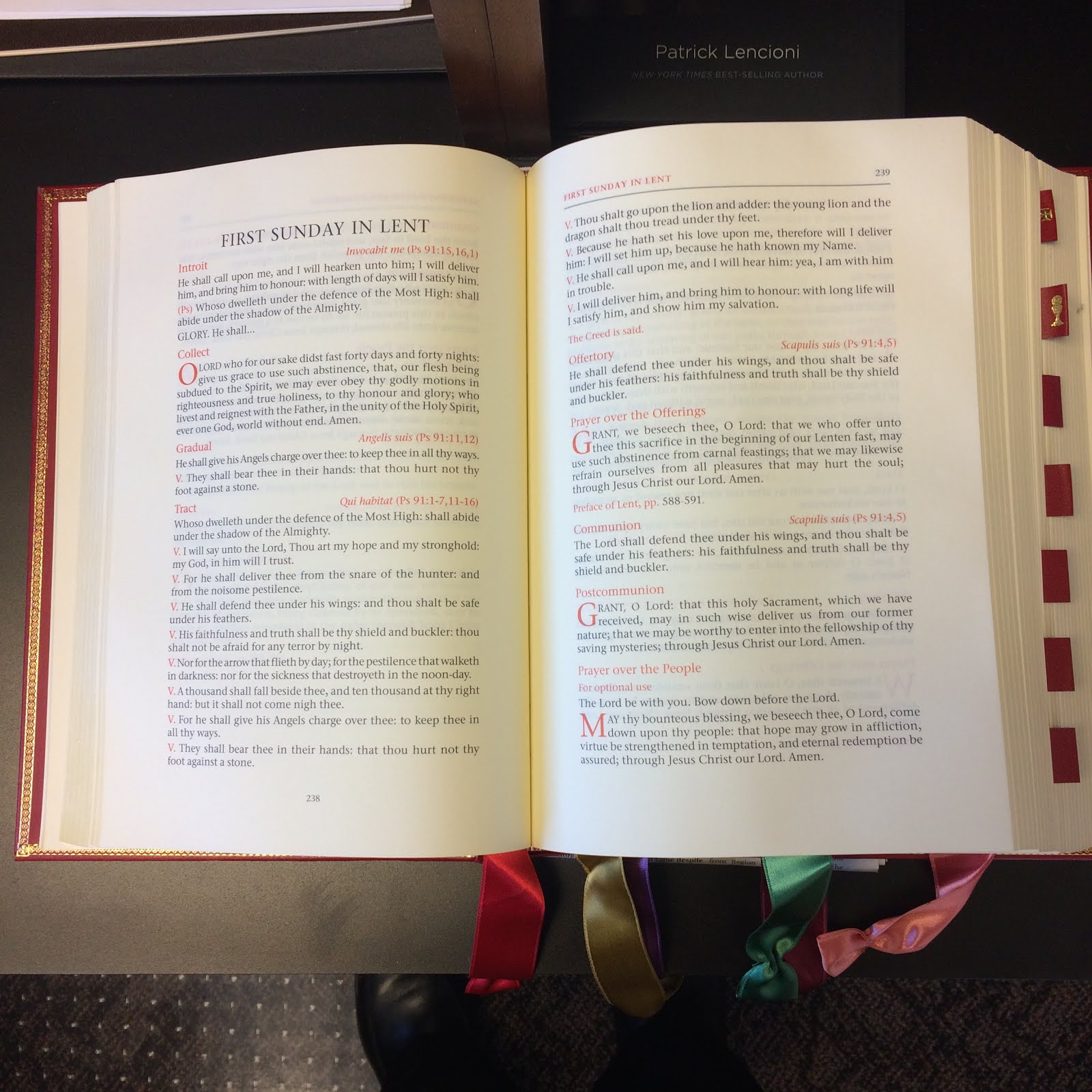
Yesterday, (Sunday, the 12th Sunday after Pentecost, orthe 19th Sunday of the Year) I took my turn celebrating our Cathedral's weekly 1 pm EF Mass.

Just as an aside, I was the associate pastor, as it was once called, at our Cathedral from 1985 to 1991. I returned to the Savannah area in 2016. When I enter our cathedral, it's as though the time between 1991 and 2016 didn't happen and I expect to see everyone there who was there in 1991. But alas, many aren't there, they are dead, but then again if in heaven or purgatory, they are at Mass!  So, yes there is some nostalgia and as though time has stood still, but of course it hasn't.

But let's speak of the timeless EF Mass. For the most part, the EF Mass I celebrated on Sunday was exactly like the 12th Sunday after Pentecost Mass of my youth prior to Vatican II. Exactly. There was no freelancing. There was no ad lilbing. There was no creativity. I suspect the only thing different was the fact that the Cathedral's scola is perhaps one of the best young scolas in the country. I really can't remember how good the choirs or scolas were when I was a child in the pre-Vatican II Church.

But how could we offer a minor reform of the EF Mass to make it more palatable for earnest Catholics who are orthodox but find themselves mystified by the EF Mass when they attend for the first time but choose not to return because they don't know how to participate in this Mass given how they participate in their Ordinary Form Mass.

What is the main difference in the spirituality and devotional qualities of the EF Mass compared to the OF Mass?  It is contemplative and more like attending Adoration of the Most Blessed Sacrament. Thus it is quiet for the layman for the most part. This is not true of the Ordinary Form whatsoever and any silences for supposed contemplation are usually contrived, not truly integral to the ritual.

This has to be made clear to Catholics, faithful Catholics, who are formed by the Ordinary Form's spirituality with is far from contemplative.

Once we make that clear and Ordinary Form Faithful Catholics understand it, then we have to teach them that they need to have a personal missal to know what the changing parts of the Mass are in the vernacular. For the unchanging parts of the Mass, they don't need to follow the Latin words of the priest verbatim as he prays it, but simply know the structure of those prayers in the vernacular.

The silent Roman Canon is always used. If one knows the structure of the Roman Canon in English, one doesn't need his personal missal. Watch the sign language or bodily postures of the priest and listen to the bells and you can hear him. This is the most contemplative part of the EF Mass completely lacking contemplation for the laity in the OF Mass no matter the English canon or Eucharistic prayer.

Then I think ultra traditional EF Catholics need to allow for some vernacular in the EF Mass.

For the sake of preserving Gregorian Chant, I would now be opposed to chanting the propers in the vernacular. If one has their personal missal, they can look at their English missal for the translation of the Latin. They don't need to sing along either--this is the contemplative aspect of the EF Mass that served the laity so well prior to Vatican II.

I would simply suggest that the first allowed vernacular be the chanting of the Collect by the priest.

The next for be for the allowance of the Epistle and Gospel to be chanted in the vernacular but not the Graudal and/or tract.

Now, I know some would say that this suggestion is too radical, but the Secret should be chanted aloud with the option of the vernacular since it changes.

Then the only other allowed vernacular would be the Post Communion Prayer.

No other changes (unless it is allowed to have lay readers for the Epistle. I would not oppose that and for the epistle to be read from the ambo.

If you want the EF Mass to gain more Catholics attending, my suggestions are common sense.