Translate

Thursday, October 24, 2024

MY FAVORITE POPULAR DEVOTION!

 Pope Francis writes an encyclical on the Most Sacred Heart of Jesus. And it seems , clear, uncontroversial and non polarizing! A miracle of the Most Sacred Heart !!!!!

From Vatican News:

‘He Loved Us’: The Pope’s encyclical on the Sacred Heart of Jesus

“Dilexit nos,” Pope Francis’ fourth Encyclical, retraces the tradition and relevance of thought on “the human and divine love of the heart of Jesus Christ,” calling for a renewal of authentic devotion to avoid forgetting the tenderness of faith, the joy of serving, and the fervour of mission.

By Alessandro Di Bussolo

“‘He loved us’, Saint Paul says of Christ (cf. Rom 8:37), in order to make us realize that nothing can ever “separate us” from that love (Rom 8:39)”: Thus begins Pope Francis’ fourth encyclical, which takes its title from the opening words, Dilexit nos.

The encyclical is dedicated to the human and divine love of the Heart of Jesus Christ: “His open heart has gone before us and waits for us, unconditionally, asking only to offer us His love and friendship,” the Pope writes in the introductory paragraph. “For ‘He loved us first’ (cf. 1 Jn 4:10). Because of Jesus, ‘we have come to know and believe in the love that God has for us’ (1 Jn 4:16).”

The love of Christ represented in His Sacred Heart

In our societies, the Pope writes, “we are also seeing a proliferation of varied forms of religiosity that have nothing to do with a personal relationship with the God of love” (87), while Christianity often forgets “the tenderness of faith, the joy of serving others, the fervour of personal commitment to mission” (88).

In response, Pope Francis proposes a new reflection on the love of Christ represented in His Holy Heart. He calls for a renewal of “authentic devotion” to the Sacred Heart, recalling that in the Heart of Christ “we find the whole Gospel” (89). It is in His Heart that “we truly come at last to know ourselves and we learn to love” (30).

The world seems to have lost its heart

Pope Francis explains that by encountering the love of Christ, “we become capable of forging bonds of fraternity, of recognizing the dignity of each human being, and of working together to care for our common home,” noting the relationship between Dilexit nos and his social Encyclicals Laudato si' and Fratelli tutti (217).

And “in the presence of the Heart of Christ," he asks the Lord “to have mercy on this suffering world” and pour upon it “the treasures of His light and love, so that our world, which presses forward despite wars, socio-economic disparities, and uses of technology, that threaten our humanity, may regain the most important and necessary thing of all: the heart” (31).

When announcing the preparation of the document at the end of the general audience on June 5, the Pope clarified that it would do us great good to meditate on various aspects of the Lord’s love, which can illuminate the path of ecclesial renewal, and say something meaningful to a world that seems to have lost its heart.”

This encyclical comes as celebrations are underway for the 350th anniversary of the first manifestation of the Sacred Heart of Jesus to Saint Margaret Mary Alacoque in 1673; the anniversary celebrations will conclude on 27 June 2025.

The importance of returning to the heart

Opening with a brief introduction and divided into five chapters, the Encyclical on the devotion to the Sacred Heart of Jesus incorporates, as announced in June, “the precious reflections of previous Magisterial texts and a long history that goes back to the Sacred Scriptures, in order to re-propose today, to the whole Church, this devotion imbued with spiritual beauty.”

The first chapter, “The Importance of the Heart,” explains why it is necessary to “return to the heart” in a world where we are tempted to become “insatiable consumers and slaves to the mechanisms of the market” (2). It analyzes what we mean by “heart”: the Bible speaks of it as a core “that lies hidden beneath all outward appearances” (4), a place where what is shown on the outside or hidden doesn’t matter; there, we are truly ourselves (6). The heart leads to questions that matter: what meaning do I want for my life, my choices, or my actions? Who am I before God (8)?

The Pope points out that the current “depreciation” of the heart originated in Greek and pre-Christian rationalism, in post-Christian idealism, and in materialism in its various guises” where great philosophical thought prioritized concepts like “reason, will, or freedom.”

“The failure to make room for the heart… has resulted in a stunting of the idea of a personal centre, in which love, in the end, is the one reality that can unify all the others” (10), the Pope writes.

For Pope Francis, it is important to recognize that “I am my heart, for my heart is what sets me apart, shapes my spiritual identity and puts me in communion with other people” (14).

‘The world can change beginning from the heart’

It is the heart that unites the fragments and “makes all authentic bonding possible, since a relationship not shaped by the heart is incapable of overcoming the fragmentation caused by individualism” (17). The spirituality of saints like Ignatius of Loyola (accepting the Lord’s friendship is a matter of the heart) and John Henry Newman (the Lord saves us by speaking to our heart from His Sacred Heart) teaches us, writes Pope Francis, that “before the Heart of Jesus, living and present, our mind, enlightened by the Spirit, grows in the understanding of His words” (27). This has social consequences, as “the world can change beginning with the heart” (28).

‘Actions and words of love’

The second chapter is dedicated to the actions and words of love of Christ. The acts by which He treats us as friends and shows that God “is closeness, compassion, and tender love” are evident in His encounters with the Samaritan woman, Nicodemus, the prostitute, the adulterous woman, and the blind man on the road (35).

His gaze, which “examines the depths of your being” (39), shows “how attentive Jesus was to individuals and above all to their problems and needs” (40), in such a way “as to admire the good things he recognizes in us,” like in the centurion, even if others ignore them (41).

His most eloquent word of love is “being nailed to the Cross,” after having wept for His friend Lazarus and suffered in the Garden of Gethsemane, aware of His violent death “at the hands of those He loved so much” (45, 46).

The mystery of a heart that loved so much

In the third chapter, “This is the heart that has loved so greatly,” the Pope recalls how the Church reflects and has reflected on “the holy mystery of the Lord’s Sacred Heart.” He refers to Pius XII’s Encyclical Haurietis aquas, on the devotion to the Sacred Heart of Jesus (1956). He clarifies that “devotion to the Heart of Christ is not the worship of a single organ apart from the Person of Jesus,” because we adore “the whole Jesus Christ, the Son of God made man, represented in an image that accentuates His heart” (48).

The image of the heart of flesh helps us contemplate that the love of the Heart of Jesus Christ not only understands divine charity but also extends to human affection (61). His Heart, Pope Francis continues, quoting Pope Benedict XVI, contains a “threefold love”: the sensitive love of His physical heart and His twofold spiritual love, both human and divine, in which we find “the infinite in the finite” (67).

The Sacred Heart of Jesus is a synthesis of the Gospel

The Pope clarifies that the visions of some saints, particularly devoted to the Heart of Christ, “are rich sources of encouragement and can prove greatly beneficial,” but “are not something the faithful are obliged to believe as if they were the Word of God.”

At the same time, he reminds us, along with Pope Pius XII, that this devotion “cannot be said ‘to owe its origin to private revelations.’” Rather, “devotion to Christ’s heart is essential for our Christian life to the extent that it expresses our openness in faith and adoration to the mystery of the Lord’s divine and human love” and “in this sense, we can once more affirm that the Sacred Heart is a synthesis of the Gospel” (83).

The Pope calls for renewing devotion to the Heart of Christ, especially to counter “new manifestations of a disembodied spirituality” that are multiplying in society (87). It is essential, he says, to return to “the incarnate synthesis of the Gospel” (90) in the face of “communities and pastors excessively caught up in external activities, structural reforms that have little to do with the Gospel, obsessive reorganization plans, worldly projects, secular ways of thinking and mandatory programmes” (88).

The experience of ‘a love that gives itself as drink’

In the last two chapters, Pope Francis highlights two aspects that devotion to the Sacred Heart should unite to “to nourish us and bring us closer to the Gospel”: personal spiritual experience, and community and missionary commitment.

In the fourth chapter, “A love that gives itself as drink,” he revisits the Scriptures, and with the early Christians, recognizes Christ and His pierced side in “the one whom they have pierced,” a prophecy from the book of Zechariah in which God refers to Himself as an open fountain for the people, to quench their thirst for God’s love, “to cleanse them from sin and impurity” (95).

Various Church Fathers have mentioned “the wounded side of Jesus as the source of the water of the Holy Spirit”—especially St. Augustine, who “opened the way to devotion to the Sacred Heart as the place of our personal encounter with the Lord” (103).

Gradually, this wounded side, recalls the Pope, “began to be associated with His Heart” (109) and he lists several holy women who “in recounting their experiences of encounter with Christ, have spoken of resting in the heart of the Lord as the source of life and interior peace (110).”

Among the modern devotees, the encyclical first mentions St. Francis de Sales, who presents his spiritual proposal with “a single heart pierced by two arrows,” (118).

Apparitions to St Margaret Mary Alacoque

Under the influence of this spirituality, St Margaret Mary Alacoque recounted the apparitions of Jesus at Paray-le-Monial, between the end of December 1673 and June 1675. The core of the message conveyed to us can be summed up in the words heard by St Margaret: “This is the heart that so loved human beings that it has spared nothing, even to emptying and consuming itself in order to show them its love” (121).

Teresa of Lisieux, Ignatius of Loyola and Faustina Kowalska

Dilexit nos goes on to speak of St Therese of Lisieux, who described Jesus as the One “whose heart beat in unison with mine” (134); and of her letters to Sister Marie, which help avoid focusing the devotion to the Sacred Heart suffering, “since some had presented reparation primarily in terms of accumulating sacrifices and good works.” Instead, “Therese, for her part, presents confidence as the greatest and best offering, pleasing to the heart of Christ” (138).

Pope Francis also dedicates several passages of the encyclical to the place of the Sacred Heart in the history of the Society of Jesus, emphasising that in his Spiritual Exercises, St Ignatius of Loyola suggests to those following the method “to enter into the Heart of Christ” in a heart-to-heart dialogue.

In December 1871, he notes, Father Pieter Jan Beckx consecrated the Company to the Sacred Heart of Jesus; and Father Pedro Arrupe did so again in 1972 (146).

The experiences of St Faustina Kowalska, Pope Francis recalled, re-proposed the devotion “by greatly emphasizing the glorious life of the risen Lord and his divine mercy”; and motivated by these reflections, St John Paul II also “intimately linked his reflection on divine mercy with devotion to the Heart of Christ” (149).

Speaking of the “devotion of consolation,” the encyclical explains that seeing the signs of the Passion preserved by the heart of the Risen One, “it is natural, then, that the faithful should wish to respond not only to this immense outpouring of love, but also to the suffering that the Lord chose to endure for the sake of that love” (151).

Pope Francis also asks “that no one make light of the fervent devotion of the holy faithful people of God, which in its popular piety seeks to console Christ” (160). God, he says, “offers us consolation ‘so that we may be able to console those who are in any affliction, with the consolation by which we ourselves are consoled by God’” (162).

Devotion to the Heart of Christ sends us to the brethren

The fifth and final chapter of the encyclical, “Love for Love,” develops the communitarian, social, and missionary dimension of any authentic devotion to the Heart of Christ, which, as it “leads us to the Father,” also “sends us forth to our brothers and sisters” (163). Indeed, love for one’s brothers and sisters is the greatest gesture we can offer Him “to return for love for love’ (166).

Looking at the history of spirituality, the Pope recalls that St. Charles de Foucauld's missionary commitment made him a “universal brother”: “Allowing himself to be shaped by the heart of Christ, he sought to shelter the whole of suffering humanity in his fraternal heart” (179).

Pope Francis then speaks of “reparation”: as St. John Paul II explained, “by entrusting ourselves together to the heart of Christ, ‘over the ruins accumulated by hatred and violence, the greatly desired civilization of love, the Kingdom of the heart of Christ, can be built’” (182).

The mission to make the world fall in love

The Encyclical recalls again with St. John Paul II that “Consecration to the heart of Christ is thus ‘to be seen in relation to the Church’s missionary activity, since it responds to the desire of Jesus’ heart to spread throughout the world, through the members of His Body, His complete commitment to the Kingdom.’ As a result, ‘through the witness of Christians, ‘love will be poured into human hearts, to build up the body of Christ, which is the Church, and to build a society of justice, peace and fraternity” (206).

To avoid the great risk, underlined by Saint Paul VI, “amid all the things we say and do, we fail to bring about a joyful encounter with the love of Christ who embraces us and saves us” (208), we need “missionaries who are themselves in love and who, enthralled by Christ, feel bound to share this love that has changed their lives” (209).

The Prayer of Francis

The text concludes with this prayer of Francis:

“I ask our Lord Jesus Christ to grant that His Sacred Heart may continue to pour forth the streams of living water that can heal the hurt we have caused, strengthen our ability to love and serve others, and inspire us to journey together towards a just, solidary and fraternal world. Until that day when we will rejoice in celebrating together the banquet of the heavenly kingdom in the presence of the risen Lord, who harmonizes all our differences in the light that radiates perpetually from his open heart. May he be blessed forever.”


Wednesday, October 23, 2024

LET ME BE SO PRE-VATICAN II: CAN A CATHOLIC IN GOOD STANDING GO AND WATCH CONCLAVE? IF THEY HAVE THE MONEY TO PAY FOR THE TICKET, YES!

 I will go to see it.

This is what the National “catholic” Reporter’s commentary is, in part:

Laced with the poignancy of a homily and unfolding with the nail-biting intensity of a whodunit, the most miraculous achievement about Edward Berger's "Conclave" is how it bridges its pulpy thrills with its spiritual commentary.

Adapted from Robert Harris' 2016 novel of the same name, the film follows fictional cardinals tasked with selecting a new pope when the acting Holy Father suddenly dies. A movie about the electoral process may not seem rife with cinematic potential, but the creative rendering of the particulars of this ceremony, coupled with a decisive commitment to portraying the trappings of corruption and power, make the proceedings both entertaining and thought-provoking. In a time of deserved mistrust against religious institutions, "Conclave" makes a compelling and ecclesial call for a renewed spiritual stewardship characterized by humility, meekness and, curiously, doubt…

Read the rest at the NcR here.

IF THIS ISN’T THE KETTLE CALLING THE POT BLACK, I DON’T KNOW WHAT IS! IT IS TO LAUGH, TO LAUGH I SAY!


The National Catholic Reporter has a news story about a publication in Wisconsin calling itself “Catholic” when it isn’t published by the Church but a partisan political platform.

And the National Catholic Reporter? Is that a Church published publication. What a joke! it really must be a joke?????

Press title:

Who's mailing the Catholic Tribune? It's not the church, it's partisan media.

Monday, October 21, 2024

EARLY VOTING BEGINS TODAY, MONDAY, OCTOBER 21, IN SOUTH CAROLINA AND I VOTED AND WILL GO TO CONFESSION LATER!

 First day of early voting in South Carolina and I am in line on Hilton Head Island, 1 Sand Shark Lane…


I voted, #182 at my place, and I got in line at about 9 am and in my car at 9:38 am to return home!


SAINT PETER’S CHURCH IN VOLLO, ILLONOIS…

 A former parishioner of mine from St. Anne’s in Richmond Hill was married over the weekend at St. Peter’s Church in Vollo, Illinois. 

The parish and its pastor understand that there should only be one main altar, not two, thus they use the historic altar for the Modern Mass. 

It boggles my mind that so much money was wasted to destroy old altars, or place new altars in front of the original altar, but lower and less important looking.

The old rubrics for building altars, even if detached from the reredos, promotes reverence for the Mass and the Most Holy Eucharist. The Protestantizing of the Mass and our churches have left reverence and piety as it concerns the Mass, its celebration and respect for the Most Holy Eucharist, in shambles.


Please note there is not a glut of plants, ferns, flowers and palms to clutter the sanctuary.


Sunday, October 20, 2024

MAKING DOUBLE ALTARS LOOK LIKE ONE ALTAR!


When we were restoring and renovating Saint Joseph Church in Macon, I insisted that we update the sanctuary as a part of the major overhaul of the interior. 

The old high altar, was three steps up and higher than the flimsy free standing altar placed there around 1966. The free standing altar consumed all the space of the sanctuary.

Thus with the renovation, I insisted that the sanctuary be raised higher and extended a bit into the nave. A new marble altar was designed and executed and placed on the same level as the high altar, giving the appearance from the nave that there was only one altar, not back to back altars as you can see in the photo above taken this past week. 

The altar railing was restored but now at the level of the nave where it is easy for communicants to kneel on the first step where the railing is. This not only makes the railing safe to use, since the communicants don’t have to go up any steps, but also does not fence off the sanctuary or constrict it. 

I find the interior of St. Joseph to include its sanctuary to be the nicest renovated old church, apart from Most Holy Trinity in Augusta, in Georgia. 


Thursday, October 17, 2024

A DUTCH CARDINAL AS THE NEXT POPE? FOR HEAVEN’S SAKE, THIS ONE YES!

 It appears that this Dutch Cardinal would agree with the common sense recommendations of the Real Presence Coalition and certainly this Cardinal as pope would not pit himself, liturgically, against the great liturgical pope, Pope Benedict XVI and his astute and pastoral allowance for those who think the TLM is superior to the Novus Ordo, to celebrate it exclusively. That’s synodal to say the least!!!!


From Rorate Caeli (press title for full interview):

Dutch Cardinal: Don't repeat our mistakes! Those among our churches where truth is proclaimed and liturgy is well celebrated are full. Put Christ at the Center!

 Cardinal Eijk, of Utrecht (primate of the Netherlands), in an interview with Catholic periodical COMMUNIO:


The church must speak with one voice

Cardinal Eijk on mission, secularization and the World Synod


The Church in the Netherlands was once regarded as very progressive. Disillusionment and collapse followed. Cardinal Willem Jacobus Eijk warns in an interview: Don't repeat our mistakes! In an extremely secularized society, the Archbishop of Utrecht is counting on a new missionary awakening.


By Willem Jacobus Eijk, Benjamin Leven, Lambert Hendriks


COMMUNIO: The Netherlands is considered one of the most secular societies in Western Europe. How Christian are the Netherlands still?

Read more »

Wednesday, October 16, 2024

THE CHURCH BUT ALSO THE SEMINARIANS

 This is a Diocese of Charleston Church which I really like apart from the double main altars. 

I am a priest of the Diocese of Savannah but in retirement live in the Diocese of Charleston where I have facilities to celebrate Mass and Confessions. These are their seminarians. But the church captured my attention:


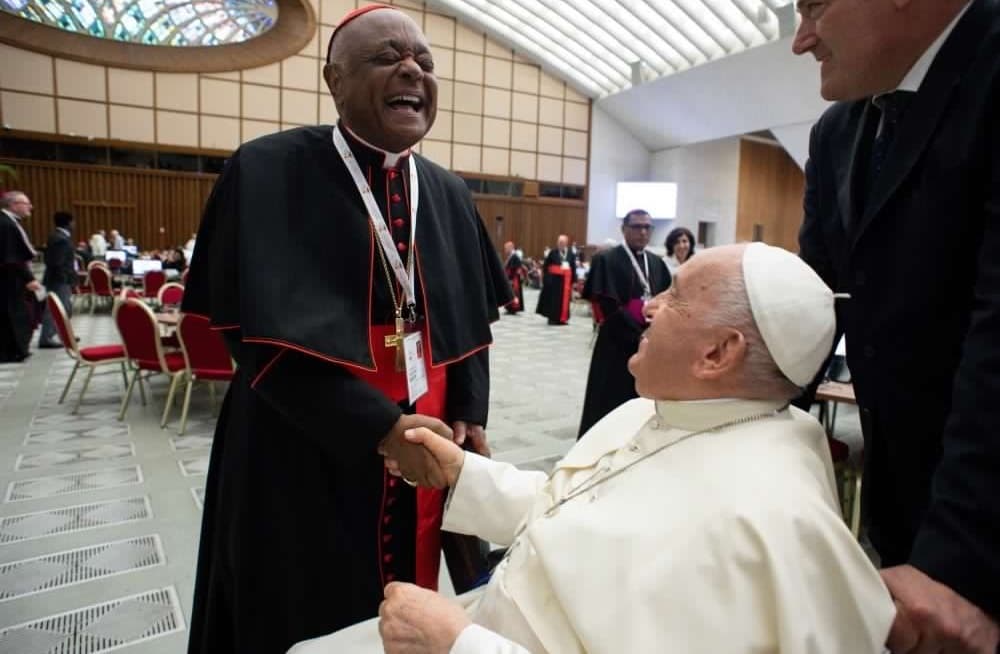
POPE FRANCIS SNUBS WASHINGTON’S WILTON CARDINAL GREGORY


FROM CRUX: (my astute comments embedded in red within the text.)

Speaking of the American context specifically, recently three of your fellow American cardinals and synod delegates had a meeting with Pope Francis to discuss challenges in the American Church. Many were surprised that you weren’t also part of that meeting. Is there a reason you didn’t participate?

I didn’t get the invitation. I didn’t get the invitation. I have no idea. I don’t know if they asked for the meeting or that the Holy Father asked them. I simply don’t know.

In a press conference Cardinal [Joseph] Tobin said he had requested the meeting with the pope…

I have no idea.

If you had been there, what do you think are some challenges that were important to discuss?

I would think the health of our ecclesial community would be one. Are we a healthy Church? That is, are we a healthy Church that’s rooted in the truth and living in the faith as best we can, practicing charity? And are we a Church that has something to say to the rest of the world? Why become a Catholic? (This is an astute comment and may be the reason the other three cardinals and the pope didn’t want him there as they don’t want to listen this kind of reasoning which is orthodox. Synodal Catholicism is infected with worldly concerns and talking, chattering, talking and incessantly talking about this, that and the other. It is neurotic talking. Did I say it is obsessed with talking?)

How do you think synodality can help in responding to these challenges?

It gets us talking to each other. One of the things that I am most impressed with, both last year’s gathering, this year’s gathering, is the fact that it’s an environment in which people can honestly speak to one another, hear one another, and not condemn one another. It’s a delightful opportunity to have someone raise an issue of significance that challenges me, to listen, to attempt to understand what’s prompting that opinion and maybe even to learn. A conversation that you enter into where you already have the answer is not a conversation. (And this is what Catholicism is reduced to under synodalism. It is all about, talking, talking, talking. Where are the perennial truths? Where is the call to perfection as St. Teresa of Avila demanded? Where is the call to repentance and individual reform, especially in the areas of ethics, addictions, self absorption and sexuality, most needed today? Where is any of that. No, neurotic and power hungry Catholics zwant power, decision making and their sinful lifestyles confirmed. They want nothing to do with sin, repentance and the call to holiness and a moral way of life. What a disaster for the Catholic Church, what Cardinal Pell stated, the last 13 years have been a catastrophe!)

Tuesday, October 15, 2024

I AM CONVINCED THAT THESE COMMONSENSE RECOMMENDATIONS WOULD WORK— BUT ONLY CATHOLICS WITH COMMONSENSE WILL UNDERSTAND THAT IT WILL WORK!


Single largest survey of Catholics ever completed in the United States.

Today the Real Presence Coalition (RPC) announced the release of the findings of its survey of U.S. Catholics to the general public.  The survey results can be found at https://realpresencecoalition.com/results/

In conjunction with the public release, the RPC also issued an open letter to U.S. bishops urging them to consider the survey’s findings as they proceed in their National Eucharistic Revival campaign.

“This is the single largest survey of Catholics ever undertaken in the United States,” said Vicki Yamasaki, spokesperson for the RPC.  “Surveys from organizations such as Pew Research and Center for Applied Research in the Apostolate (CARA) come nowhere close to the number of Catholics participating in this survey.”

The United States Conference of Catholic Bishops (USCCB) launched a multi-year National Eucharistic Revival campaign in 2021 in response to a Pew Research study which revealed a majority of Catholics no longer believe in the Real Presence of Jesus Christ in the Eucharist.

“The Pew survey revealed a very concerning problem, and the RPC designed and initiated this survey to specifically get at the root cause of this problem and probe the question of why lay Catholics believe there has been a loss of faith in the Real Presence,” said Jim Hobart, a partner with Public Opinion Strategies (POS) who assisted in the survey effort.

The RPC survey revealed that the loss of faith in the Real Presence has been precipitated by a combination of factors, including

1) Receiving the Eucharist in the hand;

2) Scandal of offering the Eucharist to public sinners who reject Catholic teaching;

3) Lack of reverence on the part of both the laity and priests;

4) Lack of solid catechesis; and

5) Lost sense of the supernatural.

Survey respondents also offered a number of specific recommendations to U.S. bishops on how to restore belief in the Real Presence, including:

1) Encouraging the practice of receiving the Eucharist on the tongue while kneeling;

2) Catechizing the faithful;

3) Promoting greater reverence for the Eucharist;

3) Eliminating the use of Extraordinary Ministers;

4) Withholding the Eucharist from public sinners; and

5) Increasing Eucharistic events such as Adoration and Benedictions.

“The overall findings of this survey can be best summarized by ancient Latin maxim ‘lex orandi, lex credenda’” said John-Henry Westen, a RPC member.  “There’s currently a disconnect between the way we worship and what we believe. There’s no single ‘silver bullet’ answer to solving this problem. An integrated, multifaceted approach will be required.”

“How will we know when there’s been a restoration of belief in the Real Presence?” asked Fr. Chad Ripperger, an RPC member.  “When the line for confession is at least as long as the line for receiving the Eucharist.”

Public Opinion Strategies (POS) is a nationally recognized research firm that has conducted 25,000 research projects and 11 million interviews across 50 states.  POS was engaged to assist in the survey design as well as the interpretation of its results.

The Real Presence Coalition (RPC) is an informal group of influential Catholics working to restore belief in Jesus Christ’s Real Presence in the Holy Eucharist. Its mission is to provide valuable input to U.S. bishops in their multi-year effort to restore belief in the Real Presence of Jesus Christ in the Eucharist.

The massive RPC survey resulted in nearly 16,000 responses with an 80% completion rate and generated more than 250,000 words of open-ended feedback.  While the survey was open to all U.S. Catholics, those who responded could best be characterized as “highly engaged in their faith,” with over 97% of respondents attending Mass on at least a weekly basis.

The Real Presence Coalition urges the U.S. Conference of Catholic Bishops to consider these findings as they work toward a Eucharistic Revival.  The survey’s insights provide a roadmap for restoring faith in the Real Presence of Jesus Christ in the Eucharist.

WHY AREN'T WE PRAISING AND EMPHASIZING SAINT POPE PAUL VI'S HUMANAE VITAE? EVEN FORMER PRESIDENT BILL CLINTON ACKNOWLEDGES THAT AMERICANS AREN'T REPRODUCING IN THE NUMBERS NEEDED TO SUSTAIN THE PEOPLE WE NEED FOR OUR SOCIETY!


Former President Bill Clinton said it. Speaking about migration, he stated that migrants need to be vetted and there should not be open boarders where there is no screening of those trying to "break" in. 

What he said next, and this was in Georgia, near my former parish in Macon, was stunning but true.

He said we need migrants because Americans are not conceiving and giving birth to babies to keep up with what we need to do in America and the people we need to do it. 

Low birth rates among Americans, and many places in Europe, to include Rome and all of Italy, is causing a need for migrants and a generous allowance of numerous migrants entering these "barren, birthless" places.  

The Democrat party is the party of birth control and abortion on demand by the mother until and up to the end of the 9th month. They want no laws to protect the innocent unborn. They want the mother to make the decision about murdering or allowing to live the child they carry, completely dependent upon her mother! Absurd to say the least.

It would be like me saying that I don't want any laws to stop me from driving recklessly. Every driver should be able to make their own decision about how they are going to drive with no laws to curtail their murderous driving ways. The way I drive must be my decision made with the automobile I drive--no government intervention please! 

Why isn't the current magisterium of the Church, the pope and bishops in union with him, promoting Humanae Vitae to the nth degree? Why??????

BEFORE AND AFTER OF A BARN OF A FORMER PROTESTANT CHURCH BUILDING AND MY ASTUTE OBSERVATIONS!

 Before and After: St. Edward Catholic Church in Athens, Texas

BEFORE!


AFTER!


This Catholic parish purchased a former Protestant church building as is quite evident by the before picture and how the sanctuary is placed on a stage and one could easily fall off of if not careful!

But the A-frame building is like many low-cost Catholic church buildings built in the 1950's and 60's. 

The after photos shows how a traditional approach to the sanctuary can truly beautify an otherwise ugly building and/or setting. 

What I appreciate the most, though, is even though the sanctuary is traditional and with an altar railing to boot, there is only one altar, not a multiplicity of altars. And the one altar is not competing with a secondary altar behind it and placed higher! The reredos for the tabernacle is quite beautiful, quite tradtional but not on a competing "high" altar. The only altar, one that is free standing, but connected visually to its backdrop, can allow for Mass facing the nave or ad orientem. 

One altar please and make it look like this in terms of the connection to what is behind it!

Well done Texas!

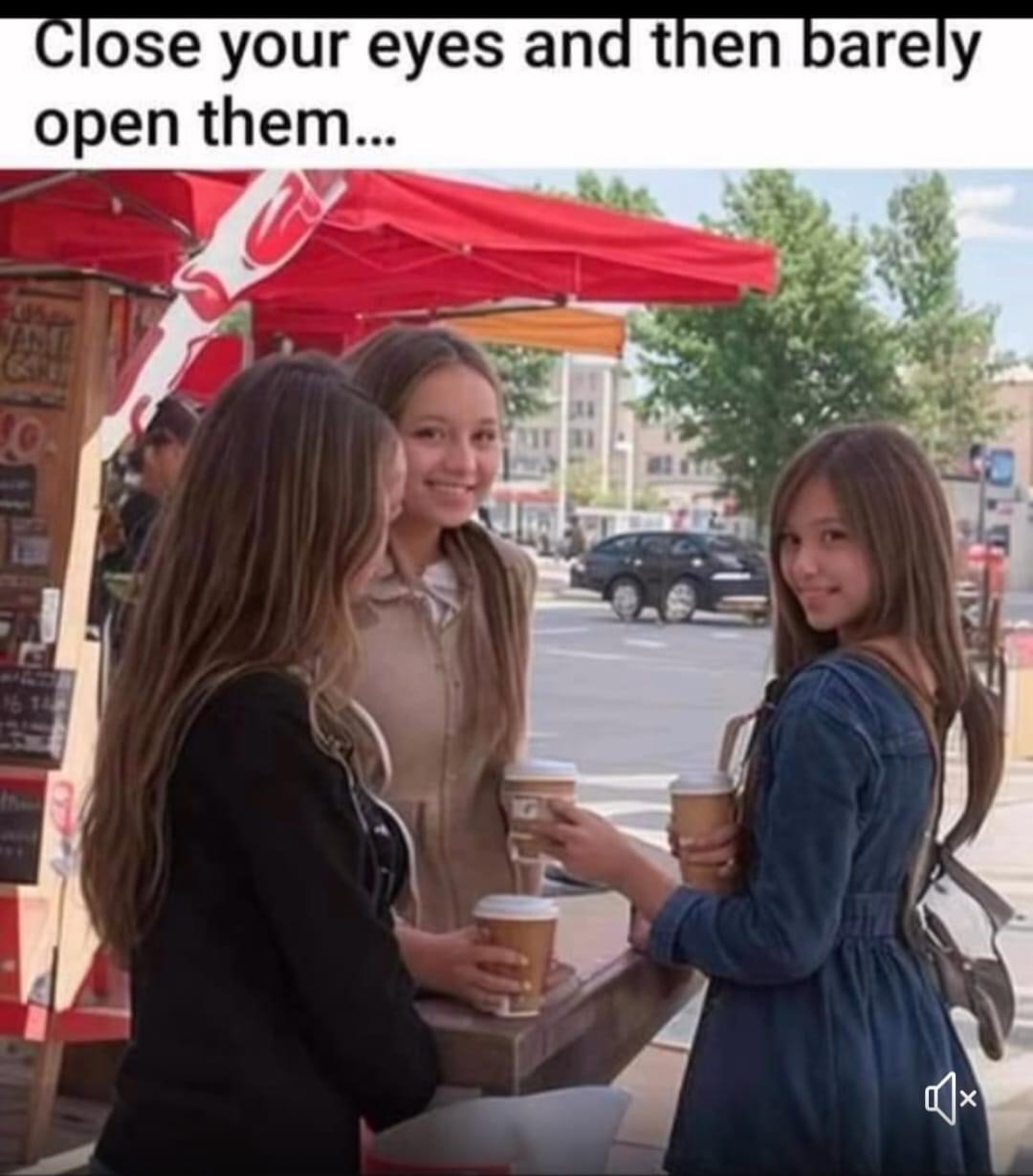
AMAZING WHAT “AI” CAN SIMULATE!!!

 It’s amazing how real AI makes these look! Astounding!


Another AI simulation from 1969! A little more crude but astounding nonetheless:

Monday, October 14, 2024

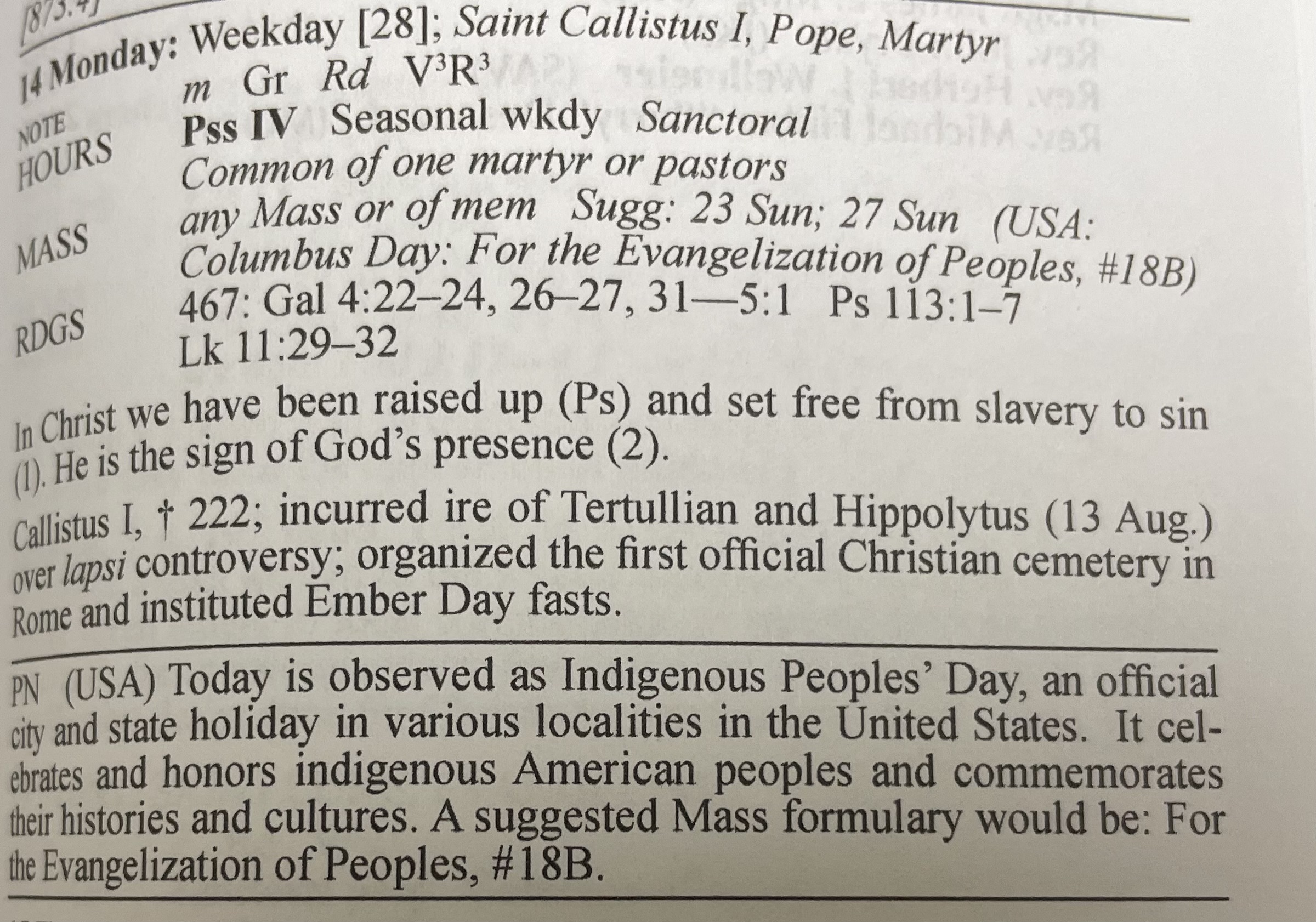
IT’S MONDAY, OCTOBER 14 AND IT’S COLUMBUS DAY, STUPID!

 This is in the Ordo telling priests what Mass they may celebrate:

Apart from Thanksgiving Day, I don’t think the Mass should be used to celebrate any country’s civil holidays. 

But for today, the Ordo for Mass, the little book that tells priests what Mass to celebrate, what is optional and what votive Masses tie into the Scriptures for Mass when there is no prescribed daily Mass, goes cancel culture and woke as it concerns Columbus Day, which is a federal holiday.

Some places have tried to cancel Christopher Columbus and substitute “indigenous People’s Day”! While it might be a good idea to have such a celebration, if it isn’t anti-Christian or anti-Relgion, today, Columbus Day, isn’t the day to do that. Indigenous People’s Day evolved from cancel culture, revisionist’s history and the woke ideological movement of the last few years. 

Who put this into the Ordo is what I want to know!

Friday, October 11, 2024

WHY OR WHY BUILD A BEAUTIFUL NEW CHURCH AND HAVE DOUBLE ALTARS??? DON’T BISHOPS HAVE A CHURCH BUILDING COMMISSION TO PREVENT SUCH THINGS???


 I presume the back altar with the tabernacle is an altar and retabalo (reredos) harvested from a closed church in the northeast. That altar had to be completely dismantled to be shipped to this new church and then put back together again.

Why could they not have pulled the altar part of this altar piece forward so that it could be freestanding and allow for Mass to be celebrated in either direction? And the altar would remain on the same level as the reredos, not lower.

The new altar is competing with the old altar as though this took place in 1966 rather than 2024! A new church should be designed so that it doesn’t look like the freestanding altar was put in after the original altar. It makes no sense to me with new construction, no sense whatsoever!


Wednesday, October 9, 2024

WHAT A CRAZY ELECTION SEASON AS THE CURRENT PRESIDENT THROWS HIS VICE PRESIDENT UNDER THE BUS AND LET’S NOT LOSE OUR SENSE OF HUMOR…


President Biden, still reeling from being unceremoniously dumped as the chosen presidential candidate, has become passive aggressive towards his replacement at least four times as I count it:

1. He put on a mega hat!

2. He knocked Harris’ rally in Michigan off the air to tout the good news about employment as he claimed victory rather than allow Harris to do so

3. He “joked” about getting back into the presidential race 

4. He praised Governor DeSantis leadership on hurricanes, again knocking Harris off the air to do so with an impromptu news conference and contradicting the silliness of Harris’ political trick to shame DeSantis 

And then Saturday Night Live has a really funny skit as they throw Harris and her knucklehead choice of a Vice Presidential candidate under the bus. You can watch the Facebook Video HERE. IT IS FUNNY!

Tuesday, October 8, 2024

AT THE NEXT CONCLAVE THE MAJORITY OF CARDINALS WILL NOT KNOW EACH OTHER! GOOD, BAD OR INDIFFERNT?

 Recently, a Cardinal from a far, far,& far away country from here, told me that Pope Francis has had almost no meetings with the cardinals and thus very few know each other well.

With 21 more new cardinals, that puts the situation on steroids.