Translate

Monday, May 25, 2015

A LOSS OF CATHOLIC FAITH IN IRELAND: TWO PERSPECTIVES

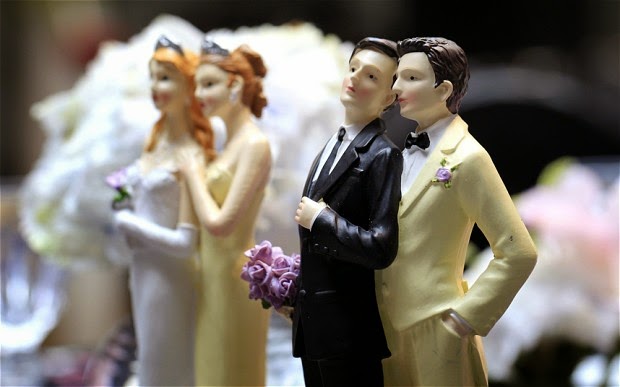
What Ireland did on Friday in showing the world that a popular vote landslide could lead to the approval of same sex marriage tells us in some ways what is wrong with the post-Vatican II Church today. There has been an over correction in tactics of leadership from authoritarianism (not to be confused with authoritativeness) to a wishy-washy Catholicism that lacks it edginess, authority or even convinceability.

However, there are two good commentaries on the Irish Church's decline and near fall. The first is built on the authoritarianism of the Irish Church enshrined in government that usually leads to anti-clericalism when politics and religion are too intertwined and viewed as limiting the freedom of the populace that doesn't believe everything the Catholic Church teaches. Civil law supports Church law and this causes resentment. It would be like Sharia Law imposed upon Americans who aren't Muslim and even the Muslims might not appreciate it being a part of secular law.

I know that my Italian mother thought it was a good thing when Italy finally allowed civil divorce which the Church had successfully defeated until a popular voters' uprising. My mom said that many good-for-nothing Italian men had left their wives and families and were living with their significant other and got away with it legally. In other words abandonment was allowed in the law and the offending party didn't have to offer support to his family.

This also caused a serious anti-clericalism in Italy when the Church involved herself too much in Italian politics like the Muslims do in their own Muslim countries.

The other commentary points to a loss of Catholic Faith and the vacuum filled not by evangelical Protestantantism as in South America, but by godless secularism.

Here are the two commentaries:

'We're next' says Italy after Irish gay marriage vote

Positive reaction to overturning of Catholic church's hold on Ireland may have knock-on effect elsewhere


People march during the annual Lesbian, Gay, Bisexual and Transgender (LGBT) Pride Parade in Turin, on June 28, 2014
LGBT Pride Parade in Turin in 2014. Italy now is the only Western European country that does not recognize either same sex marriage or civil unions. Photo: AFP/Getty
Ireland's historic vote in favour of same sex marriage reverberated across Italy on Sunday, as Prime Minister Matteo Renzi's lieutenants came out in force to call for fast-track passage of a stymied civil partnership law.
Socially conservative Italy now is the only Western European country that does not recognize either same sex marriage or civil unions. But that the Irish referendum garnered an unexpectedly strong 62 per cent "Yes" vote in such a deeply Catholic country rallied backers of the Italian law, which has been languishing in parliament for months.
Several editorials on Sunday suggested that such a referendum in Italy would have a similar outcome, recalling the divorce referendum in 1974, when 60 percent of Italian voters went against the wishes of the Catholic church on a major social issue.
La Repubblica reported Mr Renzi confided privately that in the wake of the Ireland vote the question of civil unions in Italy can no longer be put off. Many of his key cabinet members and key party allies spoke out in favor of swift passage of the proposed legislation.

Roberto Speranza said it was now Italy's turn (AFP/Getty)
"What joy," said Roberto Speranza, leader of Mr Renzi's centre-left Democratic Party of the result. "Now it is Italy's turn." "The moment has arrived, finally, to approve this before the summer's end," said Democratic Senator Andrea Marcucci.
"Ireland is giving us a lesson in civility," said gay Italian politician Nichi Vendola, president of the Apulia region since 2005.
Laura Boldrini, speaker of the Italian Chamber of Deputies, said Ireland was giving Italy a much-needed push forward. "It is time that Italy has a civil unions law," Ms. Boldrini said on Twitter. "To be European means to recognize rights."
• Ireland's love for its gay children won out over fears for 'family'

The crowd in Dublin celebrates the referendum result on Saturday (EPA)
Ireland is the 13th EU country to recognize gay marriage. Many countries, such as Germany, allow civil partnerships but are yet to allow marriage, while Cyprus, Greece and most of Eastern Europe do not recognize any form of same sex union.
The vote in Ireland crowned a dramatic shift in public attitudes towards homosexuality and a wide range of other social issues as the Roman Catholic church's once-firm grip on the country weakens.
There was soul-searching in churches across the country after the vote in favour of changing the 1937 constitution specifically to allow same-sex marriage was declared passed, with a vote of 62.1 per cent in favour, on Saturday.

Archbishop Diarmuid Martin says there's a "growing gap between Irish young people and the Church" (AFP/Getty)
The Archbishop of Dublin, Diarmuid Martin, described the vote against church teaching on gay marriage as "overwhelming" and said Catholic leaders needed "urgently" to find a new way to speak to the country's young.
"It's a social revolution," he said. "The church needs to do a reality check right across the board."
He said that some church figures who argued in the "No" camp came across as "harsh, damning and unloving, the opposite of their intention".
"Have we drifted completely away from young people?" he said. "Most of those people who voted 'yes' are products of our Catholic schools for 12 years."

After being honoured with the Tipperary International Peace Award on Sunday, Ban Ki-moon said the landmark referendum giving equal rights to same-sex couples was a truly historic moment (PA)
 
The vote is likely to have a knock-on effect elsewhere, particularly in Catholic-majority countries. It was also welcomed by Ban Ki-moon, the United Nations secretary-general.

"This is a truly historic moment: Ireland has become the first country in the world to approve marriage equality in a nationwide referendum," he said.

"The result sends an important message to the world: All people are entitled to enjoy their human rights no matter who they are or whom they love."

Italy's proposed civil partnership law – based on the German model - gives same sex couples many of the same rights as married couples, as well as the option of stepchild adoption, which allows a partner the possibility of adopting the biological child of the other partner. But the law is stuck in a Senate committee, where it has been bombarded with 4,320 amendments and is currently being rewritten with careful language that does not mention marriage.

Many of the roadblocks to the law have been thrown up by the far-right Northern League and the New Centre Right party of Angelino Alfano, which remain steadfast in their opposition to the adoption of children by same sex couples, the right for same sex partners to each other's pensions or a union that resembles marriage. "In our country we need to identify a path for civil unions that at the same time is not the same as marriage," said NCR's Fabrizio Cicchitto.

Pope Francis remained silent on the Irish vote during his Pentecost Sunday address (SIPA/Shutterstock/ Rex Features)
 
How the Vatican will respond to the social shift underway is as yet unclear. Pope Francis remained silent on the Irish vote during his Pentecost Sunday address, while comments by some senior Catholic clergy suggested the Church was reeling from the result.

"Many times the Catholic Church in Italy has said it is one thing to respect legitimate rights of every person, but it is another to speak of gay marriage," said Sicilian Archbishop Michele Pennisi in La Repubblica. But at least one senior Catholic cleric in Ireland now disagrees, saying the outcome of the vote was a message that the Church needs a "reality check. "

"I appreciate how gay and lesbian men and women feel on this day," said Diarmuid Martin, the archbishop of Dublin. "That they feel this is something that is enriching the way they live I think it is a social revolution."

While Pope Francis has in the past stressed that the Church continues to regard marriage as being a union between a man and a woman, he has also asked senior Church leaders to study the reasons why many countries continue to legalise same sex marriages.

Father Timothy Radcliffe is an outspoken proponent of gay rights (Nick Cornish)

In Latin America, where Catholic traditions and conservative governments tend to be anti-gay, Brazil, Uruguay, the Pope's native Argentina and the Federal District of Mexico City have passed laws allowing same sex marriages. Last week, the Pope appointed a liberal Dominican priest, Father Timothy Radcliffe, as consultor for the Pontifical Council for Justice and Peace. The Englishman is an outspoken proponent of gay rights – another sign, some say, that Pope Francis is showing willingness to take a more inclusive stance on the issue.

And here is the commentary concerning the loss of Christian Faith altogether:

Secularism has filled the vacuum left by the decline of Irish Catholicism
Saturday’s vote for same-sex marriage in Ireland is one for the history books. It’s the first time a country has legalised gay marriage by popular vote.

The question on everyone’s lips is: what changed Catholic Ireland into a post-religious country where gay marriage has been enshrined in law by the will of the majority of people?

The vastly diminished role of the Church has left an elephantine emptiness in Irish life. One very important factor is how ashamed many Irish people feel about the sexual abuse crisis. Perhaps the people who ought to feel that shame are the guilty priests and nuns. But Benedict XVI was right, in his book-long interview with Peter Seewald, when he pointed out that most Irish families had a member who had a vocation either as a priest or a nun. Therefore most Irish people felt very deeply the disgrace caused by the revelations of clerical sexual abuse. This was the case even if the priest or nun in a family was totally innocent.

Growing up in Ireland, I saw this first-hand, when a friend or acquaintance who had a brother who was a blameless priest, they would feel embarrassed to say that their sibling was a good priest, for fear that people would think they were “covering up”.

Humiliation and regret have gone hand in hand, and increasingly in the past few decades, the Irish, who have, by an average margin of two to one, legalised gay marriage, convinced themselves that if the Church was wrong, then the opposite of the Church’s teaching must be right.

When the Church lost power and influence in Irish life, that same power and influence was inherited by the forces of secularism. Have no doubt: the vacuum was filled by secularism: The Irish did not turn to another religion such as Pentecostal Christianity. When tens of thousands of people stopped practising as Catholics, they did not en masse convert to any other Christian denomination.

Jon Anderson hit the nail on head when he recently wrote: “Many Irish believe in Jesus in the same way that Hindus believe in Gandhi, an interesting historical figure.”

It’s not as simple as saying that the Irish have rejected the Catholic Church. It goes much deeper: the truth is that the majority have abandoned traditional Christianity and will not let it guide their choices and their way of life.

It’s a strange irony that the Irish constitution, dedicated to the Most Holy Trinity, will now enshrine same-sex marriage. An austere portrayal that even the most formally Catholic legal charters for a formally Catholic country can be usurped by secularism.

Sunday, May 24, 2015

THE LAST DAY OF THE EASTER SEASON: PENTECOST AND THE FLAMES THEREOF


PERSPESTIVE AND PASTORAL COMMON SENSE

We know that in many places around the world if even 11% of Catholics attend Mass, that is good news. Think of what communism did to Catholicism in Eastern Europe as well as what it is doing today in Red China. Many people abandon the Catholic faith, and other Christian denominations, if it is not politically or socially in vogue to be considered a public Christian or Catholic. Yet in Communist Europe of the past and Red China of today, there were/are underground, faithful Catholics who keep the Church going even if just a mustard seed.

Right now in those places around the world where the mustard seed of 11% of Catholics are attending Mass, there is no need to go underground yet although I suspect on the hot button cultural issues concerning sexuality they need to keep their mouths shut in the public square.

Ireland is a case in point. It is Catholic in name only. But the decline in Irish Catholicism accelerated by too much of Catholicism being a kind of state religion with inept episcopal leadership in the face of scandal and the relentless march of secularism has in reality made Ireland a secular state with a secular religion more virulent and authoritarian than anything Catholicism was in her heyday. Perhaps it is the Irishness of Ireland that is so authoritarian simply picking and choosing which vehicle they will use to express it. Today it is a ruthless secularism.

The law of prayer is the law of belief. Yet we know of high Anglicanism with tasteful and exquisite liturgy and music that despite the smoke, bells, chant and elaborate ritual, Anglicans are quite content to be post-Christian. They have led the way in fact into appeasing the secular culture on everything sexual.  

How do faithful Catholic today navigate through the cesspool of secularism and the corruption it brings to Catholics and other Christians who drink of its water?

1. Love never fails. Pray for them but don't join them. This is true of family members, be they parents, siblings children or down the ancestry ladder.  One can love a relative without accepting their lifestyle. One can visit them in their homes, go out to eat with them and have them as friends. Never enable a sinful lifestyle though. But don't harangue.And if they influence your more than you influence them disengage.

2. Be compassionate and in dialogue with relatives (who want to speak to you) about their lifestyle choices. Sometimes, though, following Christ and being a Catholic estranges us from family members who aren't. This goes way back to the early Church and we have to accept this reality.

3. One commenter wrote on another thread that we should engage those who oppose us. A couple of years ago my parochial vicar was on a panel at Mercer University and the topic was homosexuality. With him was an openly homosexual Episcopal priest in a public partnership as well as others yea and nay. It was a very productive meeting and I hear Fr. Dawid represented the Church very well and was invited out for lunch by the gay Episcopal priest! That says something, no?

4. On one to one meetings with those who have same sex attractions, I think I am quite pastoral as I am in the confessional. I don't think anyone thinks I am condemning them to hell or that I find them disgusting as I don't. When they are respectful of the Church and her teachings, I think things are very productive. Sometimes while aiming for perfection we have to settle with what will do. When Jesus couldn't keep his three apostles, Peter, James and John awake in the Garden of Gethsemane, in accepting this reality Jesus simply said "It will have to do!"

5. It is better for a homosexual to be monogamous rather than promiscuous and to be in a loving, healthy partnership than in one that is unhealthy. Mortal sin is mortal sin but only God will judge why people committed their mortal sins at their personal judgment. Why are some Catholics, a few who comment here, persist in breaking the 4th and 8th Commandments when it comes to the Holy Father and others in the Church in positions of authority? Do I ban them from commenting or pray they will repent one day? Only God will judge their salvation at their personal judgement though. But for those who break the 6th Commandment (from masturbation to same sex sex)where true care and love are expressed in chaste ways, this should be encouraged and applauded.   Grace is at work. And pastoral counselors should counsel chastity, be it faithfulness to a partner or celibacy. We all know that in true marriages husbands and wives are often sexually inactive due to a variety of circumstances. In an illicit sexual partnership, chastity should be a goal as well as chaste celibacy.

The jury is out on what same sex partnerships that involve the adoption of children or children created in some fashion for the couple does to these children. We have some anecdotal evidence that it is quite harmful, but as with sexual abuse or any other type of abuse, it takes decades for people to acknowledge publicly what they experienced as children and teenagers. It will come though.  I am sure we will have studies on this in the future. It has to be damaging.

Finally, as our culture embraces the infidelity of Sodom and Gomorrah in its rejection of God (sexuality is a part of that infidelity) will we see a collapse of western civilization overrun by the barbarians of the day, be they ISIS or any other radical, death dealing group? Time will tell. We know history repeats itself.

But we also know that evil never prevails. The battle is won and this Pentecost Sunday should reassure us of the ultimate outcome!

PAPAL LATIN MASS FOR THE SOLEMNITY OF PENTECOST

 Latin Mass with Roman Canon and a chasuble worn by Benedict:

Homily:


“As the Father has sent me, even so I send you...  Receive the Holy Spirit” (Jn 20:21-22).  The gift of the Spirit on the evening of the Resurrection took place once again on the day of Pentecost, intensified this time by extraordinary outward signs.  On the evening of Easter, Jesus appeared to the Apostles and breathed on them his Spirit (cf. Jn 20:22); on the morning of Pentecost the outpouring occurred in a resounding way, like a wind which shook the place the Apostles were in, filling their minds and hearts.  They received a new strength so great that they were able to proclaim Christ’s Resurrection in different languages: “They were all filled with the Holy Spirit, and began to speak in other tongues, as the Spirit gave them utterance” (Acts 2:4).  Together with them was Mary, the Mother of Jesus, the first disciple and the Mother of the nascent Church.  With her peace and her smile, she accompanied the joyful young Bride, the Church of Jesus.

            The word of God, especially in today’s readings, tells us that the Spirit is at work in individuals and communities filled with the Spirit: he guides us into all the truth (cf. Jn 16:13), he renews the face of the earth (Ps 103:30), and he gives us his fruits (cf. Gal 5:22-23).

            In the Gospel, Jesus promises his disciples that, when he has returned to the Father, the Holy Spirit will come to guide them into all the truth (cf. Jn 16:13).  Indeed he calls the Holy Spirit “the Spirit of truth”, and explains to his disciples that the Spirit will bring them to understand ever more clearly what he, the Messiah, has said and done, especially in regard to his death and resurrection.  To the Apostles, who could not bear the scandal of their Master’s sufferings, the Spirit would give a new understanding of the truth and beauty of that saving event.  At first they were paralyzed with fear, shut in the Upper Room to avoid the aftermath of Good Friday.  Now they would no longer be ashamed to be Christ’s disciples; they would no longer tremble before the courts of men.  Filled with the Holy Spirit, they would now understand “all the truth”: that the death of Jesus was not his defeat, but rather the ultimate expression of God’s love, a love that, in the Resurrection, conquers death and exalts Jesus as the Living One, the Lord, the Redeemer of mankind, of history and of the world.  This truth, to which the Apostles were witnesses, became Good News, to be proclaimed to all.

            The gift of the Holy Spirit renews the earth.  The Psalmist says: “You send forth your Spirit… and you renew the face of the earth” (Ps 103:30).  The account of the birth of the Church in the Acts of the Apostles is significantly linked to this Psalm, which is a great hymn of praise to God the Creator.  The Holy Spirit whom Christ sent from the Father, and the Creator Spirit who gives life to all things, are one and the same.  Respect for creation, then, is a requirement of our faith: the “garden” in which we live is not entrusted to us to be exploited, but rather to be cultivated and tended with respect (cf. Gen 2:15).  Yet this is possible only if Adam – the man formed from the earth – allows himself in turn to be renewed by the Holy Spirit, only if he allows himself to be re-formed by the Father on the model of Christ, the new Adam.  In this way, renewed by the Spirit of God, we will indeed be able to experience the freedom of the sons and daughters, in harmony with all creation.  In every creature we will be able to see reflected the glory of the Creator, as another Psalm says: “How great is your name, O Lord our God, through all the earth!” (Ps 8:2, 10).

            In the Letter to the Galatians, Saint Paul wants to show the “fruits” manifested in the lives of those who walk in the way of the Spirit (cf. Gal 5:22).  On the one hand, he presents “the flesh”, with its list of attendant vices: the works of selfish people closed to God.  On the other hand, there are those who by faith allow the Spirit of God to break into their lives.  In them, God’s gifts blossom, summed up in nine joyful virtues which Paul calls “fruits of the Spirit”.  Hence his appeal, at the start and the end of the reading, as a programme for life: “Walk by the Spirit” (Gal 5:6, 25).

            The world needs men and women who are not closed in on themselves, but filled with the Holy Spirit.  Closing oneself off from the Holy Spirit means not only a lack of freedom; it is a sin.  There are many ways one can close oneself off to the Holy Spirit: by selfishness for one’s own gain; by rigid legalism – seen in the attitude of the doctors of the law to whom Jesus referred as “hypocrites”; by neglect of what Jesus taught; by living the Christian life not as service to others but in the pursuit of personal interests; and in so many other ways.  The world needs the courage, hope, faith and perseverance of Christ’s followers.  The world needs the fruits of the Holy Spirit: “love, joy, peace, patience, kindness, goodness, faithfulness, gentleness, self-control” (Gal 5:22).  The gift of the Holy Spirit has been bestowed upon the Church and upon each one of us, so that we may live lives of genuine faith and active charity, that we may sow the seeds of reconciliation and peace.  Strengthened by the Spirit and his many gifts, may we be able uncompromisingly to battle against sin and corruption, devoting ourselves with patient perseverance to the works of justice and peace

Saturday, May 23, 2015

ARCHBISHOP MARTIN: CHURCH NEEDS REALITY CHECK? DIDN'T POOR, MALIGNED POPE BENEDICT TRY TO DO THIS?

In the last 50 years and beginning with the redefinition of the Liturgy which became banal with its loss of reverence or what some would say irreverence, loss of piety and loss of wonder and awe in the majesty of God, that what happened in Ireland was bound to happen.

Would a liturgy that had maintained the spiritual, devotional, piety and reverence of the Latin Liturgy with only minor adaptations been able to sustain the Irish in the secularism that had fed their religious decline coupled with scandal in the Church both pre- and post-Vatican II that might have been abated by authentic Faith and piety?

It is a wake-up call for not just Ireland but for the Magisterium from the Holy Father to the college of bishops and the priests and deacons that support them. It is a wake up call for the laity.

A new and improved Church as a result of Vatican II did not, has not and will not come about. True and time tested is what is needed. Restoration as Pope Benedict envisioned it is the way.  

Archbishop Martin: Church needs reality check

Archbishop of Dublin Diarmuid Martin has called for the Church to take a reality check after the gay marriage vote.

Archbishop Martin declared the groundswell of support for same-sex couples was a social revolution that did not happen in the last day.

“It’s a social revolution that’s been going on – perhaps in the Church people have not been as clear in understanding what that involved,” he said.

“It’s clear that if the referendum is an affirmation of the views of young people the Church has a huge task in front of it.”

In the weeks running up to polling day, a series of Catholic bishops issued open letters to congregations outlining their concerns about gay marriage and why the Church would not support the reform.

The Primate of All Ireland, Archbishop of Armagh Eamon Martin, said the hierarchy may even reconsider its position on whether priests would continue to solemnise the civil aspect of a marriage if the vote was passed.

But Archbishop Diarmuid Martin called on Church leaders to take a look at itself and how it interacts with young people and their views.

“I think really the Church needs to do a reality check,” he told RTE.

“I appreciate how gay and lesbian men and women feel on this day. That they feel this is something that is enriching the way they live. I think it is a social revolution.”

Archbishop Diarmuid Martin said the Church needs to look at all areas it is involved in, from the things it is doing well in to areas where it has drifted away from young people.

The senior cleric said that there have discussions at the highest level in the church on where the contact was between the Church in Ireland and young people.

“We have to stop and have a reality check, not move into denial of the realities. We won’t begin again with a sense of renewal with a sense of denial,” he said.

“I ask myself, most of these young people who voted yes are products of our Catholic school system for 12 years. I’m saying there’s a big challenge there to see how we get across the message of the Church.”

THE SPRINGTIME FOR THE CHURCH IN THE POST VATICAN II ERA WILL BE PUT ON HOLD FOR A WHILE

It appears that once Catholic Ireland, prior to Vatican II, is no longer Catholic in the post-Vatican II 21st century after all the "spirit" of Vatican II experiments and loss of Catholic identity and lack of appropriate leadership prior to Vatican II and after as it concerns the supervision of clergy drunk on sin and change, is about to approve same-sex marriage.

Are they leading the way for Catholics throughout the world in this post-Catholic era? Time will tell.

I wonder what the pew-forum will say about this as it concerns the success of Vatican II changes that has led to this new springtime for the Church?  The laity, as Vatican II teaches, has its expertise and witness in the secular world. Voting Catholic, one would think, is what Vatican II called Catholics to do as the secular is where they witness to their Catholic Faith.

Seems though they are now witnessing to their post-Catholic faith which is actually godless secularism.

DO ANY OF YOU RUN INTO LITURGICAL GIMMICKS AT SUNDAY MASS ANYMORE

It would be wrong to call these stupid liturgical gimmicks as many are offended by the word stupid but not by the stupid gimmicks.
In the 1970's I was taught that gimmicks during the liturgy were good because these were creative and made the Mass more interesting and engaging. It has worked really well hasn't it! Before the gimmick season we only had about 10% of Catholics not attending Mass and today after the gimmick season with have about 88% not attending Mass. This is success you can really measure!

But I digress.

Since Sunday is Pentecost Sunday, I got nostalgic for Pentecosts past and the things I had hope to do gimmick-wise but failed to do for whatever reason, maybe by the power of the Pentecostal Holy Spirit?

One gimmick was to get all the ethnic groups in the parish to wear their native costumes to Mass. Never did that for some reason.

Another gimmick, which I actually like but forgot to promote this year, but I am sure many will do it anyway, is for the laity to wear red to Mass. I like that actually. Oh, I already said that--the redundant spirit in me.

Another gimmick was to get all the different language groups in the parish to offer a petition in their own native tongue during the Universal Prayers. I just couldn't get organized on that.

Another gimmick I never instituted but heard other parishes did which made me pentecostal red with jealousy was to encourage the congregation to say the Our Father together but in their own native tongues. I think this was to reenact the babel of the Old Testament or was it to show that the different languages if they were saying more or less the same thing could become one through the babel and thus overcome it?

And of course, what Pentecost Mass would be complete without a gimmicky pentecostal liturgical dance somewhere during the course of the festivities?

Here is a Protestant version of a Pentecostal Liturgical dance. I like the gimmick of the red paper cut-outs hanging from the ceiling as a representation of the tongues of flames. But I thought protestants were opposed to dancing????? But I really, really am touched by the canned liturgical dancing music for the Holy Spirit to accompany this liturgical dance gimmick. Although the congregation is ad orientem, that is with their back to us (but not the choir) we can see the great joy and exquisite drunkenness of the Holy Spirit on their faces as they experience this glorious gimmick:

Here is a Catholic version of a Pentecostal Dance at Mass. I think this gimmick speaks for itself. I see the Church is truly packed with Catholics dying for this kind of liturgical gimmick to get their Pentecost Sunday going!

Friday, May 22, 2015

ISN'T IT TIME TO WAKE UP AND SMELL THE COFFEE AND I'M DIRECTING THIS TO BISHOPS AND THEIR LITURGISTS

My comments first, but below these is a great article from Crisis Magazine on kneeling for Holy Communion and receiving on the tongue: I know there are those who wish to go back exclusively to the 1962 missal. They are a tiny minority. Don't get me wrong I love the 1962 Missal and would gladly serve a parish where it was exclusively used. But I love the revised Roman Missal too, especially since we now have the new and glorious revision of the English. It can be celebrated in an EF sort of way if celebrated in Latin with use of all the Propers or celebrated in a 1965 missal sort of way if all propers and parts of the Mass were chanted in the vernacular.

The greatest problem with the revised Roman Missal is what happened subsequent to its publication. There was immediately the calling forth of lay lectors who had little or no training or expertise in either proclaiming the Scriptures at Mass or formation in the Scriptures. Warm bodies volunteered and that's all it took.

Then standing for Holy Communion became an option and the illicit receiving of Holy Communion in the hand once indiscriminately chosen Extraordinary Ministers of Holy Communion came about started to occur until after the fact of its practice the USCCB approved it in 1977! I was in the seminary but receiving in the hand long before this approval!

Today in many large urban northeast metropolises, 88% of Catholics do not attend Mass and of the 11% who do, we're not sure they actually believe what the Church believes about transubstantiation and the real presence of Christ. This is shockingly sad!

Crisis Magazine has a good article on all of this and it is well worth reading as we approach the Feast of Corpus Christi in two weeks.

The single most important recovery of a lost liturgical practice even for the OF Mass is kneeling for Holy Communion and receiving on the tongue. This, bar none, will bring back Catholic reverence, piety and devotion for the Most Blessed Sacrament! 

From Crisis Magazine: The Reception of Holy Communion in the United States


This year marks the 50th anniversary of the close of the Second Vatican Council. Pope Francis has decided to mark the occasion with the “Year of Mercy.” Despite much happy-talk and positive papal press, it is a time of foreboding in the Church. The anxiety over the coming Synod on the Family is substantial and growing, with the German bishops’ recent moves to formally ignore the Church’s teachings on sexual morality and the family. Their corruption, and the decayed state of the Church in Europe, is a source of much distress.

The social and political situation in the United States is also of concern. Soon, the Supreme Court may declare homosexual “marriage” a constitutional right. The Obama era has been marked by a series of assaults on religious liberty and the Church’s future ability to freely exercise its prerogatives is uncertain.

It seems an apt time, therefore, for the United States Conference of Catholic Bishops (USCCB) to take stock of the state of affairs ad intra Eccelsiam. By clearly examining the health of the inner life of the American Church, the bishops can lay a better foundation for dealing with the challenges from the outside.

Of particular concern these fifty years after the Council ought to be the changes made to the liturgy in the United States in the late 1960s and 1970s, implemented by, and under the authority of, the bishops’ conference. And the most fundamental of these changes relates to the manner of reception of Holy Communion at Mass, whereby the vast majority of today’s communicants receive Communion in the hand while standing.

In reviewing the challenges both inside and outside the Church, based upon several decades of experience, the bishops must ask themselves a simple, profound and concrete question: Have the changes to the manner in which the Faithful receive the Lord in the Blessed Sacrament assisted the Faithful in their understanding of, and active participation in, the mystery, beauty and essential purposes of the Holy Mass?

Reception of Holy Communion in the Hand

Today, the practice of receipt of Holy Communion at Mass in the hand is extremely widespread. Like other changes that followed the Council, many Catholics incorrectly associate this manner of reception with the “reforms” of Vatican II. In truth, the Council gave no permission to allow the Faithful to receive the Blessed Sacrament by hand, nor was it made part of the rubrics for the Novus Ordo missal of 1969.

The movement to permit this manner of reception grew in force after the close of the Council. The idea, it seems, was based on a kind of antiquarianism that associated reception in the hand with the practice of the early Church. It was also part of the effort to promote the understanding of the Mass as a community meal over the conception of the Mass as primarily a Holy Sacrifice.

It seems apparent, however, that these lofty concepts were hardly embraced or understood by the vast majority of the laity. For his part, Pope Paul VI perceived significant dangers in allowing for the practice. Responding to the pleas of a minority of progressive European bishops (sound familiar?) to permit in-hand reception, in May 1969, the Sacred Congregation for Divine Worship declared that “the Holy Father has decided not to change the existing way [via the tongue] of administering holy communion to the faithful.” (See Memoriale Domini at para. 11.)

The Holy See apprehended the gravity of permitting a change in the solemn manner of the reception of the Blessed Sacrament. It recognized that the proposed change “carries certain dangers with it which may arise from the new manner of administering holy communion: the danger of a loss of reverence for the august sacrament of the altar, of profanation, of adulterating the true doctrine.” (See Id. para. 10.) By a two-to-one margin, the bishops worldwide voted in support of the position of the Holy Father.

Nonetheless, in the typical fashion of the times, the pope undercut his own declaration by allowing the various bishops’ conferences the right to permit Communion in the hand in their respective territories via a secret, two-thirds majority vote of the bodies. (See Id. at para. 11-12.)

In the United States, the bishops’ conference voted in favor of reception in the hand in 1977. The conference had rejected the practice in votes held in each of the preceding two years. Cardinal Bernadin, the outgoing president of the conference in 1977, apparently by means of parliamentary tricks, secured the two-thirds majority as one of his final “achievements” as conference leader.

The practice grew widely and quickly thereafter, and the American episcopacy seems committed to its maintenance. Discussing the implementation of the Third Edition of the Roman Missal, the January 2012 Newsletter of the USCCB’s Committee on Divine Worship proclaims as follows:

With regard to receiving Communion in the hand, there is a significant development from the 1985 GIRM to the 2003/2011 edition. Whereas in 1985, Communion in the hand was granted by virtue of an indult received in 1977, in the Roman Missal, Third Edition, Communion in the hand is now ordinary liturgical law for the United States, though every communicant retains the equal right of receiving on the tongue. (See January 2012 Newsletter of the Committee on Divine Worship at p. 3; emphasis added.)

The support for this claim—that “Communion in the hand is now the ordinary liturgical law for the United States,” supplanting the need for the indult—is rather dubious, as the General Instruction of the Roman Missal (“GIRM”) does not seem to support the notion. While the GIRM notes that a communicant may receive either by tongue or in the hand, it places a caveat on in-hand reception.

“The communicant replies, Amen, and receives the Sacrament either on the tongue or, where this is allowed, in the hand, the choice lying with the communicant.” (See GIRM at ¶161; emphasis added). Thus, the description of the legal status on reception in the hand offered by the Newsletter seems inaccurate. 

Reception of Holy Communion While Standing

The practice of receiving the Blessed Sacrament while standing preceded the limited permission for in-hand reception.

In 1967, the Sacred Congregation of Rites promulgated Eucharisticum Mysterium, wherein the Holy See declared that the Faithful may receive the Blessed Sacrament either standing or kneeling. Again, the bishops’ conferences were empowered to set the proper posture for their respective territories. (See Eucharisticum Mysterium at para. 32.) (This document also reminds us of the incredible speed at which the age-old liturgy was transformed, as it allowed the priest to sing aloud the Canon, an instruction that would become moot within two years.)

The American bishops, however, did not formally adopt a norm on the proper posture for the reception of Holy Communion until 2002. Such lack of formal direction, of course, did nothing to impede the removal of altar rails in countless parishes across the country, as the practice of taking Communion on one’s knees was nearly entirely abandoned.

In 2002, the USCCB formally named reception while standing as the proper posture for American Catholics. At that time, the bishops inserted language into the GIRM that, while not prohibiting a communicant to kneel, marked anyone who did so for “catechesis” so that he might come to learn the “reasons for” standing. (See GIRM 2002 at para. 160.) At the behest of the Holy See, the language on “catechesis” for those who wish to kneel was removed from the GIRM in 2010.

The Current State of Affairs

According to a 2013 study performed for Georgetown’s Center for Applied Research on the Apostolate, only 63 percent of Catholics believe in the Real Presence of Christ in the Eucharist. Nearly 1 in 5 believers in the Real Presence apparently hold to the belief without an awareness that it is taught by the Church. And of course well-over a third of Catholics do not believe at all in the Real Presence (and yet our bishops were eager to catechize those who kneel down before the Real Presence of the Lord!).

It is not here necessary to rehash other statistical information on the decline of American Catholicism following the Council and the changes to the Mass, such as the sharp drops in Mass attendance and vocations. While the experience of the last 50 years has not been uniformly negative, the tendency of the hierarchy to trumpet the “springtime of renewal” is a sad joke.

Furthermore, as the digital pages of this publication and so many other highlight daily, the American Church is increasingly isolated in a culture that is under constant, and effective, assault from an aggressive secularist, modernist ideology. Many American bishops have courageously and articulately proclaimed and defended the Church’s teachings on life, marriage and religious liberty, and yet, especially with marriage, there is a sense that the Church is rapidly losing ground and is, essentially, ignored.

In sum, we are not properly catechizing ad intra or ad extra Eccelsiam. The reasons for the problem are many, but at the core, the problem stems from our diminished liturgy, the diminishment of which is highlighted by the manner in which the Faithful receive Corpus Christi. Since, as the Council proclaimed in Sacrosanctum Concilium, the liturgy is the “summit toward which the activity of the Church is directed” and is also “the font from which her power flows,” we must first graft the spiritual life of the Faithful wholly onto the liturgy before we can hope to broadly evangelize inside and outside the Church. And reverence before the Eucharist is the heart of liturgical spirituality.

As has always been the case, the Mass is the greatest tool for teaching and handing on the Faith. The Church need not convert the entire body of believers into Thomistic scholars in order for the Faithful to fully understand and embrace the True Presence.

In a simple and profound way, the faithful can learn this truth merely through the reverent reception of the Blessed Sacrament and by observing the way in which we treat the Sacred Species. Its reception should be done in a manner that is unlike any other experienced in daily life.

In deep reverence, we come to Communion on our knees. Nothing else given to us requires us to kneel down in awe and respect.


We do not touch it, as we would any other object someone might give to us, for it alone is too holy.


We receive it with a paten under our chins, lest even a crumb fall to the ground. No other food is so honored.

Finally, it is essential for the episcopacy to be mindful of the geneses of Communion in the hand and the standing posture. Neither is the work of the Council. Sacrosanctum Concilium says nothing regarding a change in the manner of the reception of Holy Communion.

Neither is mentioned in the rubrics of the Novus Ordo; even the substantial changes instituted in the “Mass of Paul VI” gave no directive for these practices.

Indeed, Blessed Paul VI himself, the pope of the Council, refused to endorse in-hand reception and strongly counseled against it.

Thus, there is no reason given by the magisterium to retain these practices. Whatever abstract or academic notions prompted their adoption, the experience of the Church in the decades since shows that the underlying theology of the changes did nothing to catechize the faithful and enhance their devotion to the sacred liturgy.

The American bishops rightly wish to engage the culture on a wide range of issues, including the so-called “social issues.” Yet it is only the action of grace, the working of the Holy Spirit, that can ultimately convert hearts, and then minds. Until the Church fully reclaims the Sacred Liturgy and realizes the long-lost desire of the Council to draw the faithful into a deeper spiritual life, with the Liturgy at it center, the New Evangelization will not succeed.

Our shepherds need now to look to the inside in order to be prepared to reach to the outside. Promote honor and reverence for the Blessed Sacrament; the rest will follow.

POPE FRANCIS ENJOYS UNIVERSAL ACCLAIM. ALMOST

More on the hysteria and paranoia of the left and right concerning Pope Francis

Rightist Critics of Pope Francis

Pope Francis enjoys universal acclaim. Almost.

While the pontiff is building bridges to Communists in Cuba, nuns who had been under suspicion, Muslims, Jews, Protestants and even people outside the faith, two dissenting groups stand out: Catholics on the Left, in whose eyes he is not moving fast enough with respect to church laws, policies, and theology to effect the changes which they regard as urgent, and Catholics on the Right, who are displeased by almost everything this pope says and does.

So predictable are his critics on the Right that we seldom engage in sighting them or commenting on them in Sightings. But never to notice them does a disservice to those who would like a full accounting of the Pope-in-public, the Pontiff-in-the media, etc.

So, to remind ourselves that the Rightists are out there, let's just for once focus on a sample, in order to transmit a bit of the flavor and tone of what they have to say.

Out of many choices, let's notice, as representative, Cliff Kincaid (see "Sources."). He directs the Accuracy in Media's AIM Center for Investigative Journalism. The Southern Poverty Law Center people (see "Sources") list a few score of his victims, a.k.a. subjects.

Kincaid's blog last Friday is headlined "The Catholic Church Has Gone Socialist." He writes that it is dawning "on many in and out of the media that Pope Francis has come down on the side of the 'progressive,' and even Marxist, forces in the world today." He quotes his spiritual kin Stephen Herreid on this "new Catholic scandal" which is "as significant and terrifying as the presence of pedophiles in the church."

The Pope--this is Kincaid again--"has made common cause with the forces of international Marxism, which are associated with atheism, the suppression of traditional Christianity and the persecution and murder of Christians," so "[c]onservative Catholics and many other are terrified of what is to come."
Kincaid also quotes Timothy Ball, author of The Deliberate Corruption of Climate Science, who argued in an interview that "the Catholic Church is regretting making him the pope" after "the powerful Cardinals pushed" Pope Benedict "aside."

From this "Right" angle, Pope Francis is seen as too friendly to "Liberation Theology" heroes; he "even" greeted Gustavo Gutierrez as an official guest of the Vatican.

Kincaid cites with favor the late Malachi Martin, discredited everywhere but on the Catholic Far Right, who had written critically that "the most powerful religious orders of the Roman Church...all committed themselves to Liberation Theology."

Also in the figurative gunsights on the right are Francis-favored advocates of "sustainable development:" "The pope's left-wing supporters at the Catholic Climate Covenant are ecstatic over [the pope's] upcoming encyclical on ecology and climate change."

Let the Southern Poverty Law people take over from here in reporting. They remembered Kincaid applauding a proposed law in Uganda which would impose the death penalty on large numbers of gay men.

They also remembered Kincaid buttressing his anti-gay approach by reference to a book by James Wanliss, who argues that the environmental movement "is a religion with a vision of sin and repentance, heaven and hell, Its communion is organic food. Its sacraments are sex, abortion, and when all else fails, sterilization.... Both professing Protestants and Roman Catholics bear a burden of guilt for the current political mess we are in with the global warming and other hysterias."

Get ready for more of these attacks from the edges of the crowd when the pope visits the United States or issues his encyclical. And listen for the sounds of hysterias.

LOST IN TRANSLATION AND PERPLEXING TO THE POST-CATHOLICS ON EITHER SIDE OF THE POLITICAL SPECTRUM OF LEFT AND RIGHT

Why Do So Many Misunderstand Pope Francis?

Here's How Not to Make the Same Mistake
By Father Dwight Longenecker as printed in Newsmax

This week Pope Francis found himself in yet another media firestorm. Did he really say that Palestinian leader Mahmoud Abbas was "an angel of peace?"

CNN clarifies the controversy here. It turns out the Pope gave Abbas a commemorative medal just as he does other visiting politicians. On the medal is an angel of peace and, in explaining the medal, the Pope encouraged Abbas (as he encourages other politicians) to be "an angel of peace."

The misunderstanding unlocks a greater problem with Francis' papacy. In many ways it cannot be denied that Francis' papacy is divisive. His actions and words are misunderstood so often that we must ask why the problem occurs and what can be done about it. Some of it has to do with Francis' informal, off-the-cuff style. He would rather risk some misunderstanding than to be hedged about with so many restrictions that he cannot speak from the heart.

However, there are several factors that contribute to the problem which are no fault of Pope Francis'. First we have the language barrier. The Pope usually communicates in Italian or Spanish. Subtleties of subtext and connotation are invariably lost in translation. Not only must the Italian and Spanish be translated into English, but the words are translated into every global tongue.

To complicate matters further, with instant global communications the words are no sooner out of the pontiff's mouth than they are splashed across the world's headlines. Public figures have never had to cope with such constant accessibility and instant communication.

The third essential problem is the cultural barrier. The Pope is from Argentina. Like every Pope before him, he brings his own worldview, personal history, and cultural background to the papacy. It is impossible for everyone to understand the full context of his communications because it is impossible for everyone to understand what it means to be an Argentinian.

Communication is a two-way street, and in addition to the linguistic, media, and cultural difficulties every public figure experiences, one must also consider the person who is receiving the communications. Every communication is filtered through the ears and eyes of the person receiving the message. Whatever Pope Francis says, therefore, will be perceived in a different way depending on each person's personal background and bias.

Consequently, a North American progressive may very honestly perceive Pope Francis as a typical pro-gay, socialist left-winger, while a social conservative may see Pope Francis as a strong anti-abortion, pro-family traditional Catholic leader. In other words, those receiving the message may only hear the message they want to hear.

When Pope Francis turns out to be opposed to same-sex marriage and women's ordination, the progressive will either block out the message or devise some trick to pretend it is not really Pope Francis speaking.

Likewise, the social conservative might hear that Pope Francis seems to oppose capitalism, is open to helping divorced and re-married Catholics, and says he is not the one to judge people with same-sex attraction, and become upset because the Pope challenges his preconceived ideas.

Finally, Pope Francis — like every public figure — has to deal with the humiliation of having his words and actions dissected and deliberately misinterpreted by the world's press.

The mainstream journalists on Vatican duty rarely have enough education in Catholic matters to report accurately, and when they do, too often their reporting is biased. They are selective in what they report, slant the stories to cater to their editor's political viewpoint, and often miss the point of both the Pope's actions and the overall priorities and perspectives of the Catholic Church.

Therefore, here are some guidelines to avoid misunderstanding Pope Francis.

First of all, don't believe the headlines. Headlines are designed to grab your attention, not to communicate the story accurately. Don't believe the website headlines. Don't believe the blog headlines. Don't believe the Facebook headlines. Don't believe the newspaper headlines.

Secondly, try to get your news about the Catholic church from reliable Catholic news sources like Aleteia, Catholic News Service, and ZENIT. These online sources may not be as exciting as sensational blogs, salacious Facebook stories, or tabloid gossip, but they will use reporters who understand Pope Francis and the mission of the Catholic Church.

Thirdly, make a real attempt to get to know Pope Francis as he really is — not as the media presents him. There are plenty of good biographies on Francis and plenty of good books with his speeches, homilies, and writings. Try to understand his cultural, religious and political background.

Take time to understand how the turmoil of events in Argentina during his lifetime have formed his spirituality, his teaching, and his pastoral role in the church. Most of all, get to know him as the shepherd of souls, the compassionate pastor and the loving Holy Father. Remember who he is and who God has called him to be.

Finally, remember to really pray for Pope Francis. As you do, you will come to understand him in the deepest and truest way. The Holy Spirit will show you how to understand Pope Francis and why he has been chosen at this time to lead Christ's Church on earth.

Read Fr. Longenecker's blog, browse his books and be in touch at dwightlongenecker.com.

CALLING PEOPLE TO REPENT OR CONTROLING PEOPLE?

The gift of free-will is precisely that, a gift with a great burden and responsibility in terms of salvation.

Some in the clergy and not a few laity want to control people's moral lives as though they could usurp their free will in these matters. Rather than offer the medicine of mercy and God's grace that can eventually touch and change even the most hardened heart, they demand compliance. There are cases where absolution is denied because the compliance sought isn't quite present.

Who of us does not have habitual sins of differing degrees that needs the Sacrament of Penance? What good confessor has denied absolution in these cases? And yet in other cases absolution is denied because the penitent who by God's grace is actually going to confession can't seem to overcome whatever habitual sin he has. Why not just leave it to God and the individual and others who know him to help him come to some eventual resolution even if if be on his deathbed?

Pope Francis more than any recent pope is calling people to go to confession, to take the medicine of mercy the Church offers, yet there is carping here and there that the pope wants to enable sin while at the same time offering the medicine of mercy. How can this be?

Pope Francis more than any recent pope is calling people to believe in the devil and his temptations, oppressions and even possessions. Who of us hasn't been under the devil's influence in one way or another, some minor and some major? All the more reason to go to Confession.

Can we control governments and judicial systems and those who vote from allowing for same sex so-called marital unions? No, not even the threat of excommunication will work today in this regard.

Once a new and difficult period begins for the Church, the Church has to deal with it. We have done so with the divorce mentality throughout the world. No one gets hysterical that in their own parishes are many who are divorced and remarried without the benefit of a Church annulment. We coexist as friends and family all the while upholding the Church's teaching about the sanctity of sacramental marriage. At least I do in a parish with many parishioners in invalid marriages as the Church would understand and teach about invalidity.

We can't control sinners; we can only invite them to the Truth who is God and the mercy of repentance and absolution with a firm purpose of amendment.

Thursday, May 21, 2015

IT IS HOW HE SAYS IT IN ITALIAN THAT CAUSES THE ITALIANS TO LOVE POPE FRANCIS. HE USES THE ITALIAN LANGUAGE AS PEOPLE IN ITALY SPEAK IT TO ONE ANOTHER AND WITH ALL THE ITALIAN HUMOR!

Italian spoken by Italians and to one another in a familiar way is how Pope Francis uses Italian. It isn't formal or stiff. It is Italian and with that dry Italian sense of humor conveyed by language and gesture.

Fortunately there are English subtitles for this anecdote the Holy Father tells the Wednesday audience yesterday, but the English simply doesn't do justice to the Italian spoken and the way it is spoken:

Parents, especially helicopter parents, who indulge their children in the worst kind of way, listen to what the pope says and become a good parent!

SPIRIT OF VATICAN II AIN'T JUST FOR PROGRESSIVES AND POST CATHOLICS ANYMORE! AND THE CAFETERIA HAS EXPANDED FOR THE NEO/TRADITIONALIST/CONSERVATIVE CATHOLICS TO INCLUDE THEIR PICKING AND CHOOSING


Pre-Vatican II Catholics uncorrupted by post Vatican II "spirit of the Council" dissent (which now affects not only progressives who are becoming or have become post-Catholics but neo-traditionalists/conservatives who are just as dissent oriented but in a dissenting regressive way, like Protestants of yesteryear) were and are faithful to Holy Mother Church and their local bishops in the areas of faith and morals as well as Church discipline to include her approved liturgies.

I know liberal dissent when I see it as I was taught it in the liberal seminary I attended in Baltimore in the late 70's. I see its flip side in so many negative comments from neo-Protestants who claim to be Catholic of the ultra-conservative types who nonetheless disparage so much about the Church today and in the most disrespectful ways to include their attitude about the pope, who by the way is the Vicar of Christ, and the bishops in union with him not to mention the Roman Missal of the Ordinary Form. I think Fr. Martin Luther did the same thing as well as his lay and clerical followers. He and they would be proud of this new crop of "protestants."

In so many of the comments concerning the OF Mass, I find an ideology of dissent once absent from true conservative Catholics who in obedience accepted the new Roman Missal, all the while decrying the abuse of that missal which is so common today.

So, orthodox Catholics, get with it. We aren't dissenters from the official teachings and disciplines of the Church, if we are, that makes us spirit of Vatican II in the worse sense and comrades in arms with the liberal, post-Catholics! True Catholics love the pope and bishops and believe they are the successors to Saint Peter and the apostles. They love the Church and her liturgies, all of them which are approved by the Pope and the bishops in union with him. They aren't cafeteria catholics in other words. If they have a negative or mean-spiritedness in themselves they keep it to themselves so as not to give bad example in their mortal sin made public what true Catholics called and call scandal!

Oh, did I mention that, that these neo-traditionalists/conservatives are just like the liberal catholics who once were disparagingly called "cafeteria catholics" but at the other end of the buffet table?

Wednesday, May 20, 2015

LONGING FOR THE IMPOSSIBLE

There are some who comment here and then there are others in higher academic realms who actually advocate for a return to the 1962 missal with the suppression of the revised Missal of Pope Paul VI altogether. Perhaps they want the Church to commit suicide?

I'm all in favor of unbelieving Catholics using the gift of free-will that God gave them to leave the Church if the Church doesn't live up to their own narcissistic expectations. Don't get me wrong, I don't want them to leave and I pray that the Lord will touch their heart in the same way he touched the heart of Saul of Tarsus and converted him to the Faith at which point he became Saint Paul.

I was happy to read that a columnist and commentator for the Macon Telegraph, Bill Cummings, who brags incessantly that he was in the seminary in Rome during the time of Pope St. John XXIII and eventually ordained a priest in the 1960's only to leave the priesthood and get married during that silly season, has finally "fessed" up to not being a Catholic anymore, he's simply a secular humanist of some sort who wants religion and the Catholic Church his way--another form of narcissism. But at least he has finally become honest in his self-designation. I wonder if he knows how many people in Macon are not Catholic (about 98.9%) and don't give a gosh dern about the Catholic Church and his longing for the Catholic Church of the good old 1960's. But that's the way it is way aging hippies.

But back to my point. If the Church were to suppress the Ordinary Form of the Mass, which is as likely as the Edsel as it looked in the 1950's returning as a competitor to SUV's today, there would be a mass exodus of Catholics from the Church and a lot of angry ones who will stay.

So, the hope of the liturgy being improved and equaling the majesty and reverence of the EF Mass does not hinge on the suppression of the OF Mass but rather the third Roman Missal organically developed from the wonderful and glorious liberalization of the once "suppressed" EF Mass and better celebrations in continuity with the EF Mass of the OF Mass.

Also necessary is the need to recover liturgically the unique ministerial role of the ordained priest and deacon and subdeacon, not to mention bishop.

So what will this revised Ordinary Form Missal look like?

1. It will still have options and still be primarily in the vernacular but some Latin will be required and my clairvoyance tells me that it will be for the chanted parts of the people, Gloria, Credo, Sanctus, Pater Noster and Agnus Dei and perhpas the Propers. This is the case at the Vatican even when all else is in Italian. I think this would be a marvelous and unifying solution to the babel and language division we have in parishes due to multi-vernaculars.

2. Only ordained bishops, priests, deacons and subdeacons along with extraordinary ministers of Holy Communion who must be formally installed acolytes may distribute Holy Communion at Mass. This recovers the priestly role of Eucharistic Prayer and the ministering of Holy Communion to the Faithful.

3. The Order of the EF Mass will be applied to the latest revised OF Roman Missal, with all the priest's private prayers, prayed quietly in Latin. However, the Eucharistic Prayers will be prayed in a normal voice, not loud and not silent with the lowering of the voice for the consecrations, but still audible. The other Eucharistic Prayers will be evaluated and some will be suppressed but there will remain more than just the Roman Canon.

4. Kneeling for Holy Communion will be the norm and Holy Communion under both kinds for special occasions will be by intinction, not from the common, unsanitary chalice where profanation of the Precious Blood is likely to take place. Kneeling for Holy Communion and receiving on the tongue will be the single most important reform of the revised Roman Missal and devotional practices that will correct the sacrileges either intended or unintended concerning particles of the Eucharist and the taking of the host outside of the Church for nefarious purposes.

5. The OF Roman Calendar will be slightly revised to include ember days, Septagesima, the Octave of Pentecost and the recovery of the full array of Holy Days of Obligation celebrated on the proper day and not transferred to Sunday.

6. Stricter guidelines concerning music and instrumentation, its tenor, theology and ethos will be given and followed.

7. The revised lectionary will remain in place but an adapted lectionary from the 1962 Roman Missal will be added as a year "D" that will preserve this treasure and its graduals and tracts.

Tuesday, May 19, 2015

WHEN IT COMES TO THE "NONES" WHO HAVE LEFT THE CATHOLIC CHURCH, CATHOLICS SHOULD BE CONCERNED ABOUT ONE THING AND ONE THING ONLY--THE LOSS OF THESE SOULS TO THE ETERNAL FIRES OF HELL!

This is my homily for this past Sunday, which in the south was Ascension Sunday:


Introduction: Europe has been way ahead of the United States in terms of abandoning religion and becoming merely a godless, secular state. In fact compared to Europe, the United States has traditionally been a very religious nation regardless of the religion that is practiced. But this is changing and quickly as the USA leap frogs toward equality with Europe in abandoning the practice of religion in favor of a godless, selfish secularism. A report released Tuesday by the Pew Forum finds that the total number of Catholics in the United States dropped by 3 million since 2007, now comprising about 20 percent – or one-fifth – of the total population.
And perhaps more troubling for the church, for every one Catholic convert, more than six Catholics leave the church. Taken a step further, Catholicism loses more members than it gains at a higher rate than any other denomination, with nearly 13 percent of all Americans describing themselves as “former Catholics.”

Now, most pundits think the bad news here is that the Catholic Church is shrinking or losing its influence in society and its prestige is being damaged. And while that may well be true, it misses the religious point that all believing and practicing Catholics should understand. When a Catholic, with full consent of the will, leaves the Church to become nothing, their eternal salvation is in jeopardy. 

The reasons for the Church are multifaceted but the rock bottom reason is for the personal salvation of sinners. In other words Christ’s Church exists to save people from going to hell. We should grieve the loss of souls just as a family would grieve the loss of a child who abandons the family. We want our children back just as the Church does.

Topic Statement: In his ascension, the Church becomes the necessary means by which Jesus Christ and salvation in Him are made known.

1.              By God’s grace we accomplish this by knowing our faith but more importantly by knowing, loving and serving our God.

A.             After the Second Vatican Council, when we moved away from the Baltimore Catechism to new and improved ways of teaching our children, we unfortunately discovered some time later, more than two generations later,  that new and improved was not improved but an impoverishment of our way of handing on the Faith.  It lacked clarity, purpose and mission.  It was all about feeling good about oneself and God, highly superficial and with no substance.  Compared to Pre-Vatican II times, we now have a generation or two of Roman Catholics who are totally illiterate about their faith and what faith they have is built on marshmallows not the solid rock of Jesus Christ.  This leads to a significant number of Catholics being very wishy washy about their faith, many no longer practice it .  And if one is taught only the psycho-babble of feel good religion and all or no religions are equal and there is no chance of going to hell, why in the hell should anyone remain Catholic. I'd join the "nones" too if I believe this sort of religious drivel.

B.             But faith formation can only go so far. There has to be a personal commitment to Jesus Christ and His Church no matter what. Catholics are in a personal relationship with God through the grace of Christ, not necessarily in a personal relationship with dogmas and doctrines as important as these are to inform our relationships with God and neighbor.  Pope Francis speaks often about his grandmother and grandmothers of his grandmother’s generation. They were not highly educated in the faith but were good and committed Catholics and handed on the faith of the Church to their children and grandchildren by the infectious love they had for God and His Church. They simply did the right thing and had the right faith because they loved God and the Church. They loved God and neighbor. They knew and loved God, pure and simple.

2.              We do what we are commissioned to do by giving witness as best we can to Jesus’ ministry to the sick, poor and sinners.

A.             Why in the world do we have here at St. Joseph's  a Saint Vincent de Paul Society, Family Advancement Ministries, Daybreak, the Kolbe Center, soup kitchens or prison ministry or hospital ministry?  Because Jesus has a special place in his heart for those who were broken, and rejected, those who live on the periphery of society and those who have chosen a path to damnation.  But more importantly, each and every lay Catholic has an obligation to witness to their Catholic faith at home, at work and in recreation.  We do so by word and deed.  We should never underestimate the power we have to propagate the faith to our spouses, our children; relatives, friends, and all we meet by the manner in which we conduct your lives.

B.             All seven sacraments of the Church show forth the real presence of Jesus Christ in a sacramental way, a presence that exists throughout the world.  The Holy Sacrifice of the Mass in particular makes known the Word of God, the one Sacrifice of Jesus on the cross and His desire to nourish, fortify and sustain His Church with His body, blood, soul and divinity so that we might be good Catholics in the world.  We are most blessed as Roman Catholics to have the real presence of Christ available to us in the Blessed Sacrament reserved in the tabernacle of every Catholic Church, shrine or chapel throughout the world.  Jesus is still among us, we can see and speak to him and this presence is just as real as when he walked among us two thousand years ago.  This is the glory of the ascension, that Jesus by the Holy Spirit is everywhere in the world, not just in one location.

Conclusion:  Jesus has ascended to the right Hand of God the Father almighty, but He remains with us in and through the Church by the power of the Holy Spirit.  As we celebrate this Holy Eucharist, which he has left us as a sign of His abiding presence, may we be inspire persevere in the true Faith until our last breath and until our Last Holy Communion when we hope to hear the Risen Lord say to us, "welcome good and faithful servant. Inherit the kingdom establish for you from all eternity."